Latest Blogs
See More
Indian Dairy News

DairyNews7x7
Global Dairy News


DairyNews7x7
India’s vast and diverse agricultural landscape, spanning 160 million hectares and sustained by the efforts of 151 million farmers, plays a substantial role, contributing five per cent to the nation’s GDP (World Bank, 2023).
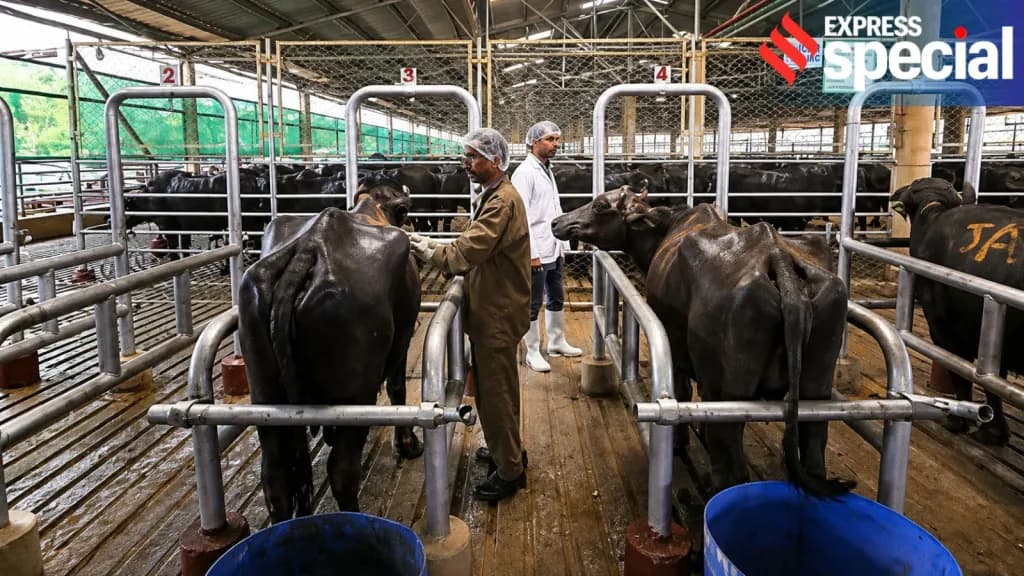
Despite its scale, challenges persist, including fragmented landholdings and susceptibility to unpredictable weather patterns, limiting its full potential. However, amidst these challenges lies a noteworthy segment—the Indian dairy sector, a global leader producing an impressive 230 million tonnes of milk annually (National Dairy Development Board, 2023). This sector, constituting 26 per cent of the agricultural GVA (gross value-added), not only nourishes millions but also supports the livelihoods of over 80 million people (Ministry of Agriculture & Farmers Welfare, 2023).
Similar to its agricultural counterpart, the dairy sector grapples with challenges such as insufficient cold chain infrastructure, varying milk quality, and income disparities among farmers. Enter agri-tech, a transformative force with a remarkable compound annual growth rate (CAGR) of 50 per cent (FICCI-KPMG Report, 2023). Sample this: Over 1,000 agri-tech startups have emerged in India recently. This digital wave can potentially revolutionize the lives of those dedicated to cattle care. This is possible though, for instance, smart sensors optimising nutrition through monitoring feed intake for individual animals (Krishi Bhavan, 2023), blockchain tech ensuring milk traceability, fostering consumer trust, and ensuring fair pricing for farmers (Indian Council of Agricultural Research, 2023) or even telemedicine reaching remote villages, providing real-time veterinary consultation, and reducing animal mortality (ET Agro, 2023).
To improve milk quality and safety, cold chain infrastructure with smart milk collection systems ensures quality and minimises spoilage. Blockchain technology traces milk from farm to table, ensuring transparency and consumer trust. Portable adulteration detection devices swiftly identify milk adulteration, promoting fairness for genuine producers. Also, to boost farmer income and market access, online dairy platforms connect farmers directly to consumers, eliminating middlemen. Digital dairy cooperatives enable collective bargaining and information sharing among farmers, empowering them in the market. Mobile apps provide market information, best practices, and financial services.
Breeding programmes for high-yielding cows optimise genetic selection, improving milk production and quality. Telemedicine for livestock offers remote veterinary consultation, enhancing animal health and reducing mortality rates.
The agriculture and allied areas in India stand to benefit from advantages such as precision agriculture practices, facilitated by sensors, drones, and AI analytics, optimising resource utilisation, resulting in heightened yields and reduced costs. Agtech platforms furnish farmers with weather data, market insights, and optimal farming methods, empowering informed decision-making and efficient farm management. Technologies like soil sensors and remote monitoring systems promote sustainable farming by aiding water conservation, minimising fertilizer usage, and reducing environmental impact.
Addressing these challenges requires collaborative initiatives from the government, private sector, and educational institutions. Only through such collective efforts can the full potential of the Indian agtech market be unlocked, ushering in transformative changes for the dairy sector, farmers, consumers, and the broader agricultural sector. The intersection of dairy and technology holds immense promise for farmers, promising increased yields, enhanced market access, and improved incomes. This digital transformation is not only beneficial for farmers but also for processors, consumers, and the nation at large. The ongoing digital evolution promises a brighter future for India’s dairy sector, driven by data, fuelled by technology, and propelled by the resilience of its people.