Logo
IndianGlobalBlogsPublicationsPodcastsMarketAboutContact
Logo
IndianGlobalBlogsPublicationsPodcasts
7News
TN Minister Urges Farmers to Adopt Tech for Value Addition in DairyListen to the Farm, Not the Farmer—The New Productivity LensWhat’s Driving Change In Beverages, FMCG And Dairy in 2025ED begins money laundering probe in dairy investment fraud caseIndo-Brazil pact aims to boost cattle genetics and dairy yield

Indian Dairy News

TN Minister Urges Farmers to Adopt Tech for Value Addition in Dairy
Dec 12, 2025

TN Minister Urges Farmers to Adopt Tech for Value Addition in Dairy

In Coimbatore this week, Tamil Nadu’s Minister for Milk and Dairy Development, Mano Thangaraj, called on dairy farmers to embrace modern technologies to boost productivity and value addition across th...Read More

Listen to the Farm, Not the Farmer—The New Productivity Lens
Dec 12, 2025

Listen to the Farm, Not the Farmer—The New Productivity Lens

India’s dairy sector, valued at nearly $30 billion, has reached a point where incremental changes will not deliver the next breakthrough. For decades, improvement programs have focused on what farmers...Read More

What’s Driving Change In Beverages, FMCG And Dairy in 2025
Dec 12, 2025

What’s Driving Change In Beverages, FMCG And Dairy in 2025

India’s retail landscape in 2025 was marked by a decisive shift in how consumers choose, consume and connect with brands. From beverages to daily nutrition and even the most essential dairy products,...Read More

Latest Blogs

See More
More Milk, Less Money: India’s Dairy Crisis
Dec 01, 2025

More Milk, Less Money: India’s Dairy Crisis

With the release of the BAHS 2025 summary report, I felt compelled to deep dive into its findings and reflect on the real progress and challenges facing India’s dairy sector. Over the last six years,...Read More

India Milk Prices: Cost Shock and Procurement Pressure
Nov 28, 2025

India Milk Prices: Cost Shock and Procurement Pressure

Milk prices in India face upward pressure as rising feed costs and procurement hikes reshape farm economics. Insight on dairy procurement, feed costs, and market outlook. Official government and coope...Read More

Stop Blaming, Start Claiming: Livestock’s Carbon Credit Future
Nov 16, 2025

Stop Blaming, Start Claiming: Livestock’s Carbon Credit Future

This week, I had the opportunity to attend an Agri Carbon Masterclass conducted by CII FACE. The deliberations, case studies, and discussions presented during the session were both insightful and thou...Read More

India Powers the Gulf’s Dairy Revolution -Gulf Food 2025
Oct 31, 2025

India Powers the Gulf’s Dairy Revolution -Gulf Food 2025

As Gulf Food Manufacturing prepares to open its doors from November 4–6 in Dubai, Indian dairy product and equipment manufacturers have a unique opportunity to explore one of the most promising region...Read More

Global Dairy News

Why the global milk business needs a structural shake-up
Dec 08, 2025

Why the global milk business needs a structural shake-up

The New Zealand dairy stalwart Fonterra has sold its consumer dairy-brands (milk, butter, cheese) — including “Anchor” and “Mainland Cheese” — to French agribusiness giant Lactalis in late October 202...Read More

Raw-milk prices in Europe hit 5-yr low; ripple effect looms
Dec 07, 2025

Raw-milk prices in Europe hit 5-yr low; ripple effect looms

European raw-milk prices have plunged to their lowest in five years, as oversupply and weak demand weigh on dairy markets across the region. According to recent data from DCA Market Intelligence B.V.,...Read More

Global food prices ease; FAO dairy index slips — impact looms
Dec 06, 2025

Global food prices ease; FAO dairy index slips — impact looms

The FAO Dairy Price Index averaged 137.5 points in November, down 4.4 points (3.1 percent) from October and 2.4 points (1.7 percent) from its value a year ago. International dairy prices fell for the...Read More

Dairy News 7x7

Your trusted source for all the latest dairy industry news, market insights, and trending topics.

FOLLOW US
CATEGORIES
  • Global News
  • Indian News
  • Blogs
  • Publications
  • Podcasts
SUBSCRIBE TO OUR NEWSLETTER

Stay informed with the latest updates and trending news in the dairy industry.

No spam, unsubscribe at any time

GET IN TOUCH
C-49, C Block, Sector 65,
Noida, UP 201307
+91 7827405029dairynews7x7@gmail.com

© 2025 Dairy News 7x7. All Rights Reserved.

Terms of ServicePrivacy Policy

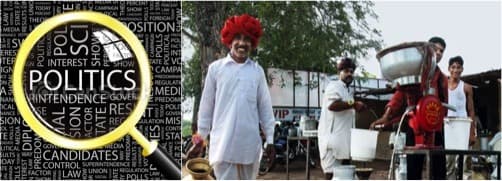
Amul, Nandini, Aavin… and politicisation of milk cooperatives

By DairyNews7x7•Published on May 08, 2023

In a country where cows are worshipped, the White Revolution is a forgotten spectacle. When Gujarat-born Amul, perceived to have been mollycoddled by the grand old party aeons ago but now backed by double-engine governments, makes a beeline for Karnataka, political parties are caught in the crossfire of canards.

It is a perfect turf for regional parochialism: how can Amul “take over” Nandini, owned by the second-largest federation of milk cooperatives in India, the Karnataka Milk Federation? What is laid bare in election-bound Karnataka’s ongoing political potpourri is nothing but the long-kept secret of dairy cooperatives. Their apolitical attire is off.

The world’s biggest dairy development programme of the 1970s is fast fading into oblivion. The politicisation of milk cooperatives is near complete, with patronage being thrust on them. There is a collective amnesia in the air. Milk may be a lifeline for 8 crore-plus rural households across the country, mostly small and marginal farmers and the landless. They make a compelling vote bank, while the cash-churning dairies are an essential honeycomb for the political bees. The cries of “Holy cow!” are no longer there.

What Amul, Nandini, Milma, Aavin, and the like did to their respective states and rural economy is part of folklore. Dairy cooperatives broke global records to make India the largest producer of milk and steadily augment per-capita consumption here. In regions where cooperatives were actively procuring milk, private dairies were forced to do so at a higher price. And wherever they were not, private players had a rock-n-roll. Dairy farmers remained loyal to their state-run cooperatives, thanks to the cost-plus price they got in return.

For many years, Amul, owned by the Gujarat Cooperative Milk Marketing Federation (GCMMF), stayed away from political masters, despite its proximity to the leaders during the freedom struggle and post-independence. Verghese Kurien, the father of the White Revolution, and his mentor, Tribhuvandas Patel, were bluntly vocal about it. In his biography ‘I too had a dream’, Kurien was quoted as saying: “So clear and unshakable were his (Patel’s) priorities that if any politician even tried to put as much as a finger on the farmers’ milk cooperatives, he would have cut off their entire hand.”

That is an old story. Over the past decade, the BJP has ousted the Congress and conquered one by one all 18 cooperatives in Gujarat, the last one being the oldest union, Kaira Cooperative, founded by Tribhuvandas Patel himself, a few months ago. Of course, Amul, which initially faced opposition from BJP-ruled states, saw its fortunes soar. Clad in new colours, it happily rode into neighbouring states. It soon became India’s largest dairy company, surpassing the likes of Nestle and HUL.

In Tamil Nadu, Aavin is a relatively small yet important player. A bulk of the market is in the hands of private players such as Arockya and Tirumala. The ubiquity of Aavin has helped farmers fetch a higher procurement price Rs 35 and Rs 44 for one-litre milk from cows and buffaloes, respectively. Of course, in times of high inflation, dairy farmers are seeking better remuneration. Aavin milk is available across the state at a discount, especially for monthly cardholders. It is in the process of buying two lakh crossbred jersey milch cows to strengthen its network of dedicated milk suppliers.

In the 1970s, when Amul started buying cocoa directly from farmers in Kerala to feed its chocolate and ice cream businesses, the prices rose three times in the southern state as it broke a private monopoly. In the case of milk procurement, there is an unwritten code to respect cooperative federalism. For instance, Nandini and Amul may not procure directly from farmers in TN, but there is nothing wrong with purchasing milk in bulk from Aavin whenever the local cooperatives procure more than what they can process. Every cooperative should be allowed to invest and thrive, with more procurement centres and bigger processing capacities. That will be a boon for the rural economy.

Swipe to continue reading

Previous Article

Next Article