Latest Blogs
See More

Indian Dairy News



DairyNews7x7
Global Dairy News

DairyNews7x7
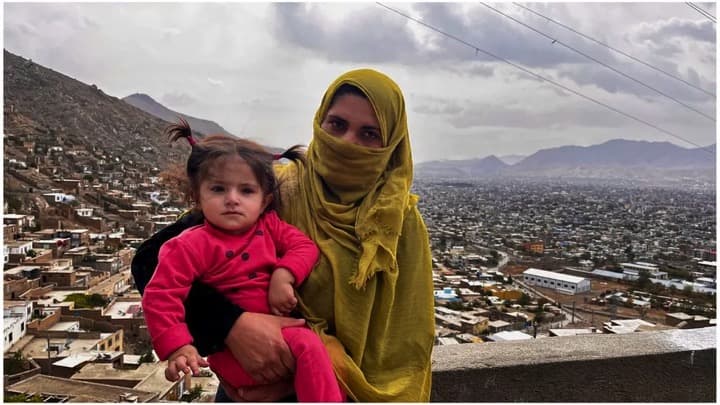
“The last time I was able to buy milk for my baby was two months ago. Normally I just fill the [feeding] bottle with tea. Or I soak bread in tea and then feed it to her,” Sohaila Niyazi says, sitting on the floor of her mud brick home up a hill in eastern Kabul.
There are no roads to her house – you have to walk up steep mud tracks with sewage flowing by the side of them.
Sohaila is a widow. She has six children, her youngest a 15-month-old girl named Husna Fakeeri. The tea that Sohaila refers to is what’s traditionally drunk in Afghanistan, made with green leaves and hot water, without any milk or sugar. It contains nothing that’s of any nutritional value for her baby.
Sohaila is one of the 10 million people who have stopped receiving emergency food assistance from the UN World Food Programme (WFP) over the past year – cuts necessitated by a massive funding shortfall. It’s a crushing blow, especially for the estimated two million households run by women in Afghanistan.
Under Taliban rule, Sohaila says she can’t go out to work and feed her family.
“There have been nights when we have had nothing to eat. I say to my children, where can I go begging at this time of night? They sleep in a state of hunger and when they wake up I wonder what I should do. If a neighbour brings us some food the children scramble, saying ‘give me, give me’. I try to split it between them to calm them down,” Sohaila says.
To calm her hungry baby girl, Sohaila says she gives her “sleep medicine”.
“I give it so that she doesn’t wake up and ask for milk because I have no milk to give her. After giving her the medicine, she sleeps from one morning to the next,” says Sohaila. “Sometimes I check to see if she’s alive or dead.”
We inquire about the medicine she’s giving her daughter and find that it is a common antihistamine or anti-allergy drug. Sedation is a side effect.
Doctors have told us that while it’s less harmful than the tranquilisers and anti-depressants we have found being given by some Afghan parents to their hungry children, in higher doses the medicine can cause respiratory distress.
Sohaila says her husband was a civilian killed in crossfire in Panjshir province in 2022, in fighting between Taliban forces and those resisting Taliban rule. After his death, she depended heavily on the aid given by the WFP – flour, oil and beans.
Now the WFP says it’s able to provide supplies to only three million people – less than a quarter of those experiencing acute hunger.
Sohaila is entirely reliant on donations from relatives or neighbours.
For much of the time that we are there, baby Husna is quiet and inactive
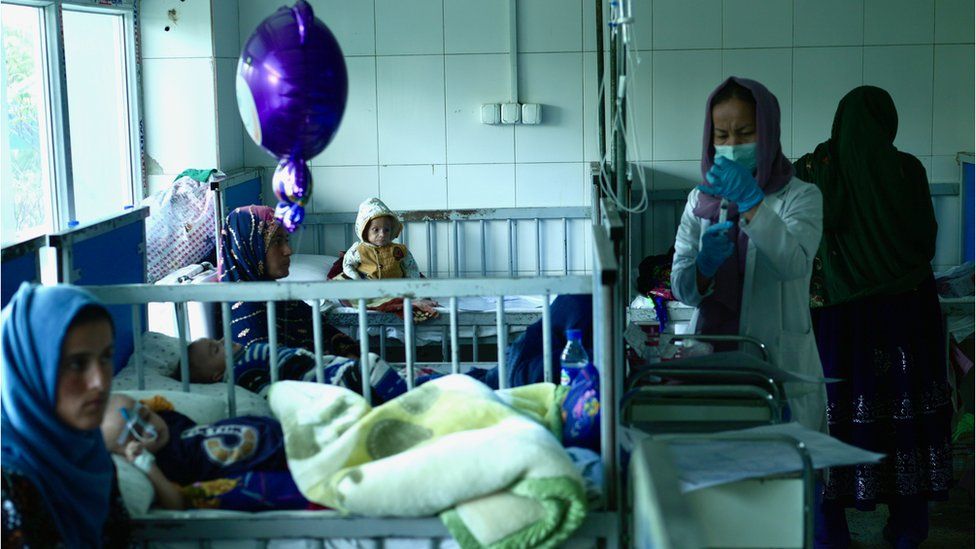
And while malnutrition is ravaging the country’s youngest, aid which had prevented healthcare from collapsing has had to be withdrawn.
The International Committee of the Red Cross (ICRC) was paying the salaries of health workers, and funding medicines and food at more than 30 hospitals – an emergency stopgap measure implemented following the regime change in 2021.
Now it doesn’t have the resources to continue, and aid has been withdrawn from most health facilities, including Afghanistan’s only children’s hospital, Indira Gandhi Children’s Hospital in Kabul.
“The salary of doctors and nurses comes from the government now. They have all had their pay cut by half,” Dr Mohammad Iqbal Sadiq, the Taliban-appointed medical director of the hospital, tells us.
The hospital has also closed its outpatient department and is providing services only for those who need to be admitted to the hospital.
The malnutrition ward is full, and on many days, they have to fit more than one child in a bed.
In one corner Sumaya sits upright. At 14 months she weighs as much as a newborn baby, her tiny face wrinkled like that of a much older person.
Next to her is Mohammad Shafi. He weighs half of what he should at 18 months. His father was a member of the Taliban, killed in a road accident. His mother died of an illness.
When we pass his bedside his elderly grandmother, Hayat Bibi, comes to us looking distraught, wanting to tell her story.
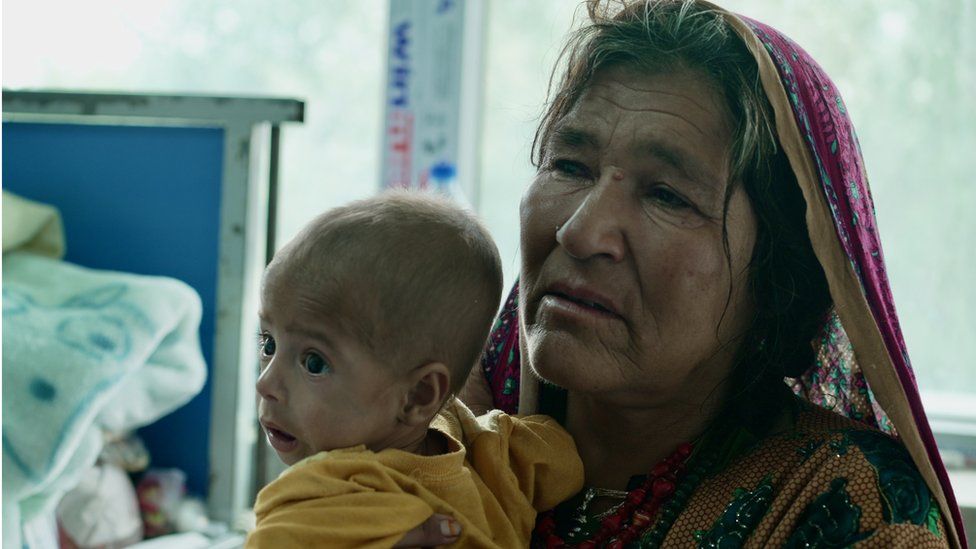
“I’m relying on the mercy of God. I have nowhere else to turn to. I’m totally lost,” Hayat Bibi says, her eyes welling up. “I’m struggling myself. My head hurts so much I feel like it might explode.”
We asked the Taliban government’s main spokesman, Zabihullah Mujahid, what they were doing to convince the international community to give more aid.
“Aid has been cut because the economies of donor countries are not doing well. And there have been two big calamities – Covid and the war in Ukraine. So we can’t expect help from them. We won’t get aid by talking to them,” he told us.
“We have to become self-reliant. Our economy has stabilised and we are giving out mining contracts which will create thousands of jobs. But of course, I’m not saying aid should be cut because we still have challenges.”
Did he recognise that Taliban policies were a part of the problem too; that donors didn’t want to give money to a country where the government had imposed stringent restrictions on women?
“If aid is being used as a pressure tool then the Islamic Emirate has its own values which it will safeguard at any cost. Afghans have made big sacrifices in the past to protect our values and will endure the cutting of aid too,” Mr Mujahid said.
His words will not comfort many Afghans. Two-thirds of the country’s people don’t know where their next meal will come from.
In a cold, damp, one-room home off a street in Kabul we meet a woman who says she’s been stopped by the Taliban from selling fruit, vegetables, socks and other odd items on the street. She says she’s also been detained once. Her husband was killed during the war and she has four children to provide for. She doesn’t want to be named.
She breaks down inconsolably minutes into talking about her situation.
“They should at least allow us to work and earn an honest living. I swear to God we are not going out to do bad things. We only go to earn food for our children and they harass us like this,” she says.
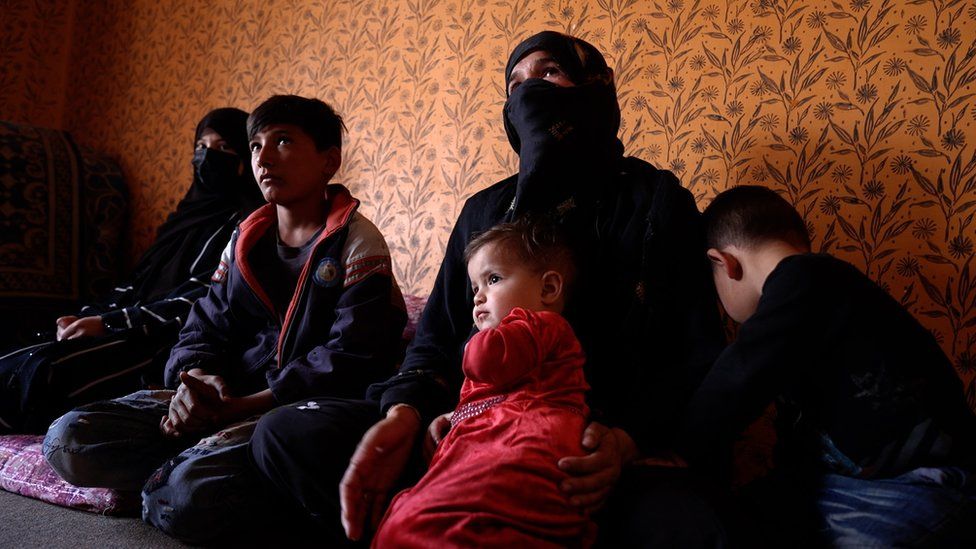
“I asked one Taliban brother, what do I feed my children if I don’t earn? He said give them poison but don’t come outside your home,” she says. “Two times the Taliban government gave me some money, but it is nowhere close to enough.”
Prior to the Taliban takeover, three-quarters of public spending came from foreign money given directly to the previous regime. It was stopped in August 2021, sending the economy into a spiral.
Aid agencies stepped in to provide a temporary but critical bridge.
Much of that funding has now gone.
It is hard to overstate the severity of the situation. We have seen it over and over again this past year.
Millions are surviving on dry bread and water. Some will not make it through the winter.
Additional reporting by Imogen Anderson. Photos by Aamir Peerzada.
Updated: The Taliban says its Ministry of Martyrs and Disabled Affairs gives cash assistance to widows, orphans and disabled people but they didn’t tell us the number of people they were helping or the extent of the help.
Source : BBC Dec 18th 2023