Latest Blogs
See More


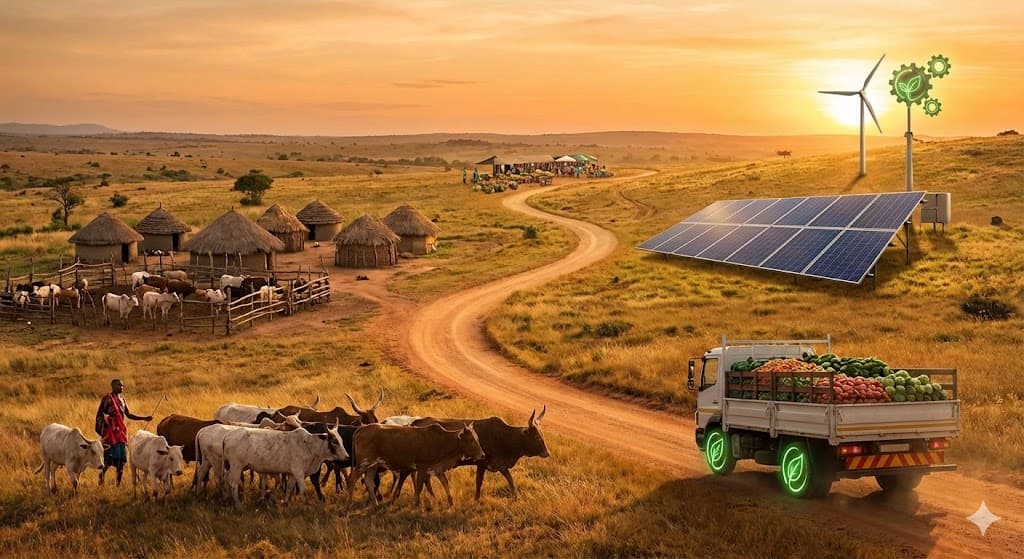
A new research review published in npj Sustainable Agriculture explores how private-sector engagement can support greenhouse gas (GHG) mitigation in ruminant livestock value chains across Africa, offering lessons that hold relevance for dairy sectors globally. The study highlights that while smallholder producers are central to dairy and beef economies, they often lack bargaining power and incentives to adopt low-emission practices on their own.
Drawing on illustrative examples from South Africa, Kenya, Tanzania, Rwanda and beyond, the paper finds that partnerships involving agribusinesses, public agencies and nonprofit organisations can help bridge this gap. Successful collaborations linked **climate-smart practices — such as improved grazing management, manure recycling, feed quality enhancements and milk-quality testing — to markets through premium pricing, embedded services and support infrastructure.
However, the authors also caution that market-based approaches alone are insufficient without supportive public policies and equitable value-chain governance. Power imbalances between buyers and suppliers can limit smallholders’ ability to capture the benefits of emissions reduction, while institutional support and financial incentives remain necessary to make climate-positive practices economically viable at the farm level.
For the dairy sector, the study underscores the importance of linking environmental goals with economic incentives — such as milk quality premiums tied to lower emissions or sustainability standards — to encourage producers to adopt climate-smart practices. This approach could help align profitability with sustainability, supporting both rural livelihoods and global climate commitments.
Source : Dairynews7x7 Feb 11th 2026 Read full article here
Image credit : Gemini
#DairyClimateAction #GHGMitigation #SustainableLivestock #ValueChainInnovation #ClimateSmartDairy