


President Donald Trump’s moves in Washington are being felt in the milking barns of an upstate New York dairy farm. There, AJ Wormuth said he’s already seeing costs go up from Trump’s tariffs while the threat of a wider trade war is driving down the price he gets paid for his cows’ milk.
“We’re getting a double whammy — we’re getting lower prices and higher costs,” said Wormuth, who has 3,600 dairy cattle at his farm, Half Full Dairy.
While none of Trump’s policies have specifically targeted the milk industry, dairy farmers say they have been caught in the fray on a number of fronts. Their stories illustrate the fast pace of change across the federal government at the beginning of the second Trump administration, as well as the intersection of two policy areas — immigration and the economy — where voters are giving Trump markedly different grades so far.

Tariffs are increasing costs for farmers while market jitters over falling U.S. dairy sales overseas are driving down milk prices. Meanwhile, Trump’s moves to step up deportations could affect the industry’s workforce, since immigrants are estimated to make up about half of dairy workers. And concerns are growing about the risk of bird flu, which has been spreading among dairy cattle for the past year.“There’s just so much uncertainty about everything right now,” said Annie Watson, who has 70 cattle on an organic dairy farm in Maine. “As dairy farmers, we work in three-year cycles — from when a calf is born on our farms until it becomes a milking cow. Nothing happens quickly on our dairy farms. So to have policies put forth that take effect very, very quickly, it can often be challenging for those of us that work in this sort of cycle.”
Trade war tensions
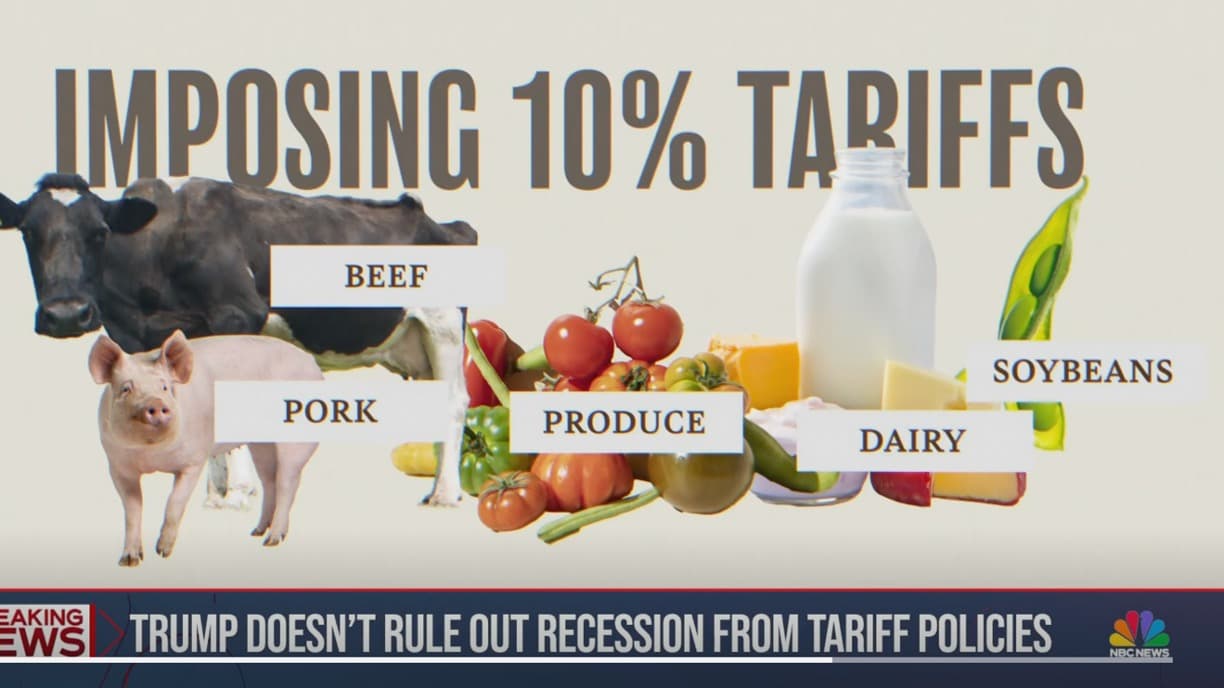
Trump has said he plans to announce sweeping tariffs on goods from across the globe on April 2, and he has already put additional 20% tariffs on imports from China along with a 25% tariff on all imports of automobiles, steel and aluminum. The president has threatened, but so far delayed, a 25% tariff on goods from Mexico and Canada.
In response to Trump’s tariff moves, other countries have vowed to retaliate with their own tariffs on American-made products. China and the European Union have already announced tariffs on certain U.S. goods, including dairy products.
Those retaliatory tariffs could drive down global demand for U.S. dairy, leading to an oversupply of milk in the U.S. That would create a supply and demand imbalance, driving down the price farmers get for their milk, though the price American shoppers pay for dairy products in the grocery store might not budge much. That’s because a number of factors go into setting the price of finished dairy products, such as transportation, marketing and labor costs.
“Anything that is disrupting the flow of trade is obviously concerning,” said Jaime Castaneda, the executive vice president for policy and strategy at the National Milk Producers Federation. “I think that the farm community is very concerned about broad tariff applications, as opposed to more targeted and more focused tariffs.”
Concern over the tariffs has already contributed to a significant drop in the price farmers are paid for their milk since Trump came into office, Castaneda said.
But there are potential upsides for dairy farmers if Trump’s trade war is ultimately able to reduce trade barriers to other countries like Canada and European Union nations, which have placed restrictions on American dairy products, said Castaneda.
Agriculture Secretary Brooke Rollins said last week that her department was looking into ways to “potentially mitigate any economic catastrophes that could happen to some of our farmers” as a result of Trump’s tariffs. During Trump’s first term, the federal government made direct payments to farmers who lost sales from retaliatory tariffs China put on American agriculture products.