Latest Blogs
See More
Indian Dairy News


DairyNews7x7
Global Dairy News

DairyNews7x7
Amul, also known as the Gujarat Cooperative Milk Marketing Federation (GCMMF), is an Indian dairy cooperative that has become a household name in India and beyond. Founded in 1946 by Tribhuvandas Patel, Amul has grown to become the largest dairy cooperative in India and one of the most successful brands in the country.
It started as a small cooperative in Gujarat to empower local farmers and provide them with a platform to market their milk and milk products. Today, it has expanded its operations to over 18,700 villages nationwide, with a network of over 3.6 million milk producers.
The company has become synonymous with quality and affordability with a wide range of products, including milk, butter, cheese, ice cream, and more. It has successfully captured the Indian market and made its mark globally, exporting its products to over 60 countries.
Its success can be attributed to its innovative marketing campaigns featuring the iconic Amul girl, a cheerful cartoon character known for her witty and timely comments on current events. These campaigns have helped build brand loyalty and become integral to India’s popular culture.
While Amul has seen tremendous success, it has faced its fair share of challenges. However, it has consistently adapted and innovated to stay ahead. With over 30,000 employees, Amul continues to uphold its core values of integrity, quality, and sustainability. Its commitment to empowering farmers, providing nutritious products, and contributing to the development of rural India has made Amul a remarkable brand in the dairy industry.
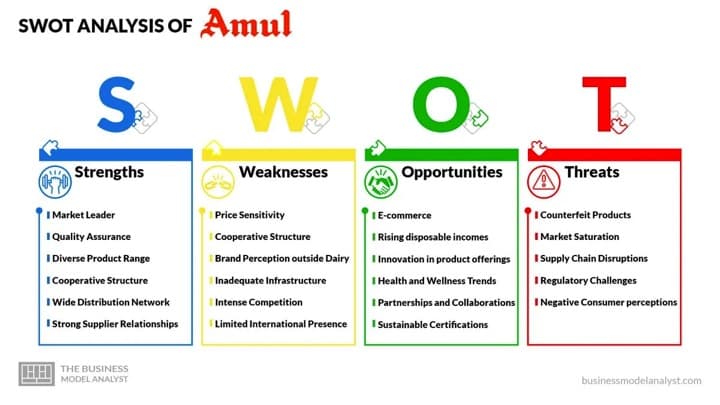
Below, there is a detailed Amul SWOT Analysis to better understand its position in the global market.
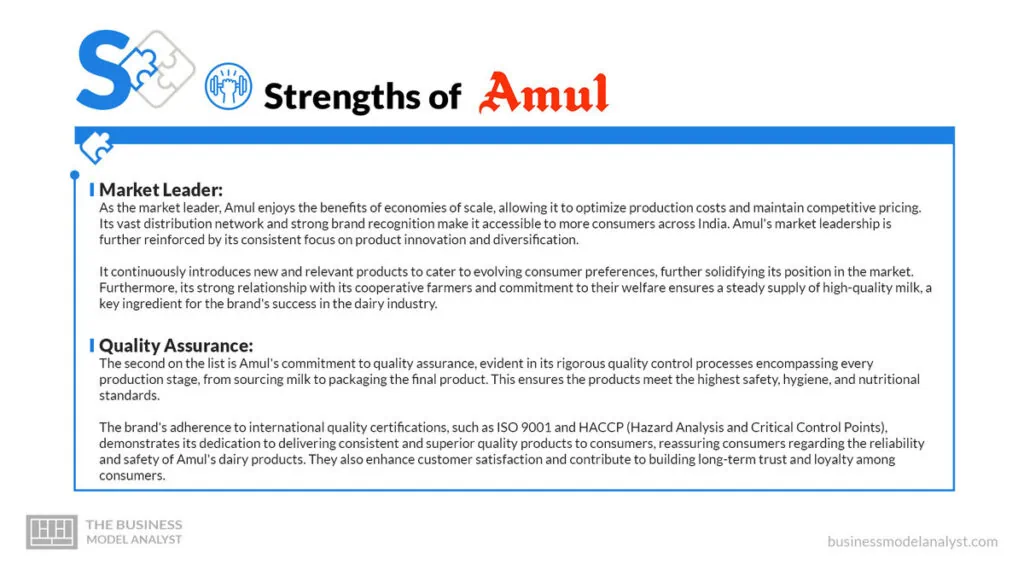
It continuously introduces new and relevant products to cater to evolving consumer preferences, further solidifying its position in the market. Furthermore, its strong relationship with its cooperative farmers and commitment to their welfare ensures a steady supply of high-quality milk, a key ingredient for the brand’s success in the dairy industry.
The brand’s adherence to international quality certifications, such as ISO 9001 and HACCP (Hazard Analysis and Critical Control Points), demonstrates its dedication to delivering consistent and superior quality products to consumers, reassuring consumers regarding the reliability and safety of Amul’s dairy products. They also enhance customer satisfaction and contribute to building long-term trust and loyalty among consumers.
This builds customer loyalty, as consumers can rely on the brand for their dairy needs across different categories. It also helps Amul penetrate different market segments and reach a larger consumer base. Its ability to consistently deliver high-quality products across its diverse range further enhances its reputation and strengthens its position in the market.
Amul’s cooperative structure also benefits the farmers and promotes rural development. It provides a platform for farmers to sell their milk and earn a fair income. In turn, Amul contributes to rural communities’ economic growth and upliftment, improving their quality of life.
Its ability to maintain a strong presence in rural and urban areas gives it a competitive edge, allowing the brand to tap into the vast consumer market in India, capture consumers’ diverse preferences and demands of consumers from different regions, and contribute to its market leadership.
By working closely with farmers, Amul maintains a reliable and consistent supply of high-quality milk, essential for its diverse range of dairy products. This collaborative approach also allows Amul to support and uplift farmers’ livelihoods actively, promoting their economic well-being and fostering sustainability in the dairy sector.
Its competitive pricing attracts price-conscious consumers and creates a competitive advantage over rivals, allowing Amul to penetrate the market and maintain a strong foothold. Its ability to provide quality products at competitive prices reinforces its position as a preferred choice among consumers, contributing to its continued success and market leadership.
Amul also fosters goodwill and positive brand perception among consumers by actively participating in social responsibility initiatives. This aligns with the values of socially conscious consumers and strengthens the brand’s reputation as a responsible and caring organization.
Its widespread recognition and popularity have made it a household name, deeply embedded in the country’s cultural fabric. The brand’s iconic logo and memorable advertising campaigns have further contributed to its strong brand identity, creating a lasting impression in the minds of consumers.
These creative and often humorous campaigns have effectively resonated with the target audience, increasing brand recall and engagement. Amul’s ability to consistently deliver fresh and engaging marketing content has set it apart from its competitors, allowing the brand to maintain a strong and enduring relationship with its consumers.
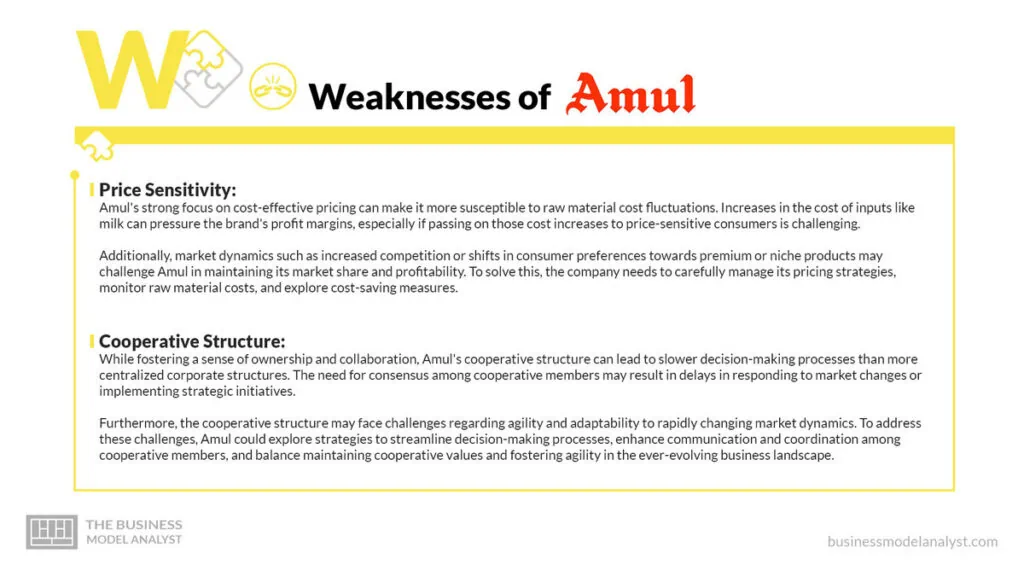
Additionally, market dynamics such as increased competition or shifts in consumer preferences towards premium or niche products may challenge Amul in maintaining its market share and profitability. To solve this, the company needs to carefully manage its pricing strategies, monitor raw material costs, and explore cost-saving measures.
Furthermore, the cooperative structure may face challenges regarding agility and adaptability to rapidly changing market dynamics. To address these challenges, Amul could explore strategies to streamline decision-making processes, enhance communication and coordination among cooperative members, and balance maintaining cooperative values and fostering agility in the ever-evolving business landscape.
As such, Amul needs to build brand awareness and consumer trust to venture into non-dairy segments successfully. It could consider strategic partnerships, acquisitions, or brand extensions to enter non-dairy food segments while leveraging its existing brand equity to mitigate this limitation.
Addressing infrastructure challenges requires investments in building and maintaining a robust cold chain network, including refrigerated storage facilities, transportation systems, and last-mile delivery capabilities. Collaborating with logistics partners and investing in technology and monitoring systems can help Amul ensure the integrity of its products throughout the distribution process and mitigate potential infrastructure-related issues.
Amul must consistently deliver high-quality products, leverage its strong brand reputation, and actively monitor market trends to anticipate and respond to competitive challenges to maintain its competitive edge. It should implement effective marketing and branding strategies, enhance product diversification, and focus on customer loyalty to withstand the competition and retain its market leadership.
To overcome this weakness, Amul can focus on strategic international expansion plans, exploring new markets, establishing strong distribution networks, and adapting its products and marketing strategies to cater to the preferences and demands of global consumers.
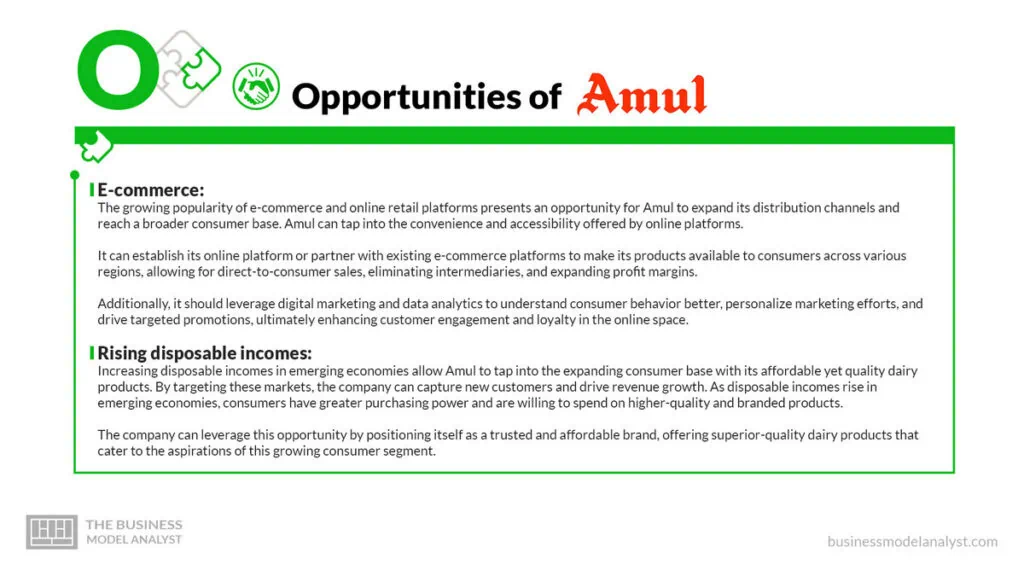
It can establish its online platform or partner with existing e-commerce platforms to make its products available to consumers across various regions, allowing for direct-to-consumer sales, eliminating intermediaries, and expanding profit margins.
Additionally, it should leverage digital marketing and data analytics to understand consumer behavior better, personalize marketing efforts, and drive targeted promotions, ultimately enhancing customer engagement and loyalty in the online space.
The company can leverage this opportunity by positioning itself as a trusted and affordable brand, offering superior-quality dairy products that cater to the aspirations of this growing consumer segment.
Packaging innovations, such as portion-controlled or on-the-go formats, can provide convenience and cater to busy lifestyles. Additionally, creating value-added products like fortified milk with added nutrients or probiotics can address specific dietary needs and offer enhanced nutritional benefits to consumers.
Furthermore, fortifying dairy products with essential vitamins, minerals, or probiotics can offer health benefits and appeal to health-conscious consumers. This way, it positions itself as a trusted brand for those seeking nutritious and wholesome dairy options.
Collaborating with retailers and distributors domestically and internationally can also help the company enhance its market penetration and increase product visibility. Such partnerships can enable Amul to reach a wider range of consumers and establish a stronger foothold in various regions. Furthermore, technology collaborations with dairy industry players can facilitate knowledge sharing, innovation, and process improvements.
Promoting animal welfare through ethical treatment and responsible sourcing can resonate with consumers prioritizing animal rights and welfare. Obtaining certifications like Fairtrade, organic, or sustainable agriculture certifications can provide tangible evidence of Amul’s commitment to sustainability and ethical practices.
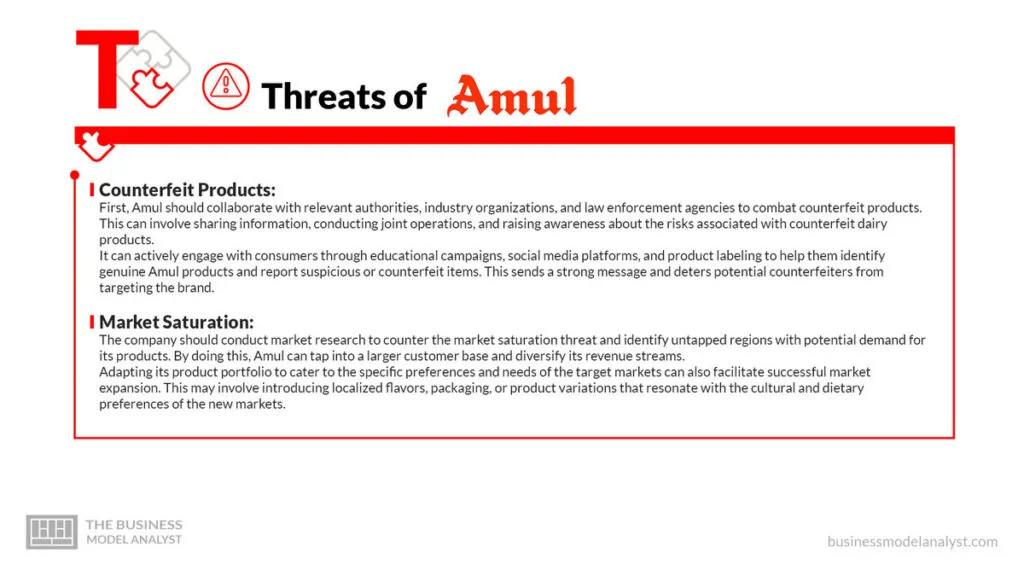
It can actively engage with consumers through educational campaigns, social media platforms, and product labeling to help them identify genuine Amul products and report suspicious or counterfeit items. This sends a strong message and deters potential counterfeiters from targeting the brand.
Adapting its product portfolio to cater to the specific preferences and needs of the target markets can also facilitate successful market expansion. This may involve introducing localized flavors, packaging, or product variations that resonate with the cultural and dietary preferences of the new markets.
Investing in technology and systems that enhance supply chain visibility and traceability can help Amul identify and address potential bottlenecks or disruptions in real time. Furthermore, collaborating with logistics partners and having alternative transportation routes or storage facilities in place can provide flexibility and reduce unexpected disruptions in the supply chain.
Regular audits and inspections of manufacturing facilities can help identify and address compliance gaps, ensuring the brand maintains high quality and safety standards. Additionally, fostering strong relationships with regulatory authorities and industry associations can provide valuable insights and guidance on navigating complex regulatory challenges.
Amul can also invest in sustainability initiatives, such as reducing carbon emissions, implementing waste management strategies, and promoting eco-friendly packaging options. This way, Amul can promote the nutritional benefits of dairy products, highlighting their role in a balanced and healthy diet, and address any misconceptions or myths that can help overcome health-related concerns.
While facing specific weaknesses and threats, such as price sensitivity, reliance on a cooperative structure, limited international presence, infrastructure challenges, strong competition, and market saturation, Amul has numerous opportunities to capitalize on, including e-commerce, rising disposable incomes, innovation in product offerings, health and wellness trends, partnerships and collaborations, and sustainable practices.
By addressing these weaknesses and leveraging the opportunities, the company can continue strengthening its market position, expanding its reach, and maintaining its strong brand reputation. This also ensures it is well-positioned to meet the evolving needs of consumers and sustain its growth in the dynamic dairy industry.