Latest Blogs
See More



Indian Dairy News



DairyNews7x7
Global Dairy News

DairyNews7x7
Global dairy markets are approaching a period of unusual turbulence, with analysts warning that 2026 could become a defining year for the trajectory of milk prices worldwide. What was once a predictable cycle of seasonal price movements is now being disrupted by a combination of stubbornly high input costs, volatile demand patterns, and shifting supply dynamics across major dairy-producing regions. A recent analysis published by eDairy News argues that the industry may be on the brink of a “milk-price shockwave,” where the true determinant of pricing will no longer be consumer demand alone but the rising cost structures embedded deep within the dairy value chain.
Over the past several years, global milk production has continued to grow, driven largely by Europe, New Zealand, the United States, and emerging producers in Latin America. However, this expansion has been accompanied by significant inflation in feed, energy, fertilizer, and labour — all of which have eroded farm-level profitability. The dairy industry has always been cost-sensitive, but what distinguishes the current situation is the prolonged and structural nature of cost escalation. Feed prices remain elevated due to climate variability and disrupted global grain markets. Energy costs have not normalized to pre-pandemic or pre-conflict levels. Labour shortages continue to plague dairy farms, particularly in developed economies, forcing many producers to increase wages or invest in automation. These pressures are steadily raising the minimum viable price that farmers require to continue operating sustainably.
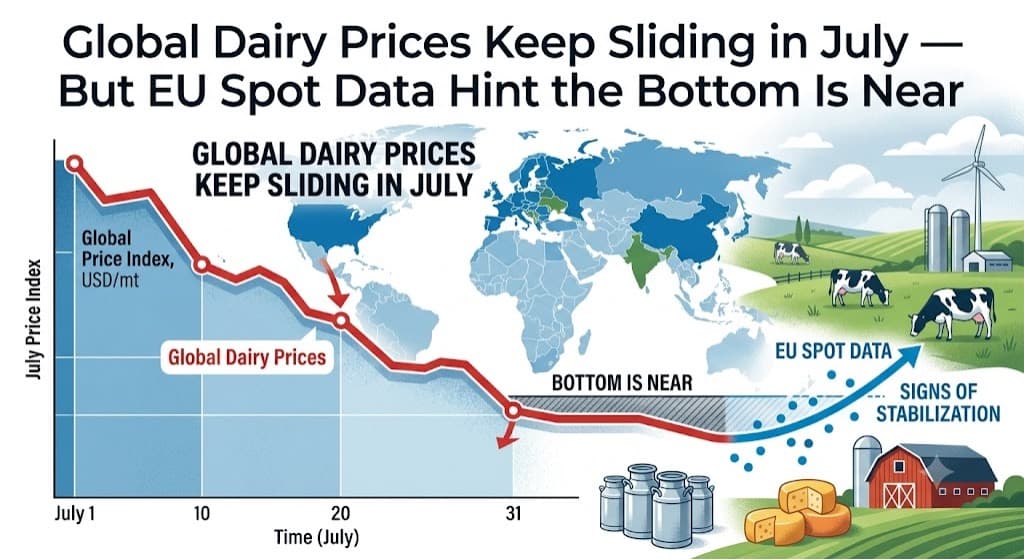
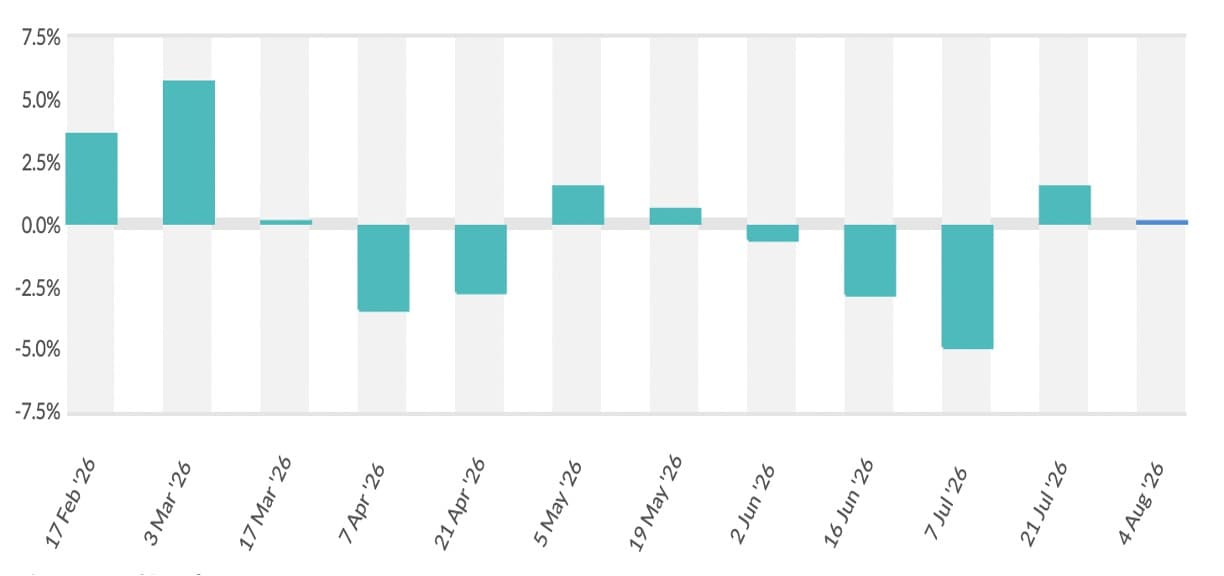
The imbalance between supply and demand is further complicating the picture. The latest FAO Dairy Price Index recorded a 3.4% decline in October 2025, reflecting oversupply in European and Oceanic markets combined with weaker-than-expected import demand from Asia. This downturn in global commodity prices may appear beneficial for consumers, but it places considerable strain on farmers who are already operating on thin margins. When export prices fall, exporting nations are compelled to push more product into domestic markets, depressing prices further and triggering a cascade of financial stress throughout the supply chain.
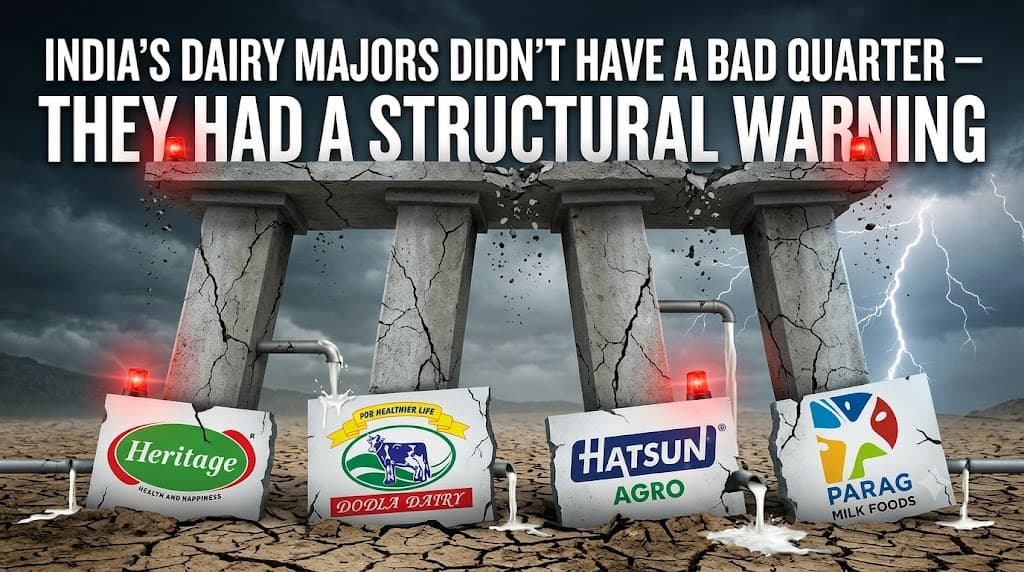
Within this global context, India presents an interesting counter-cycle. Despite pressures on input costs, the Indian dairy sector is projected to grow at around 5% annually, supported by strong domestic demand, cooperative procurement networks, and relatively stable retail consumption patterns. However, India is not immune to global forces. Rising feed costs — especially fodder, maize, and soymeal — are compressing margins for small and medium dairy farmers. Meanwhile, consumer expectations around quality, value-added products, and nutrition are increasing, pushing dairies to invest in modernization, automation, and cold-chain enhancement. For India, the challenge will be to maintain growth while ensuring that the farmgate economics remain viable.
The eDairy News analysis warns that if input costs continue to escalate through 2026, dairy processors and cooperatives worldwide may be forced to revise procurement prices upward, even if global commodity markets remain bearish. This would create a paradoxical situation where consumer prices do not fall in line with international indices, potentially impacting demand in price-sensitive regions. The report argues that this phenomenon will redefine global competitiveness: nations that secure affordable feed resources, low-cost energy, and efficient supply chains will gain a significant advantage over those that remain exposed to inflationary pressures.
In the short term, dairy processors and cooperatives may face difficult decisions. Absorbing higher costs will compress margins and delay investment plans, while passing on these costs to consumers risks weakening demand. Farmers, especially in fragmented or non-organized sectors, may struggle unless procurement prices are adjusted to reflect rising input burdens. Conversely, countries and companies that focus on improving productivity — through better breeding, scientific feeding, and modern farm management — will be better positioned to navigate the volatility.
Looking ahead, the dairy industry’s outlook will depend heavily on how quickly global markets stabilize and whether producers can adapt to new cost realities. Adoption of precision dairy technologies, alternative feed sources, climate-resilient fodder systems, and renewable energy integration at the farm level will play a critical role in safeguarding margins. At the policy level, support mechanisms for farmers, export diversification, and investment in innovation will shape the resilience of national dairy ecosystems.
Ultimately, the emerging price shockwave is not merely a short-term fluctuation; it represents a structural shift in how milk economics will behave in the years ahead. For farmers, processors, investors, and policymakers, 2026 may prove to be a pivotal year — one that demands foresight, adaptation, and a renewed commitment to building cost-efficient, future-ready dairy systems.
Source : Dairynews7x7 Nov 28th 2025 from our partner channel edairynews