Logo
IndianGlobalBlogsPublicationsPodcastsMarketAboutContact
Logo
IndianGlobalBlogsPublicationsPodcasts
7News
Meenesh Shah gets extension as Chairman NDDBAbundant Milk Output in US, Argentina, Australia Shapes 2026 Dairy OutlookKerala Raises Minimum Wages, Boosts Pay for Agricultural & Dairy WorkersInside Scoop: The 2,500-Year History of Ice CreamTamil Nadu Milk Producers Urge Local Milk & Butter Procurement

Indian Dairy News

Meenesh Shah gets extension as Chairman NDDB
Jan 02, 2026

Meenesh Shah gets extension as Chairman NDDB

NDDB congratulates Dr. on the extension of his tenure as Chairman, NDDB, for a further period of 3.5 years by the Government of India. This extension is a recognition of his exemplary leadership and...Read More

Kerala Raises Minimum Wages, Boosts Pay for Agricultural & Dairy Workers
Jan 02, 2026

Kerala Raises Minimum Wages, Boosts Pay for Agricultural & Dairy Workers

The Kerala government has significantly revised and increased minimum wages for agricultural and dairy workers, including milkmen and related roles, marking the first update since 2017 and expanding l...Read More

Inside Scoop: The 2,500-Year History of Ice Cream
Jan 02, 2026

Inside Scoop: The 2,500-Year History of Ice Cream

Ice cream — one of the world’s most beloved frozen treats — has an unexpectedly long history stretching back roughly 2,500 years, beginning with ancient innovations in ice storage and evolving into th...Read More

Latest Blogs

See More
From Forecast to Fact: 2025 Lessons, 2026 Dairy Outlook
Jan 01, 2026

From Forecast to Fact: 2025 Lessons, 2026 Dairy Outlook

As we step into 2026, it is worth pausing to reflect on how the Indian dairy sector navigated the challenges of 2025 and how closely reality tracked the forecasts I outlined in the first blog of last...Read More

India–NZ Dairy FTA: Safeguards or Silent Slippages?
Dec 26, 2025

India–NZ Dairy FTA: Safeguards or Silent Slippages?

The recently concluded India–New Zealand Free Trade Agreement (FTA) marks an important milestone in bilateral trade, while carefully ring-fencing India’s sensitive dairy sector. Under the agreement, c...Read More

Vision 2047: India’s Dairy Development Roadmap
Dec 21, 2025

Vision 2047: India’s Dairy Development Roadmap

As India moves steadily toward Vision 2047, the dairy sector stands at a strategic inflection point. From being a food security instrument in the decades following Independence, dairy has evolved into...Read More

Global Dairy Dynamics: Innovation, Sustainability & Inclusion
Dec 18, 2025

Global Dairy Dynamics: Innovation, Sustainability & Inclusion

The International Dairy Processing Conference (IDPC) 2026, organised by the Trade Promotion Council of India (TPCI) at Yashobhoomi Convention Centre, Dwarka, New Delhi on 7 January 2026, will serve as...Read More

Global Dairy News

Abundant Milk Output in US, Argentina, Australia Shapes 2026 Dairy Outlook
Jan 02, 2026

Abundant Milk Output in US, Argentina, Australia Shapes 2026 Dairy Outlook

Milk production across major dairy exporting regions — the United States, Argentina and Australia — is set to remain robust through 2025 and into 2026, underpinning global milk supplies and shaping co...Read More

Global dairy prices under pressure Rabobank Q4 outlook
Jan 01, 2026

Global dairy prices under pressure Rabobank Q4 outlook

Global dairy markets softened through Q3 2025 and fell sharply in Q4 2025. In Oceania, spot prices (in USD) for the dairy commodity complex remain weak. Butter has led the decline, down 9% since the b...Read More

Milk Prices Plunge, Production Set to Weaken in 2026
Dec 31, 2025

Milk Prices Plunge, Production Set to Weaken in 2026

Global milk prices have plummeted to lows not seen since early 2021 amid a pronounced oversupply and softening demand, while dairy producers are signalling caution as milk production momentum is expec...Read More

Dairy News 7x7

Your trusted source for all the latest dairy industry news, market insights, and trending topics.

FOLLOW US
CATEGORIES
  • Global News
  • Indian News
  • Blogs
  • Publications
  • Podcasts
SUBSCRIBE TO OUR NEWSLETTER

Stay informed with the latest updates and trending news in the dairy industry.

No spam, unsubscribe at any time

GET IN TOUCH
C-49, C Block, Sector 65,
Noida, UP 201307
+91 7827405029dairynews7x7@gmail.com

© 2026 Dairy News 7x7. All Rights Reserved.

Terms of ServicePrivacy Policy
IDPC 2026 Advertisement

When Milk Becomes a Mourning by the death of two toddlers

By Kuldeep Sharma•Published on July 16, 2025

I feel deeply saddened by the death of two innocent children ( 11 months and  2 years)—lives lost not to disease or fate, but to something as ordinary and trusted as milk. It's hard to imagine the grief their families must be going through, and even harder to accept that such a tragedy could happen in today’s India.

Two children are no more. Not because of a rare illness or a tragic accident, but because of something as basic, as sacred in Indian households, as milk. Adulterated milk. The same milk meant to nourish their growing bodies became the reason their hearts stopped beating. It’s a heartbreak no parent should face—and a moment of reckoning for all of us.

India is quietly battling a silent public health crisis, not born out of viruses or bacteria alone, but out of something deeper—neglect. According to a study by ICMR’s FoodNet program, the country witnessed over 3,000 food-borne outbreaks between 2009 and 2018, with nearly 400 recorded deaths and lakhs falling ill. And yet, the urgency to act seems missing.

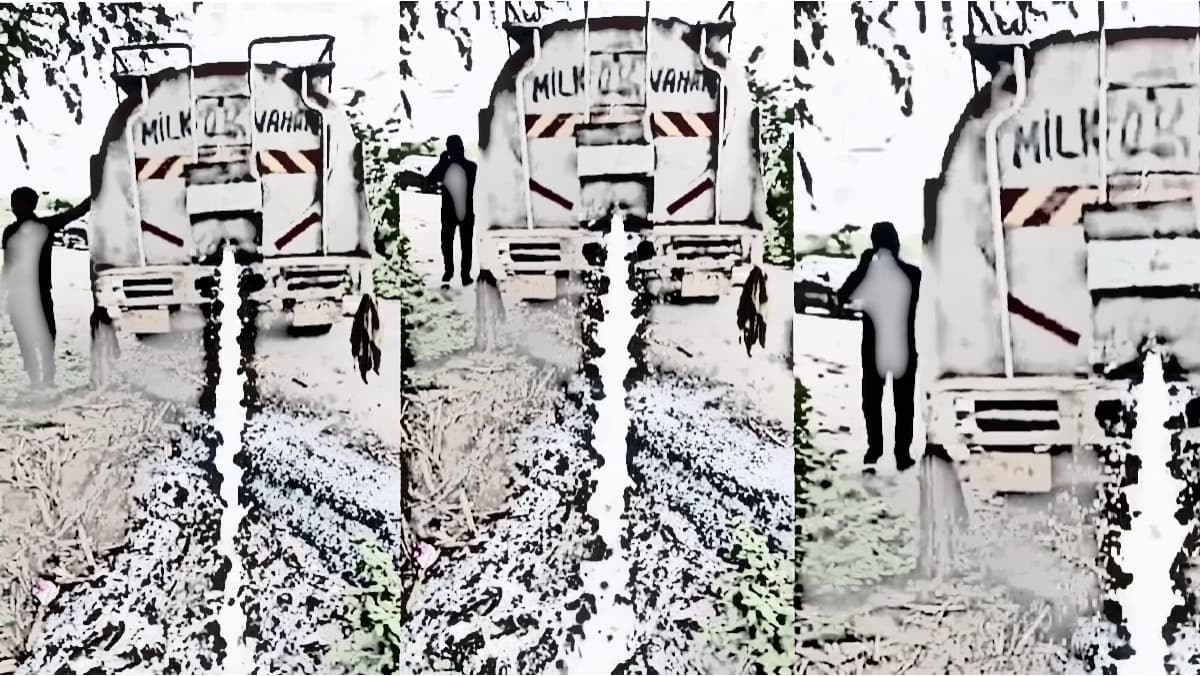
The recent deaths of these two children should have shaken our food safety system into immediate action. Yes , there was action. Tankers were stopped. Milk was drained. Raids were conducted. A racket was exposed. Everything being  hailed as a big win. But in truth, it was too late. Corrective action makes headlines. Preventive action saves lives. India’s dairy sector found itself in the crosshairs again.

While dairy products are occasionally implicated in food-borne outbreaks, data doesn’t support the claim that they are the primary culprits. Still, each such tragedy prompts sections of media and social media to hastily condemn Indian milk. In doing so, the real issues get buried, and the livelihoods of over 70 million dairy farmers, many of them women, come under threat.

We’ve seen how other countries responded differently. China’s infamous melamine milk crisis in 2008 led to six infant deaths and over 300,000 children falling sick. The Chinese government didn’t hesitate—it cracked down with over 2,000 arrests, factory closures, and even death penalties. That tragedy prompted sweeping reforms in food safety protocols.

Closer to the corporate world, there’s the haunting example of the Ford Pinto case—where a known design flaw in the car's fuel system led to fatal crashes. Internal memos revealed that the company chose to pay damages for deaths rather than fix the defect—because the cost of a human life, on paper, was cheaper than a recall.

Is our food system drifting down the same path?

India’s food safety enforcement suffers from a chronic shortage of capacity. A single Food Safety Officer (FSO) is often responsible for monitoring nearly 50,000 or more food business operators in a district. The infrastructure is thin. Labs are under-equipped. Officers lack vehicles for field checks. Even if a case is detected, the process drags on. Experts now recommend that Sub-Divisional Magistrates (SDMs) be once again empowered as adjudicating officers to expedite legal actions.

These are not abstract policy suggestions. They are urgent necessities. Because time, in food safety, can cost lives.

The Food Safety and Standards Authority of India (FSSAI) is meant to be our watchdog. Yet, too often, it behaves like a sleepy bystander—issuing advisories, forming committees, and moving on. Enforcement should mean more than paperwork. It should mean presence, accountability, and most of all, prevention.

This is not an article against the system. It’s a quiet call from a place of pain. A plea. If the deaths of children don't move us to act faster, what will?

Food safety cannot remain a distant regulatory checklist. It has to become a national priority, rooted in compassion, vigilance, and a shared responsibility. Because the question is no longer just about who mixed the poison—it’s about who looked away when it reached a child’s lips.

Source : A blog by Kuldeep Sharma Chief Editor Dairynews7x7 July 16th 2025

Swipe to continue reading

Previous Article

Next Article