Latest Blogs
See More

Indian Dairy News


DairyNews7x7
Global Dairy News


DairyNews7x7

Religion and politics cannot be allowed to mix, the Supreme Court said Monday while hearing three petitions over allegations that animal fat was found in the ghee used to make the laddoos, or devotional offerings, 'fed' to the deity and given to devotees at Andhra Pradesh's Tirupati temple.
In a series of pointed questions and sharp observations, the top court underlined the lack of definitive proof of contamination of ghee or, if it was indeed contaminated, that the affected ghee was used to make the laddoos. The court also pointed to an ongoing inquiry and a "false positive" testing caveat.
Let me deep dive into the compliance part for maintaining highest level of integrity of food products. Let us begin by going back in history to watch the chronological evidence of ghee adulteration.
Around five years back, FSSAI conducted a comprehensive surveillance of milk products to ensure their quality and safety in and around Delhi. This pilot-scale operation, carried out between 15th October and 7th November 2019, coincided with the festival season, a period notorious for food adulteration. For the first time, the surveillance extended its focus to microbiological parameters, including process hygiene and pathogen detection.
A total of 1,041 samples, comprising khoya, paneer, ghee, and milk-based sweets such as khoya burfi, chenna, and chenna rasgulla, were tested at the National Food Laboratory in Ghaziabad. The findings revealed widespread microbiological contamination and substitution of milk fat with vegetable or hydrogenated fat. In particular, the testing of ghee samples showed significant adulteration, especially in loose ghee, where vegetable fat was frequently used as a substitute.
This effort was part of a broader, nationwide crackdown by the regulator, targeting establishments involved in producing and selling spurious food products. These raids and surveillance activities underscore the regulator's commitment to curbing adulteration and ensuring the safety of food products for consumers.
| Parameters | Weightage | |
| 2020-21 | 2023-24 | |
| Human resource and institutional data | 20% | 9% |
| Compliance | 30% | 28% |
| Food-testing-infrastructure and survielance | 20% | 36% |
| Training and capacity Building | 10% | 8% |
| Consumer empowerment | 20% | 9% |
| Improvement in rank of states/Uts | 10% | |
| Total | 100% | 100% |
Amongst the key parameters, weightage for Consumer empowerment got reduced from 20% to 9%. This section is very critical from developing a safe food eco system in the country. This parameter measures the performance of States/ UTs in various consumer empowering initiatives of FSSAI like participation in Food Fortification, Eat Right Campus, BHOG (Blissful Hygienic Offering to God), Hygiene Rating of Restaurants, Clean Street Food Hubs, etc. State initiated activities for creating consumer awareness are also considered.
Let me bring your attention to BHOG (Blissful Hygienic Offering to God). BHOG was introduced by Sh Pawan Agarwal CEO FSSAI. Bhog initiative aimed to improve hygiene and sanitation standards of places of worship. This initiative certifies places of worship based on pre-defined benchmarks as per Schedule 4 requirements of the Food Safety and Standards (FSS) Act, 2006.
BHOG is deeply personal to me. Inspired by the unwavering support of Pawan Agarwal Ji and the blessings of the Almighty, I had the privilege of coining this term. It holds a special place in my heart.
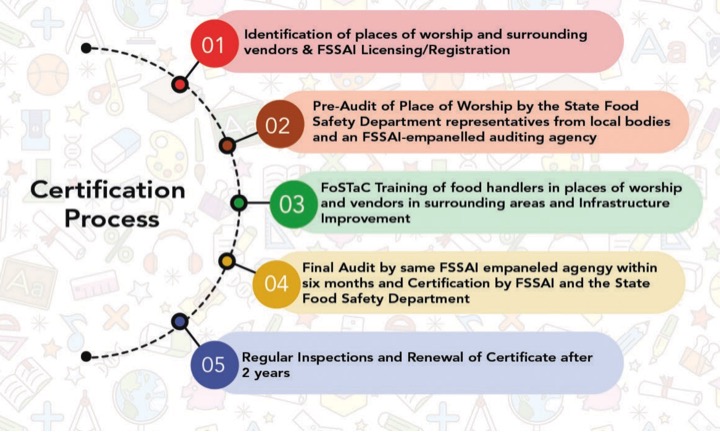
While the increased emphasis on food testing infrastructure and surveillance at the state level appears commendable, if it comes at the expense of consumer empowerment, this approach demands reconsideration. The recent incident at Tirupati is a glaring example, where the fundamental step of evaluating and approving suppliers on their Food Safety Management Systems (FSMS) was overlooked before allowing them to participate in the tender process. Such oversights undermine the core objective of ensuring public safety and trust.
In 2019, the IS 17678 method, endorsed by the International Dairy Federation (IDF), gained traction in research circles for verifying milk fat purity by analyzing triglycerides associated with fatty acid chains. While this method had limitations, continuous efforts by Indian experts led to the development of a five-equation model that helped identify potential adulterants in ghee. However, it is necessary to use this method in conjunction with the fatty acid profile and the plant oil marker for comprehensive analysis.
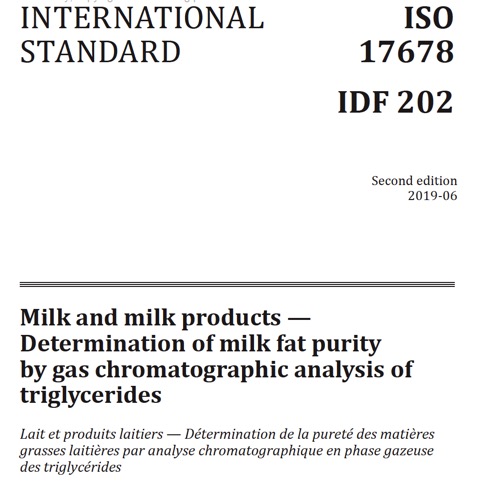
This approach mainly indicates potential adulterants, and further investigation is required to confirm the presence of non-plant fats such as lard, fish oil, or beef tallow. Identifying these adulterants demands advanced testing facilities and a specialised team to establish precise identification norms. Without thorough validation, it would be neither wise nor scientifically sound to claim the presence of such non-plant fats in ghee. FSSAI need to work closely with BIS to standardize the IS 17678 2019 method and approving it for testing adulteration in ghee.
Let us look below at some of the global initiatives in curbing Food frauds incidents.
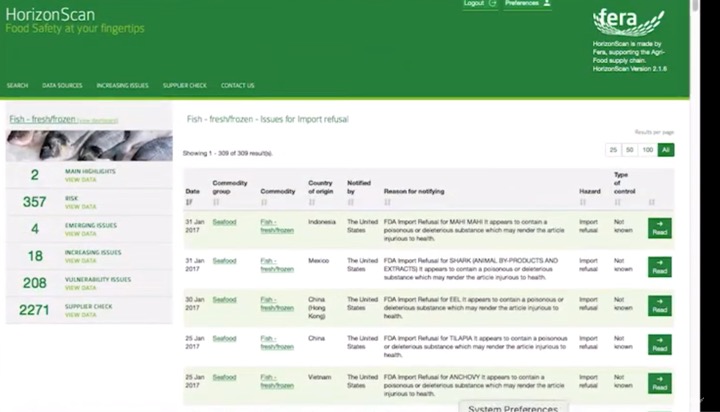
With 24/7 access to real-time and historical data, Horizon Scan allows for long-term trend analysis and helps stay ahead of emerging issues. It supports vulnerability assessments for BRC, addressing food fraud through adulteration, substitution, and more. Ideal for supply chain managers, it simplifies investigations and quickly alerts users to critical issues.
Its high time for Indian regulator to create such platform for Indian Food supply chain. This may be done by collating the data of surveillance and failure of samples in enforcement at one platform with food category as well as location with the category of non-compliance. Dairy products are most vulnerable to Food frauds and in last one year there has been surge of around 12.5% in food frauds in dairy as per Horizon scan globally with microbiological hazards leading the list.
It allows authorities to track unsafe food and feed products, issue warnings, and take action to prevent contaminated or adulterated items from reaching consumers. RASFF operates by collecting data on potential risks such as chemical, biological, and physical hazards in food supply chains.
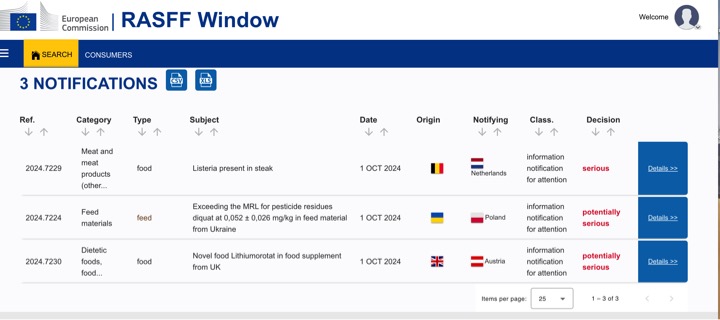
For India, where food adulteration is a significant issue, adopting a similar system could enhance food safety regulation. With high levels of contamination in products like milk, ghee, and spices, a rapid alert mechanism would enable swift action, improve surveillance, and help ensure compliance with safety standards. It would also strengthen India’s ability to control adulteration by monitoring supply chains, thereby protecting consumer health and supporting regulatory efforts.