When Fertiliser Disrupts the Milk Curve: Between Assurances and Emerging Reality
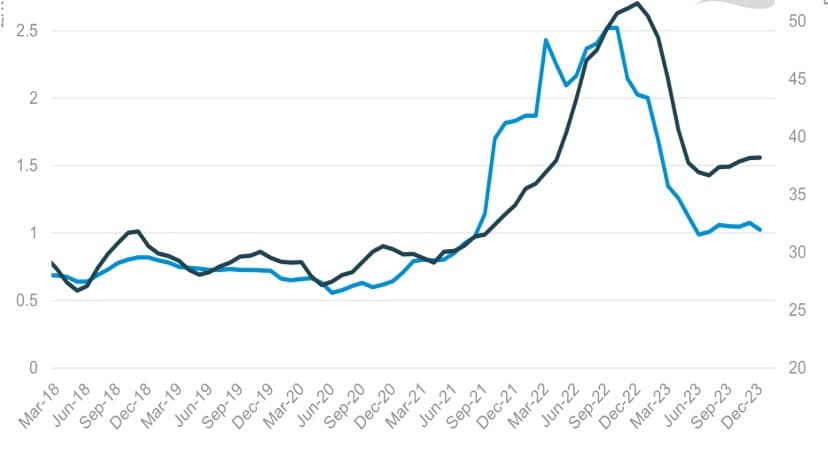
India’s next milk price shock has already begun.
And it is not in dairy—it is in fertiliser.
A recent report by Mongabay India, authored by Kundan Pandey, flags a structural vulnerability that India has long carried but is now being stress-tested under geopolitical pressure. The ongoing tensions in West Asia, particularly around critical energy routes like the Strait of Hormuz, are raising concerns over India’s dependence on imported LNG and fertilisers—both essential for urea production. This is not merely a supply issue. It is the beginning of a chain reaction that quietly moves from ports to pipelines to farms—and eventually to milk prices.
Yet, almost in parallel, the official narrative presents a very different picture. Government statements across multiple media platforms have consistently maintained that the situation is “under control.” According to briefings reported in the media, India currently holds over 61 lakh metric tonnes of urea, with supplies secured in advance and domestic production ramped up significantly. Government representatives have emphasised that stocks are “adequate” and that the country is “comfortable” going into the Kharif season. Even at the policy level, assurances have been strong, with Nirmala Sitharaman reiterating that fertiliser subsidy support will remain intact despite global volatility. Official communication also highlights increased gas allocation to fertiliser plants and a ~23% rise in domestic urea production, aimed at insulating the system from external shocks.
The government is not wrong.
But that is exactly where the risk begins.
Because the real story lies in the gap between stock sufficiency today and flow assurance tomorrow.
Even within these reassuring signals, there are subtle indicators of emerging stress. Industry commentary and media reports acknowledge that current availability is largely secured till May, after which fresh imports will be critical—precisely when Kharif demand peaks. Voices from the sector, including experts like Naresh Deshmukh, have pointed out that while prices may be cushioned through subsidies, availability and sourcing risks cannot be insulated indefinitely. Agriculture does not operate on annual averages—it operates on timing. And the moment timing becomes uncertain, behaviour begins to change.
Dealers become cautious. Farmers delay purchases. Application rates are adjusted—not dramatically, but just enough.
Even a 10–15% reduction in urea usage is enough to trigger:
- 10–18% drop in maize yields
- 12–20% drop in fodder output
These are not projections. These are agronomic realities.
And this year, fertiliser is only one part of the equation.
Overlay this with emerging weather signals, and the risk compounds sharply. Agencies such as the World Meteorological Organization and the India Meteorological Department are indicating a rising probability of an El Niño phase. Private forecasters are pointing towards a meaningful risk of below-normal rainfall. El Niño years in India are rarely neutral—they bring lower rainfall, higher temperatures, and extended dry spells. More importantly, they reduce fertiliser efficiency itself.
So the system faces a double hit:
- Less fertiliser applied
- Lower effectiveness of whatever is applied
This is where the feed equation begins to shift—quietly but decisively.
Maize, the backbone of cattle feed, becomes the first point of stress. A combined fertiliser and weather shock can reduce output by 10–18%. Historically:
A 10% drop in maize output → 15–20% increase in prices
A stressed year → up to 25% spike
Fodder markets, being local and fragmented, react even more sharply.
Net result: Feed cost inflation of 18–25% within 3–5 months.
And this lag is what creates the illusion of stability in the dairy sector.
Because by the time feed prices begin to rise, the fertiliser story has already played out months earlier. Feed constitutes nearly 65–70% of the cost of milk production.
So a 20% increase in feed cost → 12–14% increase in milk production cost.
But milk prices do not adjust immediately.
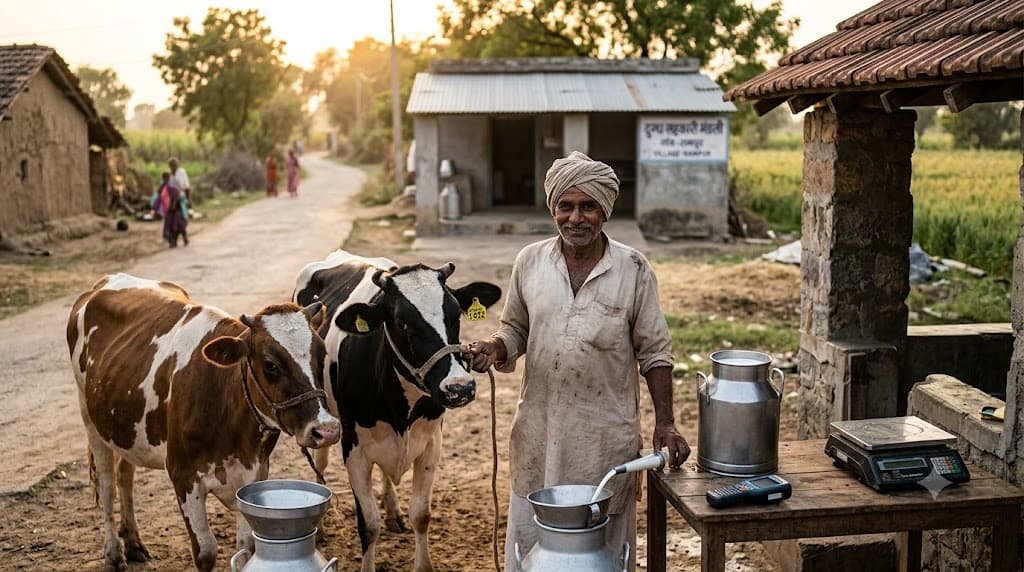
Farmers absorb the shock first. Feed quality is diluted. Concentrate usage is reduced. Under heat stress conditions, milk yield drops by 5–8%. Fat percentages decline. Productivity weakens.
Supply tightens silently—before any visible price movement.
And then comes the correction.
Under a moderate stress scenario, milk prices are likely to increase by ₹3–4 per litre. If fertiliser constraints persist alongside a weak monsoon, this could extend to ₹5–7 per litre. In a more extreme scenario—where geopolitical disruption prolongs and weather turns adverse—the increase could reach ₹8–10 per litre.
At this stage, it is important to pause and recognise the central tension.
The government is right in saying “stocks are adequate.”
The market is right in sensing “risk is building.”
Because adequacy is a snapshot.
Agriculture is a flow.
Stocks do not guarantee timely access. Supply does not guarantee optimal usage. And policy assurance does not guarantee farmer behaviour.
That is where the system becomes fragile.
For decades, India’s dairy sector operated with a degree of insulation from global volatility. That insulation is now weakening. What is emerging is a new transmission chain:
Geopolitics → Energy → Fertiliser → Feed → Milk
And this chain does not wait for confirmation. It begins reacting early—through perception, behaviour, and local decisions on the ground.
This is not a shortage story.
This is a timing story.
And in agriculture, timing failures do not show up immediately.
They show up later—as price shocks.
Sorurce : An article by Kuldeep Sharma Chief editor Dairynews7x7 Mar 30th 2026