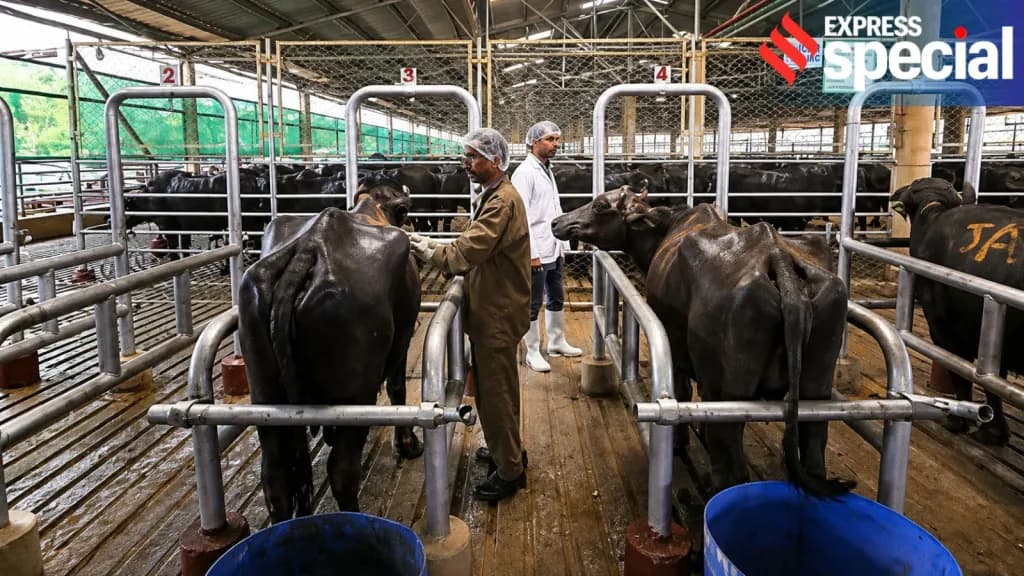
Precision animal nutrition represents a significant stride towards sustainable dairying practices. By tailoring diets to the specific needs of livestock based on their genetic makeup, age, health, and productivity levels, this approach, not only optimises animal health, and growth but also minimises waste and environmental impact. Let’s explore the potential of precision animal nutrition to revolutionise farming sustainably.
Understanding precision animal nutrition
The dairy sector faces the dual challenge of increasing milk production to fulfil societal demands, while, minimising its environmental footprint. Precision animal nutrition emerges as a crucial strategy in addressing these challenges. Precision animal nutrition, involves supplying livestock with the exact amount of nutrients they require, avoiding excess. Over the past two decades, there has been a significant shift towards reducing nitrogen (N) and phosphorus (P) content in animal diets. Notably, herds in New York have reduced dietary N by 10.8 per cent from 1999 to 2019. Concurrently, milk output per cow surged by 40 per cent, and total nitrogen excretion in manure dropped by 8.1 per cent.
Benefits to animal health and welfare
Precision feeding and nutrition, significantly enhances animal health and welfare in the
dairy industry, by delivering diets tailored to the specific needs of individual cows or herds. This approach utilises advanced technologies and detailed monitoring, to ensure that each animal receives the optimal mix of nutrients required for its health and productivity. One of the main benefits of precision feeding is improved nutrient efficiency, which reduces waste and environmental impact. The technology involved in precision feeding also enables continuous monitoring of health indicators such as weight, milk composition, and feeding behavior. This real-time data collection supports proactive health management, allowing for immediate adjustments to diets.
Reducing methane emissions
Methane emissions from livestock, particularly ruminants like cows and buffaloes, are a major contributor to
greenhouse gases. Precision animal nutrition, offers a promising solution to reduce these emissions. By fine-tuning livestock diets based on their specific digestive and metabolic needs, it is possible to lower methane production during digestion. For example, introducing certain fats or oils can help reduce methane emissions by up to 6 per cent, by partially inhibiting the methanogenesis process in the rumen. Additionally, dietary additives like nitrates or certain plant extracts have been shown to decrease methane emissions by altering the fermentation process in the stomach.
Precision animal nutrition, also plays a crucial role in managing toxins in livestock diets. By accurately formulating feeds and monitoring nutrient intake, this approach, ensures that animals are not exposed to harmful levels of naturally occurring feed toxins, such as mycotoxins, which can affect animal health and productivity. Advanced feed technologies, can detect and control the presence of these toxins, ensuring feeds are safe and beneficial.
Role of technology
Technology plays a pivotal role in precision feeding, optimising dairy farm nutrition and feeding practices to enhance animal health and productivity. Notable technologies include:
1. Milk yield and Electrical conductivity: This technology focuses on maintaining consistency in milk yield and components. It identifies nutritional and metabolic imbalances, but, may miss subtle changes that signal health issues.
2. Walking activity: Studies have shown that dairy cows with high levels of non-esterified fatty acids (NEFA), tend to be less active. This reduced activity, correlates negatively with elevated plasma NEFA levels in postpartum cows, indicating potential health concerns.
3. Feeding behaviour and intake: Changes in dry matter intake and behaviour before calving, can indicate dystocia. Cows with dystocia often consume less and show altered behaviours up to two weeks before calving, helping to identify those at risk for conditions like fatty liver or ketosis.
4. Milk fat percentage: Online monitoring of milk fat levels can diagnose rumen acidosis, influenced by diet composition and the presence of unsaturated fatty acids in the feed.
5. Body condition score (BCS): BCS is crucial for managing energy balance over the long term, reflecting changes in body fat reserves slowly, and is associated with milk production, reproduction, and overall health.
6. Rumen pH: Monitoring rumen pH helps manage subclinical rumen acidosis (SARA), a common metabolic issue. This parameter is crucial for guiding optimal rumen fermentation, thereby affecting production and health variably across individual cows.
These technologies collectively help in fine-tuning feeding strategies, detecting early signs of health issues, and enhancing overall dairy management.