Latest Blogs
See More
Indian Dairy News
DairyNews7x7
Global Dairy News


DairyNews7x7
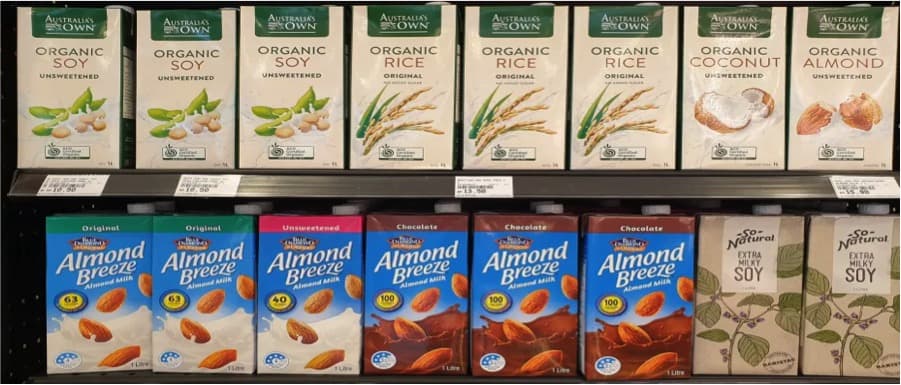
Today (Monday, August 22) is World Plant Milk Day, an international day created by Robbie Lockie in 2017 that celebrates the many vegan alternatives to dairy milk.
A decade ago, you’d have probably struggled to find soy milk in the supermarket, but there has been a staggering boom in easily accessible alternatives in recent years.
This can largely be attributed to the rise in veganism. Around 623,000 people signed up for Veganuary this year, up from 500,000 in 2021. As each day passes, more and more people are waking up to the ethical and environmental costs of the food they’d never previously given a second thought to.
For many vegans, there will be one particular moment that comes to mind regarding the catalyst that made them make the transition. It may have been a photo, social media post, film, or conversation. It will have likely caused huge upset and uprooted everything they thought they knew about their food.
This moment will probably have been about dairy.
While everyone’s aware that meat comes from dead animals (and even the most carnivorous among us would have a hard time making the moral case for factory farms and slaughterhouses), society tends to see dairy farms through rose-tinted glasses.
Growing up, many of us read wholesome stories about caring farmers lovingly milking their animals. After all, milk comes from cows naturally, doesn’t it? And aren’t we doing them a favor by relieving them of it?
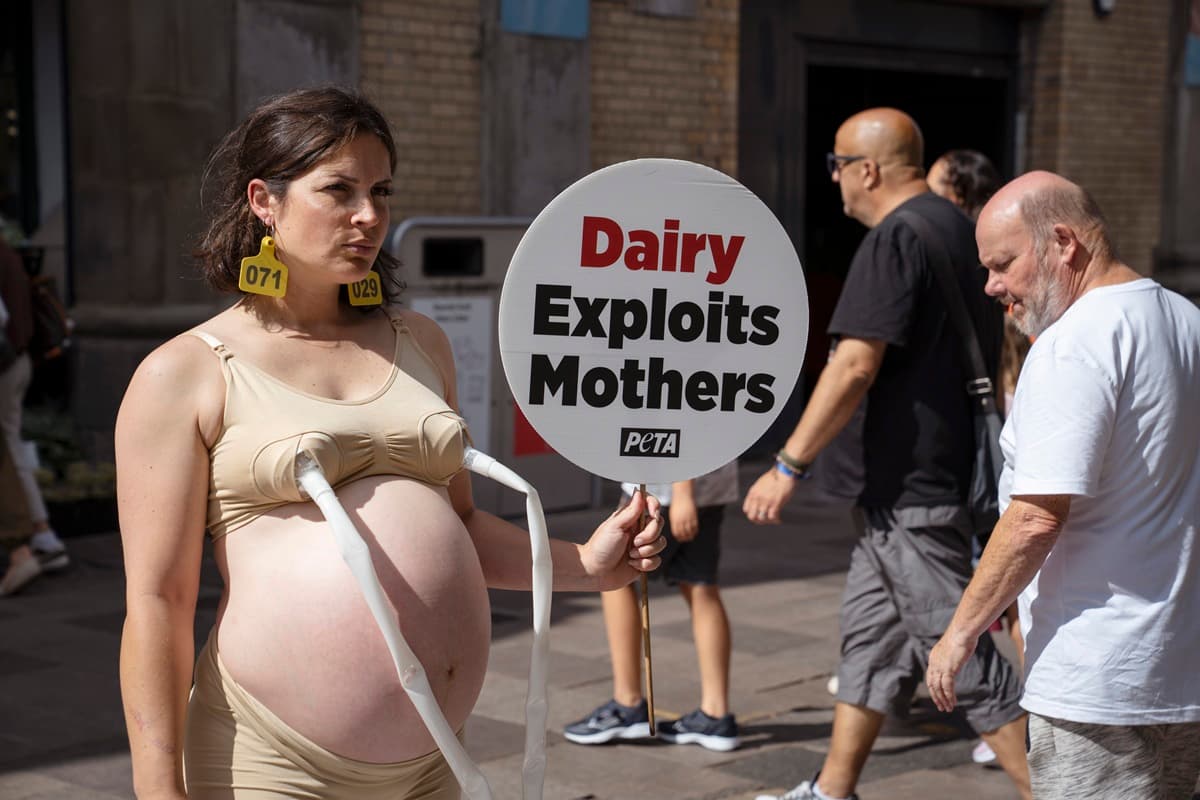
What we’re told about dairy is a lie. It’s true that cows need to be milked, but only because of what we do to them. Milk, after all, only comes from mothers.

A cow’s calf is generally taken from her hours after birth. But mother cows form powerful attachments to their babies, just like humans do. Being separated from their young is hugely traumatic, and they will often cry out and bellow for them for days after they’re gone.
The calves are often kept in small, barren crates on their own for around two months and fed a milk replacer. The female calves will then eventually suffer the same fate as their mothers, while males will either enter the veal market (which is small in the UK) or the beef industry.
For many people, dairy farming brings up picturesque views of cows in fields. It’s true that UK dairy cows are generally allowed to graze on pasture in spring and summer, but they are stuck indoors for the other six months of the year. When inside, they are often kept in concrete cubicles separated by metal bars. The housing will often be cramped and barren, offering them no chance at all to engage in natural behaviors.
More intensive styles of dairy farming are also becoming more prevalent in the UK. Around 20 percent of dairy cows are now being housed in “zero-grazing” units, in which they’re kept permanently indoors. These factory farms can house thousands of animals at a time, who will often spend their entire lives in cramped, dark, and filthy conditions.
Due to the environment in which they’re kept, and the fact they’re forced to stand on hard floors for long periods, cows will often become lame. Lameness also arises because of malnourishment, improper trimming of their hooves, infections, and poor quality of facilities.

A 2022 Animal Equality investigation into Madox Farm in South Wales, for example, found that workers were kicking and punching cows in the face and stomach and hitting them with metal shovels. Milk from this farm was supplied to Freshways, and distributed to businesses like Costa Coffee, British Airways, Londis, and Budgens.
In 2018, the same organization filmed baby calves being thrown, slapped, and force-fed at an organic farm in Somerset. Other calves were denied access to water for up to 29 hours on some of the hottest days of the year. This farm was RSPCA Assured and supplied to Waitrose.
After their bodies tire, dairy cows are considered spent by the industry. Cows can naturally live for around 25 years but they will generally be slaughtered at the age of six in the dairy industry.
When they arrive at the slaughterhouse, cows are (in theory) rendered unconscious by being stunned with a captive bolt pistol. But this is often done improperly.
The animals are forced into the stun box, but they often exhibit signs of terror by flailing around and trying to escape. This means it can be difficult for workers to apply the bolt in the right place. Because of this, cows are often alive when they’re strung up and killed by a cut to the throat.
In terms of land use, fresh water use, and greenhouse gas emissions, dairy is by far the most impactful milk on the market. (Even worse than almond milk, which often gets bad press for its water usage.)
Per liter of milk, dairy uses 8.95m2 of land (the second highest, oat milk, uses 0.76m2). A liter of dairy also requires 628.2 liters of freshwater (the second highest, almond milk, requires 371.46 liters). That same liter of dairy also emits 3.15kg of greenhouse gasses (the second highest, rice milk, emits 1.18kg).
The 13 largest dairy companies emit as many greenhouse gasses as the whole of the UK. Farmed cows are responsible for around a third of human-produced methane emissions, which they emit through their belches.
Methane is a harmful greenhouse gas. In fact, experts predict it is around 80 times more potent than carbon when released into the atmosphere. It does, however, have a much shorter half-life, persisting for around a decade before degrading into CO2. This means that reducing methane could buy us more time to tackle carbon emissions.
As Inger Anderson, executive director of the United Nations Environmental Programme (UNEP), said: “Cutting methane is the strongest lever we have to slow climate change over the next 25 years and complements necessary efforts to reduce carbon dioxide.”
A 2021 UN report stated that countries need to make “strong, rapid, and sustained reductions” in methane and that “cutting methane is the single biggest and fastest strategy for slowing down global warming.”
In 2015, 497 million metric tons of cow’s milk was produced worldwide. That figure rose to 544 million metric tons in 2021.
The dairy market was valued at 827.4 billion U.S. dollars in 2020, and has been projected to grow to about 1128 billion U.S. dollars by 2026.
But it’s not all bad news. One study from May of this year found that nearly half of Generation Z feel shame around ordering dairy products, and it was reported in 2021 that one in three Brits drink plant-based milk.
Plant-based milk generated global retail value sales of amongst $18 billion dollars in 2021, and the market is predicted to be valued at $42.86 billion by 2029. In addition, a growing number of start-up food tech companies are working on lab grown dairy, which researchers have dubbed the “future of milk.”