


Logo
IndianGlobalBlogsPublicationsPodcastsMarketAboutContact
Logo
IndianGlobalBlogsPublicationsPodcasts
7News
Godrej to Invest ₹150 Crore to Expand Dairy Plant in TelanganaNDDB, Banas Dairy & Suzuki Partner on Big Biogas Push in GujaratDairy giants rush to recall infant formula after contamination scareInside the World’s Giant 230,000 Cow Mega Farm in ChinaIndia’s First Camel Milk Plant Boosts Niche Dairy Growth

Indian Dairy News

Godrej to Invest ₹150 Crore to Expand Dairy Plant in Telangana
Jan 23, 2026

Godrej to Invest ₹150 Crore to Expand Dairy Plant in Telangana

The Godrej Group has announced a ₹150 crore investment to expand its dairy processing operations in Hyderabad, a major move aimed at strengthening its presence in southern India’s dairy sector and mee...Read More

NDDB, Banas Dairy & Suzuki Partner on Big Biogas Push in Gujarat
Jan 23, 2026

NDDB, Banas Dairy & Suzuki Partner on Big Biogas Push in Gujarat

A tripartite agreement has been signed between the National Dairy Development Board (NDDB), Banas Milk Union (Banas Dairy) and Suzuki Research & Development Institute India (SRDI) to set up a 75 MTPD...Read More

India’s First Camel Milk Plant Boosts Niche Dairy Growth
Jan 22, 2026

India’s First Camel Milk Plant Boosts Niche Dairy Growth

Sarhad Dairy — the Kutch District Cooperative Milk Producers’ Union Ltd. — has further strengthened India’s dairy landscape with its camel milk processing initiative, operating the country’s first cam...Read More

DairyNews7x7
Advertisement

Latest Blogs

See More
Two Stocks Powering India's Rs 1-Lakh-Crore Protein Boom
Jan 21, 2026

Two Stocks Powering India's Rs 1-Lakh-Crore Protein Boom

Protein consumption in India is moving beyond supplements and fitness products into daily food choices. Awareness around nutrition has increased, but intake remains uneven. Parag Milk Foods Ltd. estim...Read More

5 Year Budget Plan to Make Indian Dairy Global Leader in 2047
Jan 15, 2026

5 Year Budget Plan to Make Indian Dairy Global Leader in 2047

I recently moderated a key session on India Dairy Vision 2047 at the TPCI's International Dairy Processing Conference 2026, gaining valuable insights from panellists. This led to me developing policy...Read More

From Forecast to Fact: 2025 Lessons, 2026 Dairy Outlook
Jan 01, 2026

From Forecast to Fact: 2025 Lessons, 2026 Dairy Outlook

As we step into 2026, it is worth pausing to reflect on how the Indian dairy sector navigated the challenges of 2025 and how closely reality tracked the forecasts I outlined in the first blog of last...Read More

India–NZ Dairy FTA: Safeguards or Silent Slippages?
Dec 26, 2025

India–NZ Dairy FTA: Safeguards or Silent Slippages?

The recently concluded India–New Zealand Free Trade Agreement (FTA) marks an important milestone in bilateral trade, while carefully ring-fencing India’s sensitive dairy sector. Under the agreement, c...Read More

Global Dairy News

Dairy giants rush to recall infant formula after contamination scare
Jan 23, 2026

Dairy giants rush to recall infant formula after contamination scare

Three of the world's largest dairy companies are recalling and blocking batches of infant milk formula after a contamination scare that began with Nestle  widened on Wednesday to French groups Danone...Read More

Inside the World’s Giant 230,000 Cow Mega Farm in China
Jan 22, 2026

Inside the World’s Giant 230,000 Cow Mega Farm in China

One of the world’s largest concentrated dairy operations — **China Modern Dairy’s mega farm in Anhui Province, China — houses more than 230,000 dairy cows under a single industrial system, making it o...Read More

GDT 396: Dairy Prices Rally Again After Nine Drops
Jan 20, 2026

GDT 396: Dairy Prices Rally Again After Nine Drops

The 396th Global Dairy Trade (GDT) auction — the second dairy trading event of 2026 — delivered a second consecutive rise in global dairy prices, with the GDT Price Index increasing by 1.5 % to 1,088...Read More

DairyNews7x7
Advertisement
Dairy News 7x7

Your trusted source for all the latest dairy industry news, market insights, and trending topics.

FOLLOW US
CATEGORIES
  • Global News
  • Indian News
  • Blogs
  • Publications
  • Podcasts
SUBSCRIBE TO OUR NEWSLETTER

Stay informed with the latest updates and trending news in the dairy industry.

No spam, unsubscribe at any time

GET IN TOUCH
C-49, C Block, Sector 65,
Noida, UP 201307
+91 7827405029dairynews7x7@gmail.com

© 2026 Dairy News 7x7. All Rights Reserved.

Terms of ServicePrivacy Policy

The Lab-Made Dairy Dilemma in India’s BioE3 Policy

By Kuldeep Sharma•Published on September 16, 2024

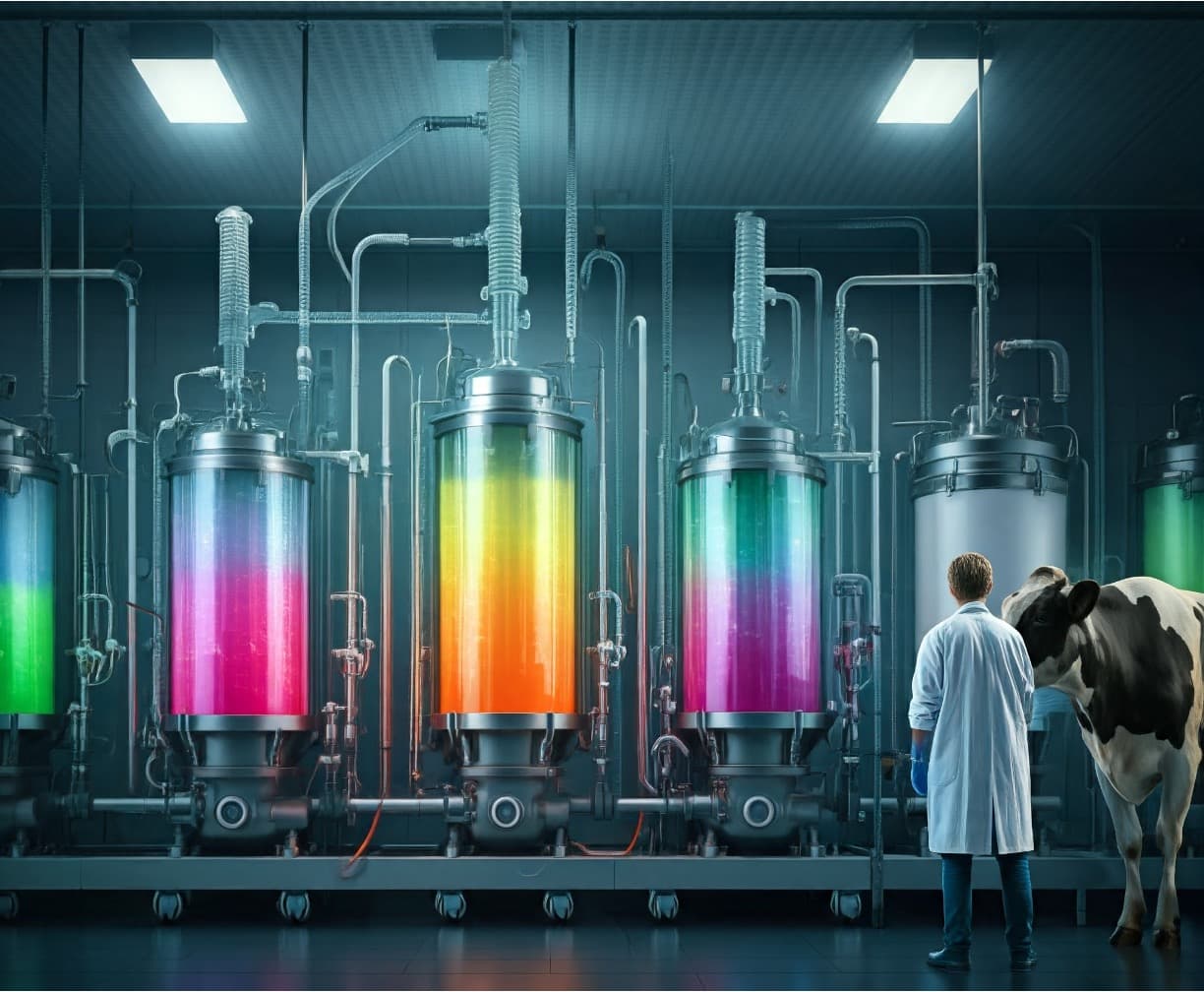
The BioE3 policy, launched by the Indian government in August 2024, emphasizes promoting biomanufacturing across various sectors, including smart proteins and functional foods, such as lab-made dairy products. The policy focuses on advancing a circular bioeconomy, boosting India's biotechnology capabilities, and supporting green growth. Lab-made dairy is positioned as part of the alternative proteins sector, potentially addressing critical global issues like food security, climate change, and sustainable agriculture.

However, the inclusion of lab-made dairy in the BioE3 policy raises significant concerns, particularly for India's traditional dairy farming sector. India is home to approximately 8 crore dairy farmers, many of whom rely heavily on traditional milk production for their livelihoods. The introduction of lab-made milk could disrupt the demand for natural milk, leading to a decrease in income for these farmers. Furthermore, the shift to lab-grown milk may undermine India's efforts to build a sustainable dairy ecosystem, which supports rural economies, biodiversity, and soil health.

Consumer perception

Another challenge involves market competition. Lab-made milk, which could potentially be produced at lower costs, might threaten traditional milk markets by affecting prices and overall market dynamics. Small-scale farmers, who form the backbone of India’s dairy industry, could be particularly disadvantaged in such a scenario.

From a consumer perspective, lab-made milk faces skepticism, especially among those who view these products as "unnatural." Health concerns, as well as differences in taste and pricing, are also barriers to widespread acceptance. In India, where consumers place significant value on fresh, locally sourced milk, lab-made dairy may face mixed demand, further complicating its integration into the broader dairy sector.

Nutritional value

When examining the nutritional value of lab-made dairy, the results are still evolving. Companies like Perfect Day claim that their lab-grown milk proteins are nutritionally equivalent to those in cow's milk. However, some research challenges this assertion. For instance, tests on products like Bored Cow's lab-made milk revealed differences in the amino acid composition compared to natural milk. Researchers also discovered 92 unknown compounds in lab-produced proteins, raising concerns about their nutritional impact and safety. The production process, though referred to as "precision fermentation," has introduced various unexpected byproducts, making the nutritional profile less predictable​

Lab-made dairy proteins also face challenges related to genetically modified organisms (GMO). In some cases, GMO-derived yeast used in the fermentation process leaves behind traces of genetically modified DNA, further complicating the safety profile of these products. Long-term health impacts of lab-grown proteins have yet to be comprehensively studied.

On a positive note, innovations in lab-made dairy, such as the use of exosomes (derived from human breast milk), show promise in enhancing immune function and reducing inflammation. Such advancements could lead to more personalized and nutritionally enhanced dairy products, particularly for specialized diets​.

In conclusion, while lab-made dairy aligns with global trends in sustainable food production, its integration into India’s dairy sector needs careful consideration. The BioE3 policy promotes these innovations, but the government must balance this with the protection of small-scale farmers, who are critical to the country's rural economy. A long-term strategy is essential to ensure that innovation does not come at the cost of farmers' livelihoods and cultural preferences.

Swipe to continue reading

Previous Article

Next Article