Logo
IndianGlobalBlogsPublicationsPodcastsMarketAboutContact
Logo
IndianGlobalBlogsPublicationsPodcasts
7News
Mandatory Daily Record of Production and Raw Material UtilisationHeritage Foods inaugurates new Ice Cream PlantFSSAI makes registration to all milk vendors in IndiaGujarat Ice Cream Makers Face Cone ShortageSummer Heat to Stress India’s Dairy Cold Chain

Indian Dairy News

Britannia Bets Big on Dairy and Croissants
Mar 15, 2026

Britannia Bets Big on Dairy and Croissants

Food major Britannia Industries is accelerating its diversification strategy beyond biscuits by expanding into high-growth segments such as dairy, croissants, cakes, wafers and rusk, as it aims to bec...Read More

Uttarakhand Milk Production Rises 3%
Mar 15, 2026

Uttarakhand Milk Production Rises 3%

Milk production in Uttarakhand has increased by 3.1%, reaching 1,957.2 thousand tonnes in FY 2025-26, up from 1,897.8 thousand tonnes in FY 2024-25, according to Dairy Development Minister Saurabh Bah...Read More

FSSAI Licences Get Perpetual Validity
Mar 14, 2026

FSSAI Licences Get Perpetual Validity

India’s food regulator, the Food Safety and Standards Authority of India (FSSAI), has announced a major reform granting perpetual validity to food licences and registration certificates, eliminating t...Read More

DairyNews7x7
Advertisement

Latest Blogs

See More
When the World Feels Uncertain, Milk Still Brings Trust
Mar 15, 2026

When the World Feels Uncertain, Milk Still Brings Trust

Trust: The Next White Revolution The world today is passing through uncertain times. Wars are disrupting global trade routes, commodity markets are behaving unpredictably and regulators everywhere are...Read More

Mandatory Daily Record of Production and Raw Material Utilisation
Mar 14, 2026

Mandatory Daily Record of Production and Raw Material Utilisation

I recently reviewed the notification issued by the Food Safety and Standards Authority of India in the context of Schedule IV of the Food Safety and Standards (Licensing and Registration of Food Busin...Read More

FSSAI makes registration to all milk vendors in India
Mar 13, 2026

FSSAI makes registration to all milk vendors in India

The recent advisory issued by Food Safety and Standards Authority of India (FSSAI) mandating registration of milk vendors is a timely and progressive step towards strengthening traceability and accou...Read More

Rajahmundry Milk Incident: Accident or Adulteration?
Mar 10, 2026

Rajahmundry Milk Incident: Accident or Adulteration?

The recent editorial “Bitter Milk” published by The Hindu raises important concerns about food safety in India. The editorial deserves appreciation for attempting to broaden the conversation and under...Read More

Global Dairy News

Global Dairy Commodity Prices Show Signs of Rally
Mar 14, 2026

Global Dairy Commodity Prices Show Signs of Rally

Global dairy commodity prices have shown a rally in the first quarter of 2026, particularly for products originating from Australia and New Zealand, according to a new Q1 Global Dairy Quarterly report...Read More

How Walmart Keeps Great Value Milk So Affordable
Mar 14, 2026

How Walmart Keeps Great Value Milk So Affordable

Retail giant Walmart has managed to keep the price of its private-label Great Value milk significantly lower than many competing brands through a vertically integrated dairy supply chain and direct co...Read More

Lactose-Free Milk Seen as Growth Driver in Coffee
Mar 13, 2026

Lactose-Free Milk Seen as Growth Driver in Coffee

Lactose-free milk is emerging as a major growth opportunity for the dairy industry, particularly in the rapidly expanding coffee and café segment. A recent US-based study highlighted that lactose-free...Read More

DairyNews7x7
Advertisement
Dairy News 7x7

Your trusted source for all the latest dairy industry news, market insights, and trending topics.

FOLLOW US
CATEGORIES
  • Global News
  • Indian News
  • Blogs
  • Publications
  • Podcasts
SUBSCRIBE TO OUR NEWSLETTER

Stay informed with the latest updates and trending news in the dairy industry.

No spam, unsubscribe at any time

GET IN TOUCH
C-49, C Block, Sector 65,
Noida, UP 201307
+91 7827405029dairynews7x7@gmail.com

© 2026 Dairy News 7x7. All Rights Reserved.

Terms of ServicePrivacy Policy
Prefer Us
Prefer Us

Rise of Plant-Based Alternatives : Declining Milk Consumption

By DairyNews7x7•Published on December 24, 2024

Rise of Plant-Based Alternatives : Declining Milk Consumption
Prefer on

Milk, being an important constituent of our diet since birth, has now seen a diminishing demand in recent years. Although being a beverage power packed with essential nutrients that are important for development and maintaining health, milk has seen a decline in consumption worldwide.

Causes of Milk Decline

Milk sales, especially in the US, have steadily dropped since the 90s. Campaigns like "Got Milk," which were backed by popular celebrities at the time, were created to help boost the declining milk sales. From 1990 to 2000, the amount of milk consumed per person dropped from 195 ml to 170 ml. A decade later, milk consumption further decreased to 150 ml, and by 2019, it had reached an all-time low per capita consumption of 122.5 ml. There are also about 50 million lactose-intolerant Americans, 80 per cent of whom are African Americans or Native Americans. Because schools mainly supplied 2% low-fat or skimmed milk, which had relatively few takers, the US has also witnessed a major loss of Gen Z consumers.

Similar trends have been seen in India, where many households are moving away from drinking cow's milk. In India, almost 3% of households no longer drink milk. The well-known Indian dairy business Amul raised the cost of its Amul Gold and Taaza milk packets by Rs 2. 14% of people switched to locally supplied, unbranded milk as a result of this price increase, while 20% reduced the quantity of milk consumed.

China has also seen a significant shift in milk consumption. Milk production has increased to 42 million tons from 30.39 million tons in 2017. While production has seen a lot of growth, many Chinese citizens have lost faith in the dairy industry, especially milk, after the 2008 tainted Sanlu Company milk scandal, where melamine, a non-protein nitrogen, was discovered in baby formula in order to boost its protein levels. This milk crisis resulted in the death of 6 infants and kidney stones and urinary tract infections in 300,000 infants.

The problem was made much more difficult because, on average, China's birth rate dropped to 6.39 per 1,000 in 2023. Even after the 35-year-old one-child restriction was repealed in 2016, birth rates continued to decline. A surplus of 300,000 tons of milk was produced in 2023 due to these causes, which also caused the price of milk to drop to US$0.5 per kilogram. China's milk producers have begun turning fluid milk into milk powder in an effort to recover their investments and export to other nations due to the country's ageing population and low birth rate.

Leaders in milk consumption

Despite declining milk consumption, certain regions continue to lead in global milk consumption. The European Union (EU-27) tops the list with 140,400.00 thousand metric tons (MT), followed by India at 121,495.00 thousand MT. The United States comes in third with 88,768.00 thousand MT, while China consumes 31,774.00 thousand MT, placing it fourth. Russia and Brazil are next, with 31,405.00 thousand MT and 30,803.00 thousand MT, respectively.

New Zealand follows with 17,926.00 thousand MT, while Mexico consumes 11,261.00 thousand MT. Argentina and Ukraine round out the list, with milk consumption of 11,045.00 thousand MT and 10,793.00 thousand MT, respectively. India, however, remains the world's largest producer of milk, with an estimated production of 207.1 million metric tons in 2024. The European Union follows closely with 149.33 million metric tons, while the US produces 102.68 million metric tons.

Rise of Milk Alternatives

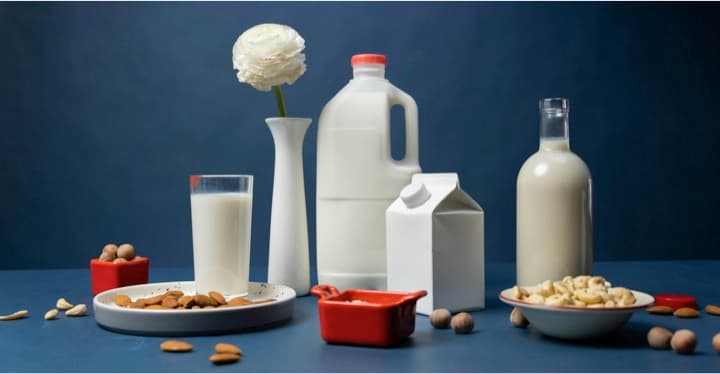
The decline in milk consumption has paved the way for milk alternatives to rise and meet the market's demand. Suitable substitutes such as oat, almond and soy milk have made great waves owing to the fact that 68% of the global population has lactose malabsorption. Milk alternatives, while being ethically sourced, also have a wide variety of textures ranging from nutty almond milk to creamy soy milk, thereby exemplifying the fact that milk alternatives can be relished by a wide demographic averse to the taste of dairy milk.

Customers are also searching more and more to lessen their carbon footprint. The World Health Organization estimates that 14.5% of greenhouse gas emissions worldwide are caused by livestock. According to a survey, one glass of plant-based milk generates three times fewer greenhouse gases than a glass of conventional milk, making it far less harmful to the environment. Additionally, soy milk helps with water conservation because it uses 64% less water than dairy milk. Due to these environmental advantages, plant-based milk is now able to offset the climate impact of dairy farming.

Additionally, although plant-based milk has been referred to as milk, the US, UK, India, and the European Union do not like this misconception since they have prohibited the use of the name "milk" unless it refers to a dairy product. According to a 2013 European Union law, milk cannot be used unless it is secreted from an animal. UK has followed suit with plant-based milk brand Oatly being forced to remove milk from its 2019 slogan "Post Milk generation", which UK courts contested that the word milk was misleading for traditional milk drinkers.

Moreover, as some plant-based drink companies were using the word "milk" to deceive customers, the FDA in the US has taken tough measures against them. Since then, companies such as Hershey's and Alt Co. have substituted the term "plant-based drink" for "milk" on their goods.

There has been significant progress in the shift from conventional milk to plant-based alternatives. Despite the fact that many customers are choosing dairy alternatives, research shows the majority of these options lack the nutritional benefits of dairy milk and frequently require additional nutrients. Despite this, there is an increasing demand for dairy alternatives as more consumers choose sustainable, ethical, and health-conscious options.

Stay Updated

Get the latest dairy industry news directly in your feed.

Prefer Us on Google Search

Swipe to continue reading

Previous Article

Next Article