Right to use the dairy terms may not be significant to the Vegan industry

The Indian Dairy Industry is not the first, and this is not the first time that there has been a call for a ban on using Dairy terms (milk, cheese, yogurt etc.) for Vegan alternatives derived from oats, almonds, soya, coconut etc. This debate, and the move towards restrictions to the Vegan substitutes industry has been going on for a long time, and in multiple parts of the globe.
There has been a ban on use of terms such as milk and yogurt on Vegan products in EU by the European Court of Justice since 2017. An Amendment 171 further threatened the Vegan industry from using terms or imagery on packaging which resemble dairy products, but this was finally dropped after a lot of debate.
The Global perspective
The US National Milk Producers Federation, the United States Cattlemen’s Association (USCA) and the National Cattlemen’s Beef Association (NCBA) are pushing the US Food and Drug Administration (FDA) to make sure the words “milk”, “meat” and “beef” are kept exclusive to animal products. Similar movements have happened in Australia and New Zealand as well, initiated by farmer organisations.
Also Read : EU surpasses FSSAI by banning dairy packagings for alternatives
In the following sections are the perspectives of different stake-holders in this issue in India, and their considerations when they are approaching this issue.
The Regulator’s Perspective
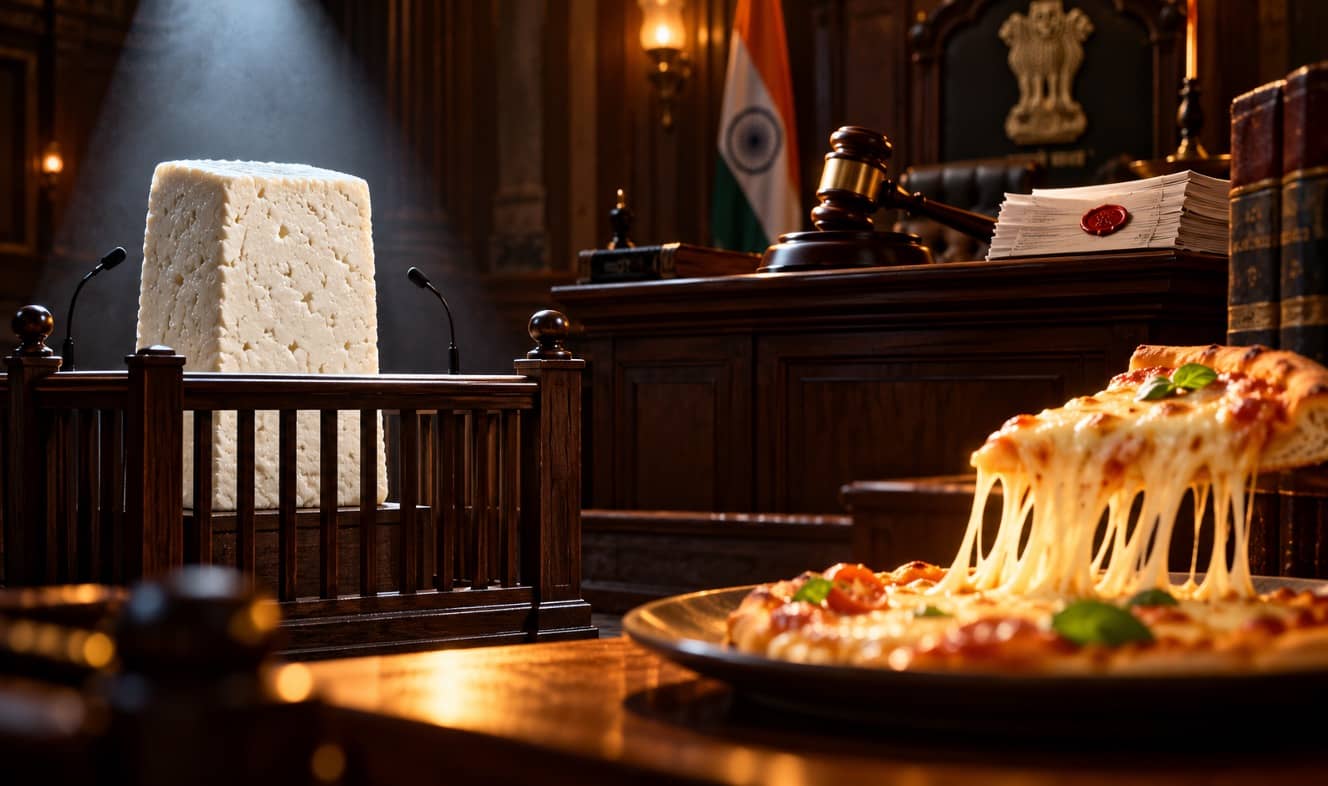
A Regulator has to balance the interests of the various constituents consisting of consumers, businesses and the environment, and make a decision in the nation’s best interest. In this case they need to balance the interests of the consumers, dairy industry and the Vegan industry. Add to the mix, PETA which seems to be representing the interests of climate change more than animal rights. The reason the Delhi High Court has sought views from different agencies is get the perspectives from the different stake-holders.
Also read : Cheese will no more be Cheezzy : FSSAI amends regulation on analogues and testing of ghee purity
The Regulator who will finally action changes (if any) in this case in India would be the Food Safety and Standards Authority of India (FSSAI). In the past FSSAI has made such amends in response to pleas by the Dairy Industry. For eg. a new categorisation of “Frozen Desserts” has been created for products that are like ice-cream in form, but uses vegetable fat instead of milk fat. Similarly, chocolates that use vegetable fat instead of milk fat are to be called “Compound Chocolate”, and cannot be called “Milk Chocolate”. The Regulators do have a challenge of developing a new name for this category if it is agreed, but that is a lesser problem to solve.
Government Perspective
From the broader Government’s perspective, one important consideration would be that while dairy industry is largely domestically dependent, the Vegan substitutes industry is highly dependent on imported agri produce. India imports about 25,000 T of Oats, about 30,000 MT of Soyabean (not considering the fact that India imports over 40% of global imports of soyabean oil) and about 115,000 MT of Almonds (India is No. 1 importer in the world) – all key raw materials in the Vegan substitutes industry. Hence the growth in Vegan substitutes would leads to income shift from Indian farmers to farmers elsewhere, and also substantial drain of foreign exchange.
The Dairy Industry Perspective
The Dairy Industry everywhere in the world has a serious concern from growth of Vegan products. Producers in key markets such as the US and the EU are concerned about the significant substitution of dairy milk with Vegan products. For eg. in the US, a Study by the USDA’s Economic Research Service (ERS) revealed that between 2013 – 2017, the average household consumption of dairy milk dropped 12% while that of Vegan substitutes grew 36% in the same period. Globally, while Dairy industry is expected to grow at 2-2.5% CAGR, the Vegan alternatives industry is expected to grow at over 16%. Meanwhile – blame it on Vegan substitutes or not – the dairy product prices have dropped upto 40% in the last 3 years, which is putting pressure on production as well. There are sufficient reasons for the Dairy industry to worry, as ultimately both products directly compete for the same consumer applications.
Also Read : Amul is cleared of blames by ASCI over its stand on integrity of milk label
The Farmer’s Perspective
In India the concern is that of farmer livelihood more than of business or environment at the moment. The organised Dairy industry in India has a substantial presence of the Co-operative sector – most notable player being Gujarat Co-operative Milk Marketing Federation (GCMMF) which markets brand Amul – and a host of other regional co-operatives that play an important part in this Industry. Their concern is the effect on livelihood of their members – the small and medium farmers, most of who don’t have more than 5 cattle heads. Since NDDB took up the cause of Operation Flood more than 50 years ago, the Dairy Industry in India has been an important source of alternative income for farmers. Dairy has been a steady contributor to rural incomes even at times when the agricultural incomes were depressed.
The well-meaning leaders of the Dairy sector (many of whom the Author has had the good fortune of working under or worked with early in his career) are concerned that it would harm the Indian rural sector significantly if Vegan alternatives gain significant shares in India as it is doing in the West.
The Vegan Industry Perspective
The companies in the Vegan alternatives is the target for this movement. When it all started, it looked to them as a very logical move to call the products by the names consumers are familiar with, and for which they were offering substitutes. The positioning of these brands was on the promise of a “healthier” or an “environment-friendly” dairy product substitute, and hence it made perfect sense for them to use the same terms. And for a very long-time no one objected, as these products were low volume, and considered niche.
But this is no longer the case. Not only has the Vegan industry grown in size, but over years of research it has also grown in range, offering a wide range of products matching the Dairy industry including milk, cheese, yogurt, meat etc. Their growth so far has been by targeting the niche customers such as the lactose intolerant, or the environment-conscious or the health conscious premium customers. However, going forward the Industry growth will have to come from targeting the mass-market consumers of dairy milk. Hence the high interest in the Industry in protecting the rights to use dairy terms. India is of particular interest to this Industry now as it is a market with a sizeable dairy products consumption, and which is among the highest growth markets in the world owing to increasing per-capita consumption and a growing consuming class.
The Consumer Perspective
Whatever the Dairy Industry, the Vegan Industry or the Regulators may say about this issue, the consumer has a mind of her own. For the consumer, the primary consideration is about what purpose does the product serve. In the mind of the customer, industry definition matters less than product form and application. Even if Vegan “milk” were to be called by any other name, the fact is that the product form and application is like Dairy milk. So, unless the Vegan Industry comes up with a very strong alternative name and popularises it, the customers are not likely to be using any other terms. For eg. even though most of Kwality Walls range is “Frozen Dessert”, customers still ask for Kwality Walls “Ice Cream”. Even though most of Cadbury range is “Compound Chocolate”, the general customer does not perceive the difference.
The By-stander (PETA) Perspective
PETA has advised GCMMF (A Dairy Farmer’s Co-operative Federation) to accept and promote the growth of Vegan milk because of its positive environmental impact. Why would a Dairy Farmer’s co-operative start promoting Vegan milk when the primary objective of the organisation is the welfare of its members who are in dairy farming? It is difficult to understood what PETA was thinking. This is akin to someone advising PETA that since gun control seems to be an important issue, PETA should change its objective to address this cause. It looks as if PETA saw a party going on, and decided to gate-crash. With due respect to what PETA is doing otherwise, it is best for everyone to ignore it as a noise in this case.
Also read : PETA India advises Amul to switch to producing creamy dairy-free milk
Conclusion
If we go by precedence with FSSAI, we can expect restrictions on use of Dairy terms on Vegan products soon. However, this may not change the trajectory of the consumer trend drastically since consumers have a mind of their own which is not driven only by labels. Hence to protect farmer interest, it is important for the Dairy industry to work on having the right communication on the health benefits of Dairy products, and to probably also proactively develop Industry-wide labels that clearly distinguish dairy products from Vegan products. One option could be to provide an open IP to the Indian Dairy industry (including the private sector) to use the Operation Flood logo.
On the other hand, the Vegan industry has many options to still be seen as a Dairy alternative with the use of packaging, visuals and smart communication. A fight to protect the right to use the terms used in Dairy products may not be worth pursuing, and may not be of any significant benefit for the Vegan industry.
Never miss an important dairy update
Follow DairyNews7x7 on Google to get live milk prices, policy alerts, and daily headlines directly in your feed.