Latest Blogs
See More
Indian Dairy News
DairyNews7x7
Global Dairy News

DairyNews7x7

New Zealand’s dairy industry is under pressure. It is one of our biggest earners, accounting for roughly 3% of our GDP; and since cows were first brought here about 200 years ago , dairy farming has taken on cultural significance for Pākehā (NZ Europeans) especially.
But it is also attracting increasing scrutiny. As well as polluting our land and waterways, dairy is to blame for large amounts of green House emissions . Jacinda Ardern’s Labour government has developed legislation to mitigate environmental pollution, but critics say it is not adequately addressing the harm dairying causes.
The industry received even more unwanted attention recently with the release of award winning documentary Milked , which follows Māori activist Chris Huriwai (Ngāpuhi, Ngati Porou, Te Ātiawa) as he reflects on his awa (river), Mangatawa, at Otaua, and exposes the negative impacts of dairy for Aotearoa and the world. And in March, Safe, New Zealand’s leading animal rights organisation, launched its Done with dairy campaign , highlighting its harms.
In response to such criticism, the dairy industry is fighting for credibility. One strategy it appears to be using is what we might call “kei te pai-washing” – or “pai-washing” for short. Like “whitewashing”, which aims to cover up unpleasant facts, or “greenwashing”, which paints organisations as more environmentally-friendly than they really are, pai-washing uses Māori words, concepts and imagery to exploit the association between te ao Māori (the Māori world) and environmental responsibility – almost like an “Indigenous tick of approval”. It is a cynical attempt to convey the impression that everything is “kei te pai”, or “all good”, with this extremely harmful practice.
In my opinion, Fonterra, New Zealand’s largest dairy company, has become especially adept at pai-washing. More recently, it contracted a Kaiwhakairo (carver) “to tell our story through the creation of a pou”, a traditional expression of Māori connectedness to land.
But is dairy really “kei te pai”?
Anyone who has travelled through New Zealand knows that much of the land now consists of paddocks. Most of this was cleared in the mid- to late-19th and 20th centuries – desecration which left Aotearoa bereft of its native forests, as well as birds, insects, reptiles and amphibians. Historically, it is mainly sheep which have been farmed here; but over the last 30 years or so, dairy farming has intensified, and so has its degradation of the environment.
Of course, some Māori communities have also chosen to engage in dairying – but the reasons for this are complex. Economic marginalisation, resulting from dispossession, land confiscation and racism, has left us with fewer choices than we once had. And the desire to stay connected to our whenua (land) has sometimes made dairying seem more viable.
But the notion that dairy can somehow be made sufficiently “sustainable” is a myth – and it is one that focuses only on the environmental impacts of the industry, ignoring its health impacts for consumers and workers, and the lives and wellbeing of the animals it exploits.
Dairying is not simply unsustainable; it violates Māori values.
As Māori, we understand ourselves as kaitiaki – carers for te taiao (the natural world). Although some dairy companies would have us believe that farmers are kaitiaki, such environmentally destructive work is ultimately incompatible with tiakitanga (caregiving).
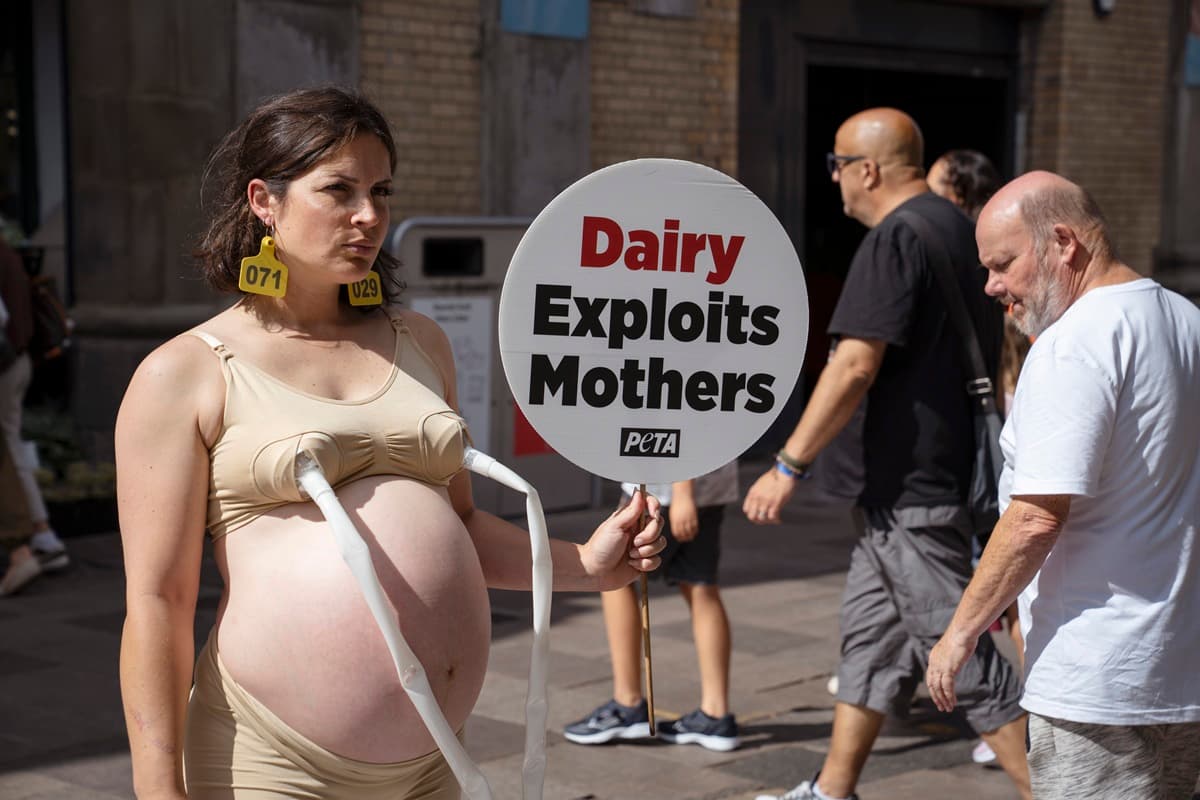
Another value, whanaungatanga, recognises that we are related, through ancestry, not only to each other, but to the wider natural world as well. Consequently, we have responsibilities to treat it respectfully. But far from treating the more-than-human world with respect, the dairy industry is extractive, engaging in a one-sided transaction: as ecofeminists have argued, it exploits female bodies, by forcefully impregnating cows, stealing their milk and separating mothers from calves. Worse, it slaughters individuals who are more profitable to stakeholders dead than alive.
(Considering how much death Fonterra’s farmers are complicit in – of bobby calves as well as dairy cows – it is ironic that the company uses the slogan Dairy for Life to sell itself.)
Dairying also undermines hauora (wellbeing). Research has linked dairy consumption to diabetes , cancer and heart diseases – all of which impact Māori at disproportionate rates. And it is likely that , on average Māori are more lactose-intolerant than Pākehā. Just as concerning are the psychological impacts on workers charged with killing animals ,including new borns.
It isn’t just big corporations that must stop. Ultimately, Māori need to divest from dairy too.
Those who defend Māori involvement in dairying sometimes cite “rangatiratanga” as a principle that allows us to do what we want. “Rangatiratanga” is often interpreted narrowly, as “sovereignty”, or “self-determination”; but it also involves responsibility – to others and to the wider world. It requires us to strive for ways of living that are respectful, nurturing and sustainable.
And if you listen attentively, you will hear that many Māori communities who are exercising rangatiratanga are, in fact, moving away from dairy. Some hapū (subtribes) have started transitioning their dairy operations to traditionally inspired ventures, focusing instead on regenerating native bush and growing crops for their people. At the same time, many iwi (tribes) are investing in sustainable alternatives to dairy, such as housing and horticulture.
This connects to broader efforts to restore whenua, reinvigorate traditional Māori gardening practices, promote food and soil sovereignty, and become para kore (waste-free).
These aspirations are reflected in Aotearoa’s ever-changing culture: in our growing sustainability movement and in the increasing number of New Zealanders – Māori and non-Māori – who are embracing vegetarian, vegan and kaimanga (Māori plant-based) living.
There is a better way forward. The rest of Aotearoa will appreciate this if – instead of misusing Māori culture – they listen to Māori and learn about the alternatives we are developing, with aroha (love) for the environment, non-human animals and people.