Latest Blogs
See More
Indian Dairy News

DairyNews7x7
Global Dairy News

DairyNews7x7
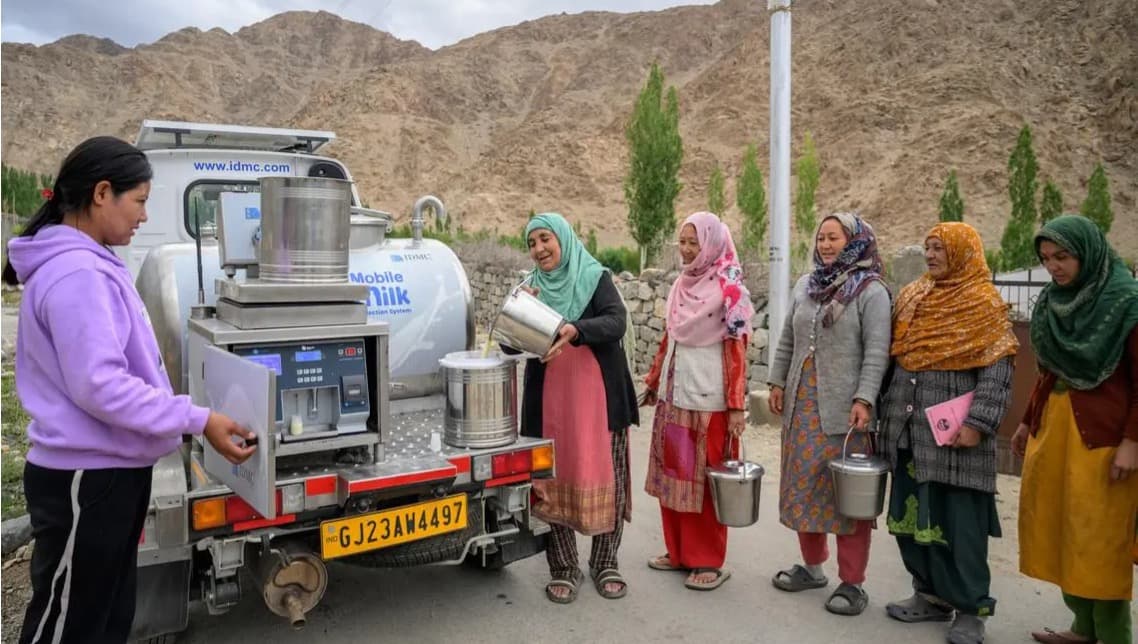
The NDDB is establishing a solar-powered milk processing plant in Kargil — one of the highest-altitude dairying projects in India — to ensure supply of fresh milk to Indian Army units deployed in remote, high-altitude regions such as Siachen, Nubra Valley, Leh and other posts.
The planned facility will have a processing capacity of 10,000 litres per day and aims to engage approximately 1,500 local farmers from the Kargil region. This initiative builds on a previous facility in Leh (serving army and local consumers), reflecting NDDB’s broader strategy to develop a robust dairy value-chain in high-altitude and remote areas.
Because Kargil and surrounding areas experience extreme cold, limited electricity availability, and logistical challenges, the plant will run on solar energy — using renewable energy and cold-chain technology to enable chilling, pasteurisation and safe supply of liquid milk under harsh climatic conditions.
NDDB and the regional UT administration of Ladakh (covering Leh & Kargil districts) have formalised the plan under a long-term dairy-development programme that includes procurement systems, processing infrastructure, animal-productivity support, and marketing under the trade name (for example, “Oma” brand) for local/regional distribution.
Officials say the initiative will not only meet the supply needs of the armed forces but also provide a sustainable livelihood and stable income to local dairy farmers in Ladakh — a region where dairy was earlier largely unorganised due to geographic and climatic constraints.
Overcoming high-altitude logistical challenges: Supplying fresh milk to remote, high-altitude military posts (like Siachen, Nubra, Kargil) has historically been difficult due to harsh climate, lack of regular electricity, cold storage issues and long transport distances. A solar-powered dairy there is a game-changer — enabling local milk collection, chilling & processing, reducing dependence on imported or pre-packed milk.
Livelihood generation & rural income support: By engaging roughly 1,500 local farmers, the project offers stable procurement and assured demand in a region where dairy options have been limited. This can help stabilise incomes, reduce out-migration, and encourage dairying even in marginal geographies.
Renewable energy + sustainability model: Running a dairy plant on solar power addresses the twin challenge of unreliable electricity and high energy costs. It fits with NDDB’s broader “solar / sustainable dairy value-chain” goals.
Enhanced market access & value-addition potential in remote zones: With processing in place, even remote milk producers get connected to a formal supply-chain; surplus milk can be converted to pasteurised liquid milk or other dairy products — potentially opening new market (civilian, army, tourist) demand in high-altitude zones.
Animal-health & climate constraints: High-altitude cold desert conditions (Ladakh / Kargil) pose significant challenges to animal productivity, fodder availability, reproduction, and dairy yield. Mortality, low yield, seasonal production swings are documented issues.
Sustaining supply in harsh winters: Even with solar energy, ensuring collection and chilling during freezing conditions or snow can be logistically tough; villages are scattered — transport, road closure risk, and weather disruptions could interrupt supply.
Cost & economic viability: Operating a dairy at high altitude with small herd sizes may carry higher per-litre costs (fodder transport, maintenance, energy, logistics). The viability will depend on consistent procurement volumes and stable demand (army + local).
Scaling beyond army supply: For long-term sustainability, demand needs to come not only from army but civilian market (tourism, local population) or value-addition (e.g. niche high-altitude dairy products), else risk of underutilised capacity.