Latest Blogs
See More


Indian Dairy News
DairyNews7x7
Global Dairy News

DairyNews7x7
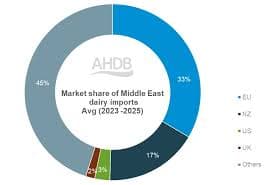
Escalating conflict in the Middle East is creating significant volatility across the global dairy sector, with disruptions in trade routes, rising input costs, and weakening demand expected to pressure dairy markets in the coming months. According to the Agriculture and Horticulture Development Board (AHDB), the war involving Iran, Israel, and the United States has disrupted dairy trade flows through the Strait of Hormuz and other regional shipping routes, increasing transportation, fuel, and fertiliser costs while squeezing dairy farm margins globally.
The Middle East and North Africa (MENA) region accounts for approximately 15–18% of global dairy imports, with countries such as the United Arab Emirates, Kuwait, Oman, Bahrain, and Saudi Arabia heavily dependent on imported milk powders, butter, and cheese. AHDB estimates the Middle East dairy market was worth around $19.5 billion in 2025, making the region a strategically important destination for global dairy exporters.
The conflict has significantly affected shipping through the Strait of Hormuz, a critical trade corridor connecting Gulf dairy importers with global suppliers. Ports such as Jeddah, King Abdullah, Aqaba, and Jebel Ali are facing disruptions, forcing exporters to use longer Cape-routed shipping services or alternative ports in Oman, raising freight costs, transit times, and trade risks. Around one-third of global fertiliser trade and 20–25% of global oil and gas shipments also pass through the Strait, intensifying concerns over rising agricultural input costs.
Iran remains a major regional dairy player and was the world’s fourth-largest exporter of skimmed milk powder (SMP) before the conflict escalated. In 2025, Iran’s dairy exports reached 730,000 tonnes, up 26.6% year-on-year and around 35% above the five-year average, while export value rose 26% to £882 million. Milk powders recorded the strongest growth, increasing 55% year-on-year in 2025, with Iraq accounting for 53% of Iran’s dairy exports, followed by Pakistan at 18%, Afghanistan at 9%, and the UAE at 4%.
The GCC remains a key market for British dairy exports worth £99 million in 2025 and is the UK’s second-largest dairy export destination outside Europe. UK cheese exports averaged 2,400 tonnes to Saudi Arabia and 2,500 tonnes to the UAE between 2023 and 2025, while exports to Egypt averaged 1,000 tonnes annually. AHDB warned that prolonged disruptions could weaken regional tourism demand, reduce foodservice consumption, and push consumers toward lower-cost dairy alternatives amid inflationary pressure. (AHDB)
Analysts noted that unlike the Ukraine war period, global dairy markets are currently supported by relatively high milk production and larger dairy inventories following strong production growth in 2025 and early 2026. However, prolonged geopolitical instability, rising fertiliser and energy costs, and softer consumer demand could place sustained pressure on dairy trade flows, export competitiveness, and producer margins worldwide.
Source: Dairynews7x7 8 May, 2026 Read full story here
#MiddleEastConflict #GlobalDairy #DairyTrade #MilkPrices #FertiliserCosts #DairyExports #DairyIndustry