How many types of antibiotics does your farm use? How does your usage compare to other farms? Measuring something as complex as antibiotic usage on your dairy farm can seem intimidating, but MSU faculty and Extension staff can help.
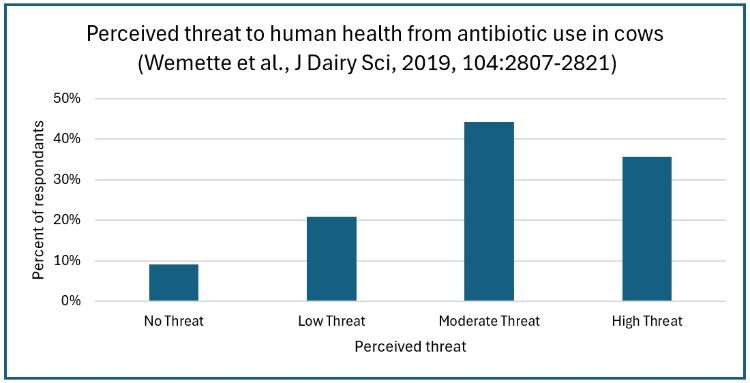
Only 9% of consumers surveyed perceived no threat to their personal health based on antibiotic usage in dairy cows, in a survey conducted by Cornell University.
Antibiotics are vital in treating both human and animal bacterial diseases, and often the same drug classes are used in both human and veterinary medicine. Therefore, judicious use of these drugs is necessary to reduce the development and transmission of multidrug resistant bacteria.
On dairy farms, responsible antibiotic use requires the participation of veterinarians, farm workers and farm owners. Veterinarians prescribe and dispense antibiotics to farms, but farm workers are responsible for estimating disease severity, initiating treatments and dispensing medications. Even more critically, farm workers conduct preventative practices against mastitis, metritis and other bacterial infections. Farm owners bear the economic costs of drug prices, greater labor needs to care for sick animals and loss of milk sales from treated cows. Noncompliance with treatment protocols, including over- and underuse of antibiotics, may negatively impact public health and could compromise animal health and welfare.
Why measure?
While many consumers are concerned about antimicrobial usage in dairy cows, 80% of dairy owners reported using the “right amount” of antibiotics on their farms in a survey of nearly 600 Wisconsin dairy farms, published in the Journal of Dairy Science. But what is the right amount? This answer varies from farm to farm and can be affected by differences in disease rates, capacity for training employees and herd demographics. The first obstacle to determining the right amount of antibiotics for your farm is to determine how much you are currently using. This can be difficult and time consuming. Thus, many dairy farmers do not know their average antibiotic use per cow, if usage on their farms differs from that of their peers, or if their usage has changed over time. In the absence of measurements and feedback, it is difficult to motivate change.
Addressing consumer concerns
Beyond potential impacts to animal health and the development of resistant organisms, consumers are increasingly concerned about antimicrobial usage on dairy farms. A 2019 Cornell University survey of 1,000 consumers documented considerable concern about risks to personal health based on antibiotic usage on dairy farms. Only 9% of consumers surveyed perceived no threat to their personal health based on antibiotic usage in dairy cows. Studies conducted by Kang and Hustvedt in 2013 show that transparency of business operations and their demonstration of social responsibility are essential for building and maintaining consumer trust.
Measuring farm antibiotic use
The good news is that most dairy farmers have already been proactive in maintaining consumer trust over the years. Whether it’s implementing digital technology to detect sick cows more quickly or being meticulous with feeding quality colostrum to newborn calves, farmers continually demonstrate their dedication to the health and welfare of the animals under their care. A farm with thorough digital records of disease incidents and treatments can review their antibiotic use with confidence that their results are accurate.
Once you know how many antibiotics your farm uses, you and your veterinarian can evaluate opportunities to reduce treatment duration, evaluate dosage accuracy or alter initiation threshold. This could include reducing the number of days cows receive intramammary antibiotics to the minimum number of days listed on the label or implementing selective dry cow treatment by not treating healthy cows with a low risk of mastitis. These strategies may not work for all farms and preventing disease rates should always be the top priority. Regardless of your methods, fewer treatment days may also reduce the length of milk discard, and therefore reduce lost profit.
How do I measure?
Led by Dr. Pamela Ruegg, DVM in the College of Veterinary Medicine, the Antibiotic Stewardship Group created the Antibiotic Usage Benchmark Tool. This secure online tool uses disease data from electronic dairy farm records to create a brief report comparing antimicrobial usage from a given farm to validated research data from over 40 large herds in the Midwest. The report separates cows and pre-weaned calves and compares their usage separately.
The Antibiotic Stewardship Group uses a farm-led participatory approach in which researchers develop solutions specific to a farm together with the farmer. If he or she chooses, they can send their antibiotic usage benchmark report to their veterinarian. The veterinarian viewing the report can better understand how the farmer is using the prescribed antibiotics. The MSU Extension dairy educators play a vital role as resource connectors in the project. As trained users of the benchmark tool, they are often the first contact with MSU personnel.
A farmer using BoviSync, PCDart or DairyComp works with MSU personnel to upload antibiotic use records into the benchmarking tool. The entire process takes between 45 minutes to an hour. Farmers can also use the benchmarking tool individually; text and video instructions are available at topmilk.msu.edu.
What do I do next?
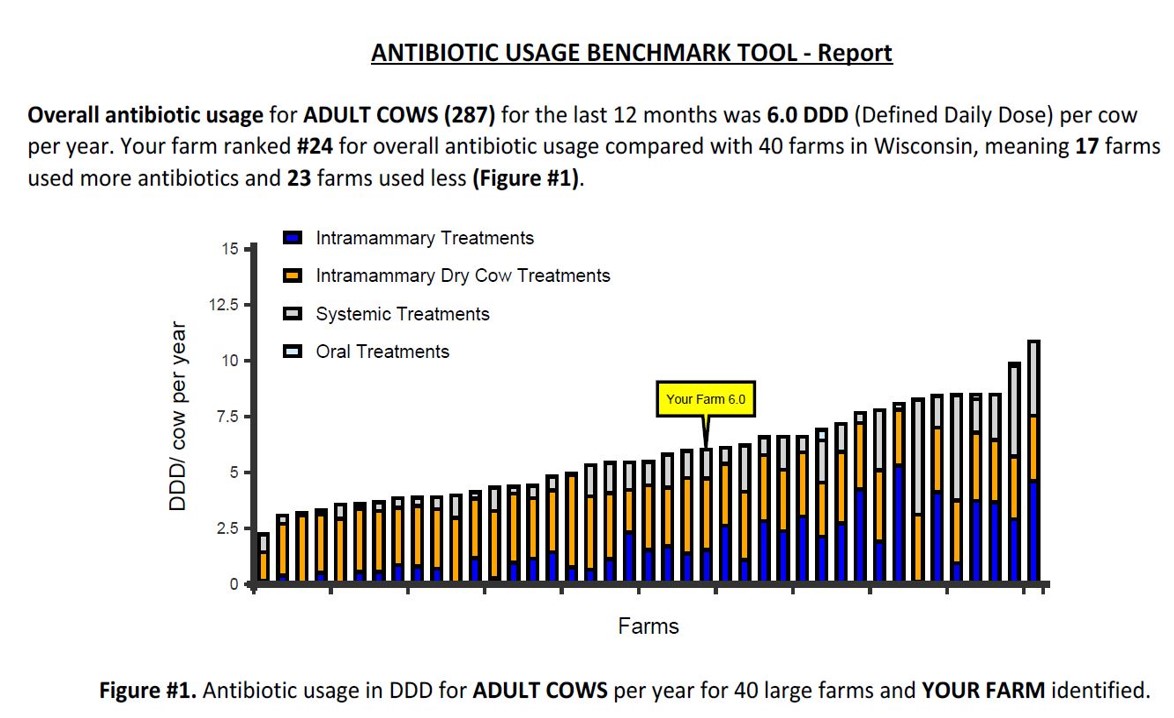
The benchmark tool generates a report that shows how a farm’s antimicrobial usage compares to other dairies in the state. The defined daily dose (DDD) is a standardized metric of antimicrobial use for comparisons of antimicrobial use among different animal species and countries. A standardized FDA-label dose for each antimicrobial for an average-sized cow is used to calculate the DDD. This is averaged out across all cows over a 12-month period. In this benchmark graph, you can see that dry cow (light orange) treatment DDDs are fairly uniform across all farms. There is much more variation between farms when it comes to intramammary, injectable and oral antibiotics delivered to adult cows. You will also find out what percentage of each antimicrobial is being used on your farm.
A portion of a sample benchmarking report for antimicrobial usage in adult cows.
There are a few things to keep in mind when evaluating your results. One important factor affecting antibiotic use on farms is disease incidence. However, farms using fewer antibiotics don’t necessarily have less disease. Some farms may choose not to treat certain conditions with an antibiotic or may be more likely to cull animals instead of treating them. Herd demographics, disease rates, culling rates and treatment protocols all affect antibiotic usage. In addition, differences in the definition of specific diseases, data recording practices and inaccurate dosing make it difficult to compare antibiotic use between farms. You may choose to observe employees giving treatments, review protocols with your veterinarian and reconsider your current record-keeping standards. Although there may not be a right amount of antibiotics to use across all dairies, through data analysis such as benchmarking and some trial and error, you can find the right amount for your farm. With more validated herds added to the tool every year, statewide usage trends may shift. Therefore, annual antimicrobial benchmarking is recommended in all scenarios. This allows the farmer to determine their usage, view trends and respond proactively to changes.
Stay Updated
Get the latest dairy industry news directly in your feed.