Latest Blogs
See More
Indian Dairy News
DairyNews7x7
Global Dairy News

DairyNews7x7
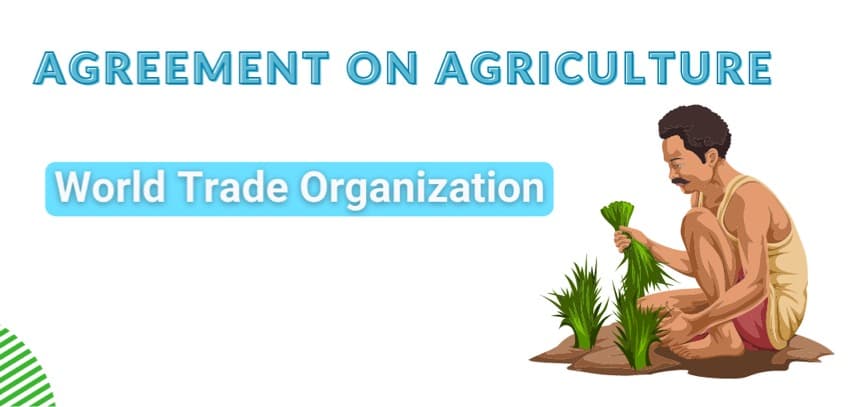
The Agreement on Agriculture (AoA), first negotiated and implemented through the formation of the World Trade Organisation (WTO) in 1995, has long been a bone of contention for farmers as well as governments. Farmers from developing countries like India have argued for a renegotiation of the mandate since they were put at a disadvantage with the integration of the agriculture sector into world markets and reduced government subsidies and support. However, the governments in the developed world, which benefit from the present WTO set-up, saw no point in going back to the table.
Since the inception of talks in trade negotiations, India has long articulated its position in favour of food security, livelihood security of farmers, poverty alleviation and protecting domestic agriculture. This position resonates with the demands and necessities of other developing and least-developed countries. It is this collective bargaining power, led by India, which paved the way for big decisions like the Bali Package
that ensured a temporary peace clause for developing countries for breaching the mandated subsidy regime for public procurement for food security purposes. Be it the Uruguay round or the present Doha Development Round, India stuck to these principles, globally and domestically.
But the US and other developed countries have long had issues with India’s limited protection measures like the Agriculture Produce Market Corporation (APMC) Act, minimum support price, public distribution system and other support policies. Time and again these countries have argued for the elimination of these and allow market principles, meaning corporate mechanisms, to run Indian agriculture.
The introduction of the three farm laws by the Narendra Modi-led Union government – despite tumultuous protests – in 2020 meant that India moved away from this long-standing position. These laws planned to dilute and remove the public procurement system through mandis at MSP, eliminate provisions for hoarding of grains and introduce contract farming. This was contrary to what India argued globally.
Soon after, addressing the US-India Business Council, Prime Minister Modi invited US companies to invest in India. He indicated that the reason behind these laws was to allow the entry of multinational companies into the agriculture sector.
However, the year-long protest movement by farmers at the borders of Delhi meant the three laws were repealed by the Union government in December 2021. The government was forced to recommit itself to its internationally articulated position domestically too.
World Trade Organization headquarters in Geneva. Photo: Wikimedia Commons/CC0 1.0
But efforts to change the status quo have not ended. During the G-20 summit, Prime Minister Modi held a meeting with US President Joe Biden. Subsequently, the Union government announced a 20% reduction in customs duty on American apples, along with a reduction in duties on seven other US products, including chickpeas, lentils, and others. Interestingly, the customs duty on some of these items was hiked by India as a retaliatory move in 2019 after the US had a year before increased import duty on Indian steel and iron on grounds of national security.The lowering of customs duty on US-produced apples comes at a time when apple farmers in India – mostly in Himachal Pradesh and Jammu and Kashmir – have been reeling under a lot of stress due lack of remunerative prices from the private sector. While farmers sell their produce at a price that does not even cover their input costs, the same companies sell apples at three times the price procured, thus making a mockery of the farmers’ suffering. Along with increasing income losses and decreasing productivity, extreme climate and changing weather patterns have made the cultivation of apples difficult.
Apples being a perishable good, are not covered under the APMC Act, and thereby have no guarantee of an MSP. The apple farmers are demanding that the government bring the crop under the ambit of the APMC Act and declare an MSP for it.
Similarly, the Indian government tried to include the dairy sector in the Economic Cooperation and Trade Agreement that it signed with Australia in April 2022. However, resistance from dairy farmers, especially from Punjab, Western Uttar Pradesh and other milk-producing states, meant the government was forced to keep milk and other dairy products – along with wheat, sugar, iron ore, apple and walnuts – in the exclusion list.
Prime Minister Modi has used the derogatory term revdi (candy) for welfare policies, thereby delegitimising and vilifying state support for people, especially in the agriculture sector. Even the much-touted PM KISAN scheme that provides Rs 6,000 per acre annually to farmers who own land does not support tenant farmers and or agricultural labourers. In India, the tenant farmers and agriculture labourers are the worst affected by the farm crisis and reducing state support to the sector would ring a death knell.
It is now a documented fact that most of the agriculture sector in developed countries is mechanised. A few corporations have complete dominance over production, distribution, and storage. In this scenario, it is important to ask questions to the international community that farmers’ movements in India have posed to the ruling regime.
Is the present trade regime with its focus on the market, profits for corporations, increased market for the agricultural products of developed countries and reduced state support for the agriculture sector in developing countries sustainable? If it is not, should the mandate of the trade regime be renegotiated on the firm pillars of food security, livelihood security for farmers and increased state support for the agriculture sector in developing countries on the principle of equity? It is time for international negotiations to answer these questions.
Source : The Wire Nov 9th 2023 by N. Sai Balaji, doctoral student at Centre for International Politics, Organisation and Disarmament (CIPOD), JNU.