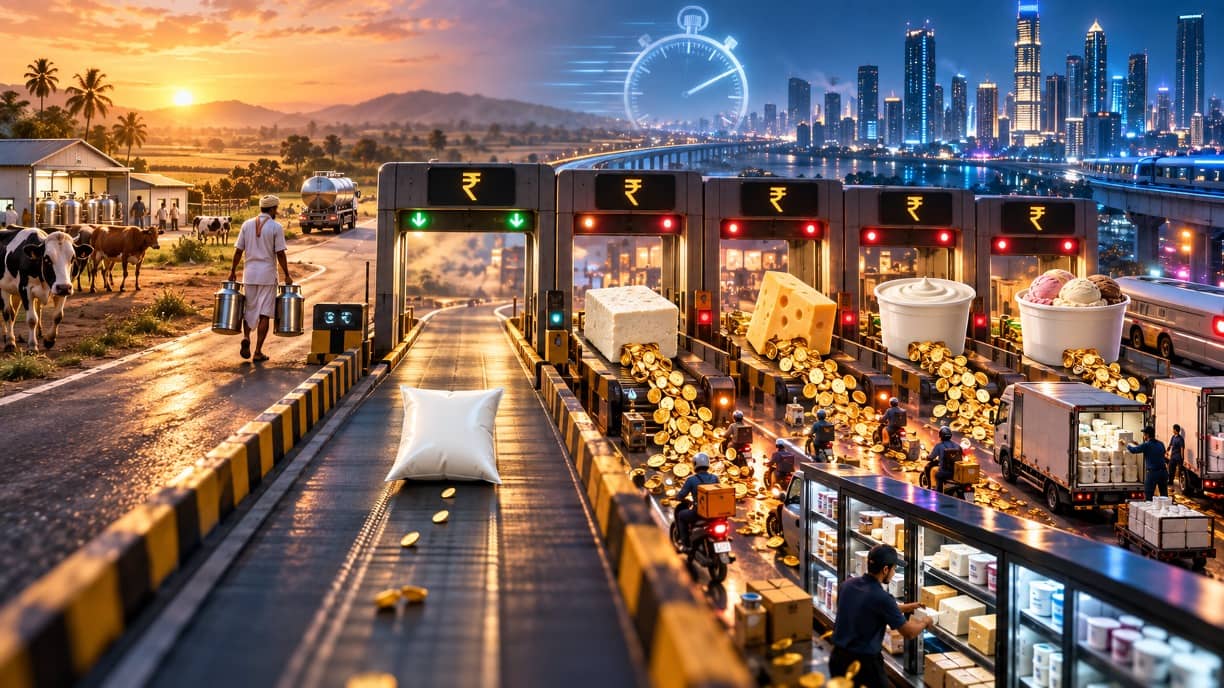
The COVID-19 outbreak early this year wrecked almost every industry worldwide. India’s dairy industry is no exception. Its business operations were hit hard as the industry had to navigate the negative effects of the pandemic on logistics, an abrupt change in demand consequently impacting the supply. Due to the nationwide lockdown, consumption from non-essential commercial establishments such as restaurants, hotels, bakery, sweet shops, theatres, and malls, suddenly dipped to zero.
Plus, for milkmen and vendors who collected loose milk from dairy farmers and then supply it to urban consumers, the ban on travel ruthlessly disturbed this arrangement. Milk procurement from small farmers, who were outside the umbrella of organized cooperative and corporate sector dairy networks, was equally impacted. That was a jolting setback for the dairy industry as well as farmers.
Unfortunately, the industry faced a few more exceptional challenges. It wasn’t possible to entirely cut down the milk production considering the plunge in demand and issues in supply. Irrespective of the market mayhem, a cow had to be milked daily for its health. On one hand, it increased the cost of a dairy farmer and on the other, the situation left them with surplus milk with no trade taking place.
Perishable dairy products were not the priority
Moreover, the pandemic didn’t eliminate the need for dairy products. But raised a different concern. Products such as curd and paneer are perishable and have a short shelf life. Hence, these were not stocked by families as their back up plan during the lockdown. As these can’t be stored for selling at a later date, and the dairy supply chain operations were severely disrupted, surplus availabilities of dairy products had to be discarded. Another factor that added salt to the injury was the drastic declination in the consumption of cold products like ice cream, flavored milk, and yogurt. In order to keep ourselves safe, most of us have avoided the food known to enhance cough and cold.
In no time, India, the largest and thriving dairy producer in the world with 187.7 million tons of milk production, as per the data from NDDB, and a high turnover rate, received a hard blow.
Upcoming opportunities
But every dark cloud has a silver lining. If this pandemic has brought unprecedented challenges and uncertainties, it has also given an opportunity to the dairy industry to look beyond and unleash its potential. Precisely, this is how several players in the industry responded to the pandemic. Identifying the need of the hour, they forayed into new product categories. Products for immunity boosting such as haldi doodh (turmeric milk), camel milk, and goat milk started gaining attention. Consumer choices are shifting to consuming products made from organic materials. Further, considering health and hygiene are two key factors in the era of new normal, the demand for fresh and organic products will rise in the years to come. This has set manufacturers in the dairy industry to expand their offerings.
No doubt, due to the rapidly changing industry environment as well as consumer behavior, the dairy businesses experienced ebbs and flows of demand and supply. But on a brighter note, weighing the current developments, we are foreseeing a U-shaped growth curve for the dairy sector, wherein the industry is expected to regain its stable growth in days to come.