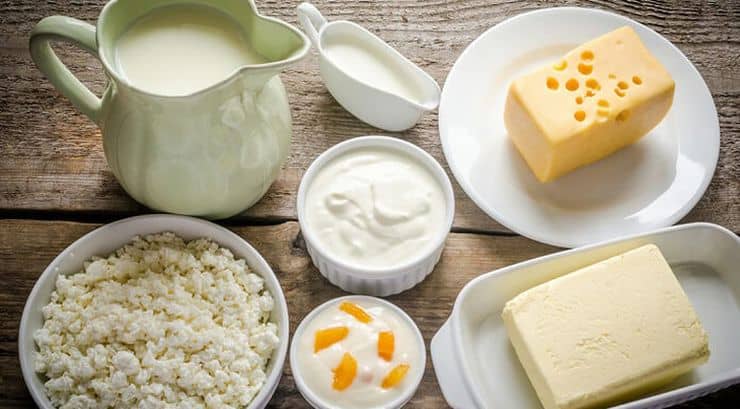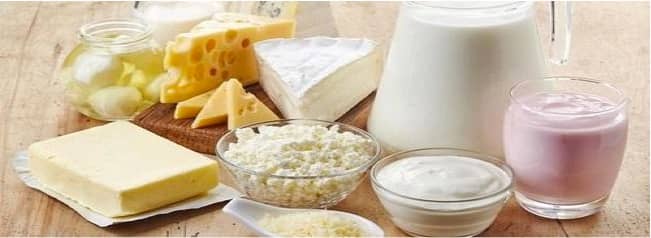
- What is meant by SNF and total solids in milk? Is there any regulatory requirement for this parameter? SNF or solids not fat is that nutrient portion present in milk which is other than milk fat and water. It consists of protein (primarily casein and lactalbumin), carbohydrates (primarily lactose), and minerals (including calcium and phosphorus. When SNF is combined with milk fat, then it is called total solids. Yes, Food Safety and Standards (Food Product Standards and Food Additives) Regulations, 2011 prescribe fat and Solids not fats (SNF) for different types of milk. For example -The legal standard for standardized milk is 4.5% fat and 8.5% SNF and the total solids are 13%.
Ice creams and Frozen Desserts
- What is Ice cream? Ice cream means frozen milk product obtained by freezing a pasteurized mix prepared from milk or other products derived from milk, or both, with or without addition of nutritive sweeteners and other permitted non-dairy ingredients. The said product may contain incorporated air and shall be frozen hard except in case of softy ice-cream where it can be frozen to a soft consistency.
- What is Frozen Dessert? Frozen Dessert or Frozen Confection means the product obtained by freezing a pasteurised mix prepared with edible vegetable oils or fats or vegetable protein products, or both. It may also contain milk fat and other milk solids with the addition of nutritive sweeteners and other permitted non-dairy ingredients. The said product may contain incorporated air and may be frozen hard or frozen to a soft consistency.
- What is the difference between Ice-cream and Frozen Dessert? Standards for Ice Cream and Frozen Desserts are prescribed in sub-regulation 2.1.14 and sub-regulation 2.1.15 respectively of Food Safety and Standards (Food Product Standards and Food Additives) Regulations, 2011. These standards prescribe quality and safety parameters of these products so as to ensure the safety of consumer. Both the products contain milk solids and other necessary ingredients as per the prescribed standards. The only difference between frozen dessert and ice cream is that frozen dessert use vegetable fat (referred to as edible vegetable oil/palm oil in the labelling) in place of milk fat.
Food Package labelling and milk fortification
- What shall consumer see on the label of the container? Generally, it is difficult to differentiate frozen dessert from ice-cream because of the similar texture and taste. Both the products are having standards as per Food Safety and Standards Regulations as mentioned above. As per the regulations mentioned above the Frozen Dessert shall indicate on the label as; “Contains ………………. % Milk Fat* Edible Vegetable Oil* and Vegetable Fat* and Vegetable Protein Product” (*strike out whatever is not applicable).” The consumer must check this information on the label to identify/differentiate these products and the name of the product as ‘Frozen dessert or frozen confection’.
- Can milk be fortified with vitamins and what are the regulatory requirements? Toned, double toned, skimmed milk or standardized milk can be fortified with vitamins A and D. It is to be fortified as per the level prescribed in Food Safety and Standards (Fortification of Foods) Regulations, 2018 which is as follows:- S.No. Nutrients Level of nutrient per litre of toned/double toned/skimmed milk/ standardized milk Source of nutrient
- Vitamin A 270 μg RE- 450 μg RE Retinyl acetate or Retinyl Palmitate
- Vitamin D 5 μg – 7.5 μg *Cholecalciferol or *Ergocalciferol (*only from Plant source) Note: Vitamin A (retinol): 1 IU= 0.3 µg RE (Retinol Equivalent); Vitamin D (Cholecalciferol or Ergocalciferol): 1 IU= 0.025 µg The above requirements are voluntary.
Lactose intolerance and Lactose free milk
- What is lactose intolerance? Lactose is the milk sugar present in milk. It acts as a source of energy not only for the individuals who consume milk but also for the microorganisms in milk. Lactose is normally converted in to glucose and galactose. These are subsequently converted in to lactic acid and absorbed in the intestine. Beta galactosidase is the enzyme that plays a major role in the conversion of lactose in to lactic acid. Lactose intolerance develops when the secretion of enzyme beta galactosidase decreases. Undigested lactose absorbs excess water, while passing through the large intestine. Bacteria present in large intestine act on the lactose and convert it in to acid and gas. This acid, gas and excess water are responsible for flatulence, stomach pain and sometimes enteritis.
- What is lactose free milk? Low Lactose or Lactose free milk means the product prepared from any type of milk, in which, lactose content has been reduced significantly through hydrolysis by enzymatic or any other appropriate process. Standards for lactose free/low lactose milk have been framed and are in the process of draft notification.
About A2 milk
- Is there classification of milk as A1 and A2? Which one is beneficial to health? Standards of milk as specified in Food Safety and Standards (Food Product Standards and Food Additives) Regulations, 2011 do not mention/recognize any differentiation of milk on the basis of A1 and A2 types. The issue regarding adverse/beneficial effects of A1 and A2 types of milk have been discussed in various meetings of Scientific Panel on Milk and Milk Products. The panel did not come to any conclusion on this issue due to lack of clinical data/risk assessment done at scale so far.