Logo
IndianGlobalBlogsPublicationsPodcastsMarketAboutContact
Logo
IndianGlobalBlogsPublicationsPodcasts
7News
Gujarat Ice Cream Makers Face Cone ShortageSummer Heat to Stress India’s Dairy Cold ChainSavencia Profit Drops on Rising Milk CostsTN Milk Output Claim Sparks Data DisputeHormuz Disruption Threatens Dairy Supply Chain

Indian Dairy News

17 High-Genetic US Bulls Arrive to Boost Kashmir Dairy
Mar 13, 2026

17 High-Genetic US Bulls Arrive to Boost Kashmir Dairy

In a major step to strengthen dairy productivity, the Animal Husbandry Department (AHD) of Jammu & Kashmir has imported 17 high-genetic-merit dairy bulls from the United States as part of a breeding i...Read More

Jigawa to Partner India for Dairy Development
Mar 13, 2026

Jigawa to Partner India for Dairy Development

The Jigawa State Government in Nigeria has announced plans to collaborate with the National Dairy Development Board (NDDB) of India to promote livestock development and expand dairy production in the...Read More

Scientific Breeding Boosts Gujarat Dairy Incomes
Mar 13, 2026

Scientific Breeding Boosts Gujarat Dairy Incomes

A 63-year-old artificial insemination (AI) specialist, Deepak Patel, from Vaheval village in Gujarat, is helping strengthen the dairy economy by promoting scientific breeding techniques that improve c...Read More

DairyNews7x7
Advertisement

Latest Blogs

See More
Rajahmundry Milk Incident: Accident or Adulteration?
Mar 10, 2026

Rajahmundry Milk Incident: Accident or Adulteration?

The recent editorial “Bitter Milk” published by The Hindu raises important concerns about food safety in India. The editorial deserves appreciation for attempting to broaden the conversation and under...Read More

Milk Prices Rise in South & West: Is North Next?
Mar 05, 2026

Milk Prices Rise in South & West: Is North Next?

The recent round of retail milk price increases across South India and Maharashtra is no longer an episodic adjustment but a clear signal of structural stress building up in India’s milk economy. Over...Read More

India’s Dairy Climate Paradox: Production Triumph Meets Methane Time-Bomb
Mar 02, 2026

India’s Dairy Climate Paradox: Production Triumph Meets Methane Time-Bomb

India’s rise to the top of the global dairy league board has been one of the most remarkable agricultural success stories of the 21st century. With milk production surpassing 247 million tonnes per ye...Read More

India’s First Cow Culture Museum in Mathura
Feb 16, 2026

India’s First Cow Culture Museum in Mathura

India’s first national “Cow Culture Museum” is set to be established in Mathura, Uttar Pradesh, on the campus of Pandit Deendayal Upadhyaya Veterinary Science University, announced the Uttar Pradesh B...Read More

Global Dairy News

Lactose-Free Milk Seen as Growth Driver in Coffee
Mar 13, 2026

Lactose-Free Milk Seen as Growth Driver in Coffee

Lactose-free milk is emerging as a major growth opportunity for the dairy industry, particularly in the rapidly expanding coffee and café segment. A recent US-based study highlighted that lactose-free...Read More

Nigeria’s Dairy Challenge: Many Cows, Little Milk
Mar 13, 2026

Nigeria’s Dairy Challenge: Many Cows, Little Milk

Despite having more than 20 million cattle, Nigeria produces far less milk than it consumes, highlighting deep structural challenges in its dairy sector. Most cattle in the country are...Read More

Israel Drops Controversial Dairy Reform From Budget
Mar 12, 2026

Israel Drops Controversial Dairy Reform From Budget

The Israeli government has removed a controversial dairy reform proposed by Finance Minister Bezalel Smotrich from the 2026 Arrangements Law, a key legislative package linked to the country’s state bu...Read More

DairyNews7x7
Advertisement
Dairy News 7x7

Your trusted source for all the latest dairy industry news, market insights, and trending topics.

FOLLOW US
CATEGORIES
  • Global News
  • Indian News
  • Blogs
  • Publications
  • Podcasts
SUBSCRIBE TO OUR NEWSLETTER

Stay informed with the latest updates and trending news in the dairy industry.

No spam, unsubscribe at any time

GET IN TOUCH
C-49, C Block, Sector 65,
Noida, UP 201307
+91 7827405029dairynews7x7@gmail.com

© 2026 Dairy News 7x7. All Rights Reserved.

Terms of ServicePrivacy Policy
Prefer Us
Prefer Us

G20 summit – What’s in it for farmers and dairying in India ?

By Kuldeep Sharma•Published on September 17, 2023

G20 summit – What’s in it for farmers and dairying in India ?
Prefer on

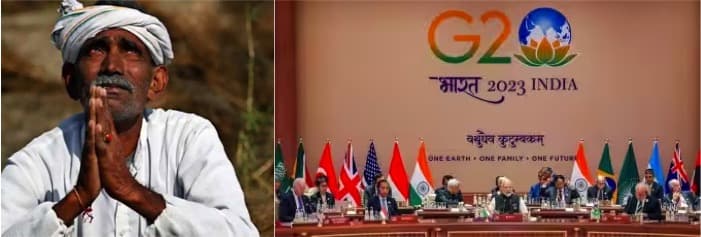
The G20 summit held successfully on September 9-10th in New Delhi was a momentous occasion for our nation, as we had the privilege of hosting global leaders on our home soil. A government press release disclosed the total expenditure for this summit, amounting to a substantial Rs 4100 Crores.

In comparison, Indonesia’s expenditure for the 2022 G20 summit in Bali stood at approximately Rs 364.4 crore. Information from the University of Toronto’s fact sheet reveals the costs of previous G20 summits, including $112 million (equivalent to Rs 784 Crores) for the 2018 G20 Summit in Buenos Aires, Argentina, and €72.2 million (equal to Rs 500 Crores) for the 2017 G20 summit in Hamburg, Germany. It appears that these countries were better prepared in terms of infrastructure for their respective summits. Notably, I am pleased to note that the India Trade Promotion Organisation (ITPO) has received a substantial allocation of around Rs 3600 Crores from this budget.

From the perspective of a dairy professional, it may be helpful to put the Rs 4100 Crores expenditure in context by noting that it equals the annual budget for the dairy sector in India for the fiscal year 2023-24. Additionally, let’s take a brief look at India’s ranking on various socio-economic parameters within the G20 group.

Comparison of India’s performance amongst G20 nations

S No Parameter India’s ranking amongst G20 countries
1. Population 1
2. Fertility rate (number of births per woman) At par with the developed world
3. Dependency ration The dependency ratio is the number of dependents (younger than 14 or older than 65) as a percentage of the working-age population. Much lower than the developed world which is actually good
4. Rural Population at 64% 1
5. Population density ( 470 per sq km) 2nd
6. GDP as per PPP 4th
7. Per capita Income Lowest
8. GDP growth in 2022 (Saudi topped at 8.7%) 7%
9. Population of Poor people at 16.4%.  1 st
10. Only India and Italy had a labor force participation rate (the share of working-age people employed or actively seeking employment) of less than 50% 19-20th
11. Women labor force participation at 23.5% which is just above Saudi Arabia at 18.9% 19th
12. Women in Parliament-14.9% which is just above 9.9% for Japan 19th
13. Human Development Index at 132 in the world 20th
14. Gini Index (measure of inequality) Around 10th in the middle
15 Life expectancy at birth 19th
16 Expenditure on health as % of GDP 3% 20th
17 Maternal mortality rate –Deaths per lakh live births (at 103 world ranking) 18th
18 Undernourished population at 16% 1 st
19 Out of pocket health expenditure at 50.6% which is 5.6% in South Africa the lowest in the group 1st
20 Literacy rate at 77% is amongst the lowest with most other members around 100%
21 Number of mobile subscription per 100 persons 20th
22 % of population with access to internet 20th
23 Access to electricity and clean energy Amongst the toppers
 
Source : The Indian Express Sep 8th 2023 article

Let us examine the Outcomes of G20

Reviewing the performance indicators provided above, my anticipation for the summit’s outcomes was quite high. I had hoped to witness substantial progress aimed at lifting a significant portion of the population out of poverty and implementing inclusive measures to fortify our existing food systems. My initial focus was on the joint declaration, an impressively structured 37-page document. This marked a notable departure from the Bali declaration, which comprised a sprawling 1188-page single document.

Eager to glean insights as an inquisitive learner, I conducted keyword searches for terms like “Dairy,” “Milk,” “Livestock,” “Farmer,” and “Agriculture” within the document. The results were somewhat disheartening: “Dairy,” “Milk,” and “Livestock” yielded zero mentions, while “Farmers” appeared twice, and “Agriculture” just six times. Undaunted, I shifted my approach and embarked on a comprehensive reading of the document, eventually uncovering four pivotal suggestions that held promise for inclusive farmer engagement with a clear alignment to the Sustainable Development Goals (SDGs).

The three primary focal points for strengthening our food systems emerged as follows:

  1. Commit to accelerating innovations and investment focused on increasing agricultural productivity, reducing food loss and waste across the value chain, and improving marketing and storage, to build more sustainable and climate-resilient agriculture and food systems.
  2. Commit to facilitate open, fair, predictable, and rules-based agriculture, food and fertilizer trade, not impose export prohibitions or restrictions and reduce market distortions, in accordance with relevant WTO rules.
  3. Encourage investments in inclusive, sustainable and resilient agriculture and food systems. Support accessible, affordable, safe and nutritious food and healthy diets in school meal programmes. Promote innovation for inclusive agri-value chains and systems by and for women farmers.

What’s in it for farmers in proceedings on Agriculture

Then I shifted my focus to the specific document on Agriculture and I was disappointed to see the word dairy, milk or cattle being used anywhere. However the key take home from the agriculture group may be seen as below :

“We acknowledge the significant role of smallholder farmers, family farmers, women, youth, indigenous peoples as applicable, and other underrepresented groups and small and medium enterprises (SMEs) in making the agriculture value chains resilient and sustainable. We will promote inclusive and diverse approaches to empower and integrate these groups into agriculture and food value chains, address gender inequalities and achieve economies of scale by programmes such as forming and strengthening farmers’ organizations, agriculture-based women self-help groups and participation of youth as entrepreneurs. We will support their capacity development, training and extension services to promote information dissemination, foster innovations and adoption of new technologies and practices to sustainably enhance production and productivity. We are committed to their full, equal and meaningful participation and leadership at all levels of action, engagement, policy and decision making in agriculture and food systems. We underline the important role of the Committee on World Food Security (CFS) as a global platform for inclusive multistakeholder dialogue in this context. “

Towards universal accessibility and affordability of digital solutions in agriculture, we commit to collaborate with all stakeholders and strengthen capacity-building efforts, including dissemination of digital tools and technology and promoting its adoption by farmers, especially by marginal, small holders, family farmers, women, youth, indigenous peoples as applicable, ageing farmers and other underrepresented groups.

The missing links

I was pleased to see the inclusion of aging farmers in the documents. Upon careful examination of these documents, I repeatedly sought to identify a clear call to action, but it appears that nothing is being reported that we are not already aware of. While the issue is well-known, the path to a solution remains elusive. The narrative primarily emphasizes collective action, but there seems to be a lack of unified direction, which may have been overlooked by Summit Sherpa Mr. Amitabh Kant, whom I greatly admire.

In my opinion, the summit has made some progress, but it has not effectively addressed the mistakes made in our past choices. We appear to be following the same trajectory and discussing the same topics. It is crucial that we critically assess the current scenario and seek answers to the following questions:

  1. What are the benefits of formulating policies based on the doctrine of “mass production is production by masses”?
  2. How effective have our subsidies been in improving the financial and nutritional security of our small and marginal farmers in recent years?
  3. What is the current status of our storage and market infrastructure for agriculture and allied produce, and to what extent has it contributed to adding value at the primary production levels?
  4. What has been the collective outcome in terms of return on investment from our numerous skilling and capacity-building initiatives for farmers?
  5. How has our support for chemical fertilizers impacted productivity, considering the limited capacity of our soils for conversion?
The list of questions could go on and on. The first step towards progress is acknowledging the issues at hand, starting with the poor state of our small and marginal farmers. It is undeniable that a significant portion of our GDP is allocated to a public support system for food security for 800 million people.

It is high time for policymakers to reflect on the past to construct a better future. Simply repeating our past policies is unlikely to yield different results. My intention is not to criticize the outcomes of the G20 summit, but rather to suggest that upon reviewing the documents of previous summits, this one may not differ significantly from its predecessors. Summits of this magnitude, with substantial public expenditure, should have a clear vision and Key Result Areas (KRAs). Bringing everyone together to develop a common declaration is a noble endeavor, but it should not be the sole objective.

I welcome your comments and would be more than willing to learn and correct myself if I have misunderstood any aspect of this matter.

Source : Dairy blog by Kuldeep Sharma Chief editor Dairynews7x7.com

Stay Updated

Get the latest dairy industry news directly in your feed.

Prefer Us on Google Search

Swipe to continue reading

Previous Article

Next Article