







Logo
IndianGlobalBlogsPublicationsPodcastsMarketAboutContact
Logo
IndianGlobalBlogsPublicationsPodcasts
7News
Quiet Centralisation: Risk is real for Private Dairy SectorLPG Crisis Halves Milk Sales for Dairy Farmers16 Dead in Andhra Milk Adulteration TragedyMilk Collection Centres Under Cooperative Framework₹60L Fine After Worms Found in Amul Curd

Indian Dairy News

LPG Crisis Halves Milk Sales for Dairy Farmers
Mar 28, 2026

LPG Crisis Halves Milk Sales for Dairy Farmers

Dairy farmers in Madhya Pradesh are facing severe disruption as an ongoing LPG shortage—linked to global supply tensions—has cut milk sales by nearly 50%, forcing distress selling and operational chal...Read More

16 Dead in Andhra Milk Adulteration Tragedy
Mar 28, 2026

16 Dead in Andhra Milk Adulteration Tragedy

India’s National Human Rights Commission has taken suo motu cognizance of a deadly milk adulteration incident in Andhra Pradesh’s East Godavari district, where 16 people have died since mid-February 2...Read More

Milk Collection Centres Under Cooperative Framework
Mar 28, 2026

Milk Collection Centres Under Cooperative Framework

Milk collection centres of GCMMF, which markets dairy items under the Amul brand, and the National Dairy Development Board (NDDB) will be brought under a cooperative framework to ensure that farmers g...Read More

DairyNews7x7
Advertisement

Latest Blogs

See More
Quiet Centralisation: Risk is real for Private Dairy Sector
Mar 28, 2026

Quiet Centralisation: Risk is real for Private Dairy Sector

A Quiet Centralisation: What the New Cooperative Push Means for India’s Private Dairy Sector As reported by agencies citing a written reply by the Union Minister of Cooperation, Amit Shah, in the Raj...Read More

FSSAI Tightens Rules on Digital Dairy E-Commerce
Mar 19, 2026

FSSAI Tightens Rules on Digital Dairy E-Commerce

The recent notification issued by the Food Safety and Standards Authority of India on compliance obligations for e-commerce food business operators under the Open Network for Digital Commerce (O...Read More

Truth Behind “Return of Dairy Cargo” — No Ban, But Disruption is Real
Mar 19, 2026

Truth Behind “Return of Dairy Cargo” — No Ban, But Disruption is Real

There is no confirmed advisory, restriction, or rejection of Indian dairy consignments such as butter or SMP by any Middle East country or Government authority. The narrative that “cargo is being sent...Read More

When the World Feels Uncertain, Milk Still Brings Trust
Mar 15, 2026

When the World Feels Uncertain, Milk Still Brings Trust

Trust: The Next White Revolution The world today is passing through uncertain times. Wars are disrupting global trade routes, commodity markets are behaving unpredictably and regulators everywhere are...Read More

Global Dairy News

Milk Recall in Canada Sparks Safety Concerns
Mar 28, 2026

Milk Recall in Canada Sparks Safety Concerns

Milk recall in Canada over glass contamination risk raises concerns about dairy safety and quality control standards. Edited by: Damián Morais Glass contamination ri...Read More

Freight Turmoil Reshapes Global Dairy Trade Flows
Mar 28, 2026

Freight Turmoil Reshapes Global Dairy Trade Flows

Freight disruptions and shifting protein economics reshape global dairy trade, impacting costs, competitiveness, and exports. Milk mixing in the stainless tank during the fermenta...Read More

UK Farmers Dump Milk as Prices Crash
Mar 28, 2026

UK Farmers Dump Milk as Prices Crash

British dairy farmers are increasingly being forced to pour milk away as falling prices and oversupply push the sector into crisis. Milk production has risen by around 5%, driven by improved cow produ...Read More

DairyNews7x7
Advertisement
Dairy News 7x7

Your trusted source for all the latest dairy industry news, market insights, and trending topics.

FOLLOW US
CATEGORIES
  • Global News
  • Indian News
  • Blogs
  • Publications
  • Podcasts
SUBSCRIBE TO OUR NEWSLETTER

Stay informed with the latest updates and trending news in the dairy industry.

No spam, unsubscribe at any time

GET IN TOUCH
C-49, C Block, Sector 65,
Noida, UP 201307
+91 7827405029dairynews7x7@gmail.com

© 2026 Dairy News 7x7. All Rights Reserved.

Terms of ServicePrivacy Policy
Prefer Us
Prefer Us

Freight Turmoil Reshapes Global Dairy Trade Flows

By DairyNews7x7•Published on March 28, 2026

Freight Turmoil Reshapes Global Dairy Trade Flows
Prefer on

Freight disruptions and shifting protein economics reshape global dairy trade, impacting costs, competitiveness, and exports.
Freight Turmoil Reshapes Global Dairy Trade Flows
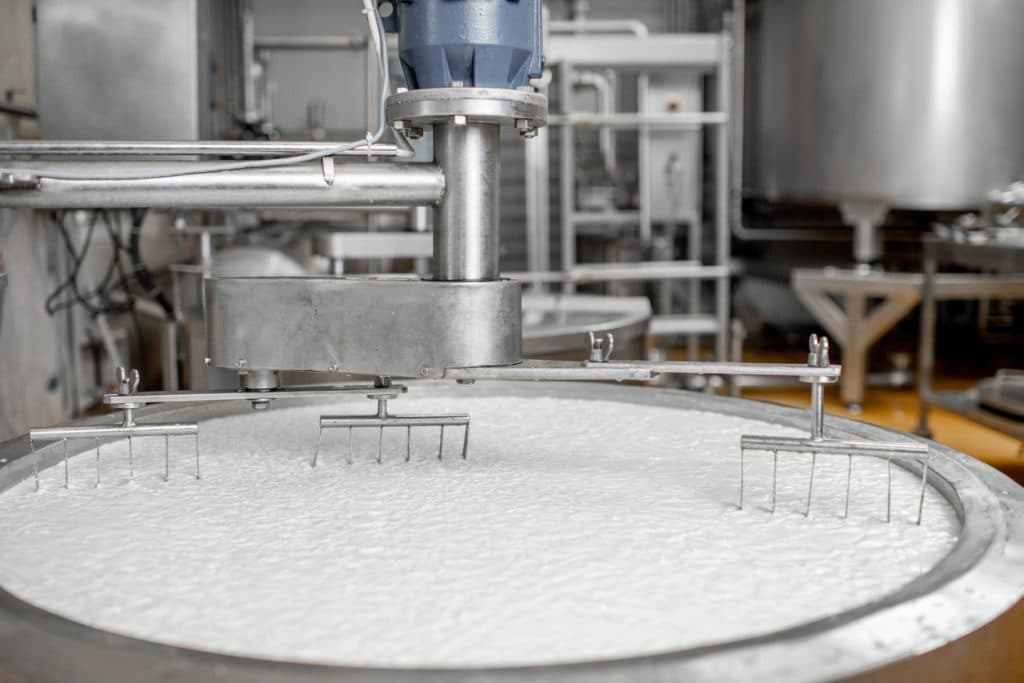
Milk mixing in the stainless tank during the fermentation process at the cheese manufacturing
  • Edited by: Damián Morais
Shifting protein economics and logistics disruption redefine competitiveness in dairy markets.

Insight Focus

Global dairy markets have steadied but remain freight‑driven. Logistics disruptions are now reshaping trade flows and regional premiums. Protein values are strengthening, MPCs are gaining on SMP and New Zealand product is commanding a transit‑speed premium into Asia. Gulf demand is softening, Indian SMP is undercutting prices and processors favour reliable WMP over riskier SMP‑AMF returns.

Fragile Balance, Logistics in the Driving Seat

In the next few weeks, the market sits on a fragile balance:

  • Prices: Powders have likely found a floor, with modest upside if demand stabilises; fats remain under pressure but can spike on any supply or logistics shock.

  • Trade flows: Freight and route risk, not just FOB prices, will dictate who wins demand in Southeast Asia and the Gulf.

  • Arbitrage: MPC’s protein‑density advantage and New Zealand’s freight advantage into Asia will continue to shape product mix and regional premiums.

  • Fundamentals: High milk supplies versus patchy demand argue for volatility rather than a straight‑line rally.

The best opportunities lie in logistics‑aware arbitrage. Buyers should choose origin, product and destination with freight, working capital and demand risk front of mind, rather than chasing headline theoretical returns alone.

Powders Firming, Fats Mixed

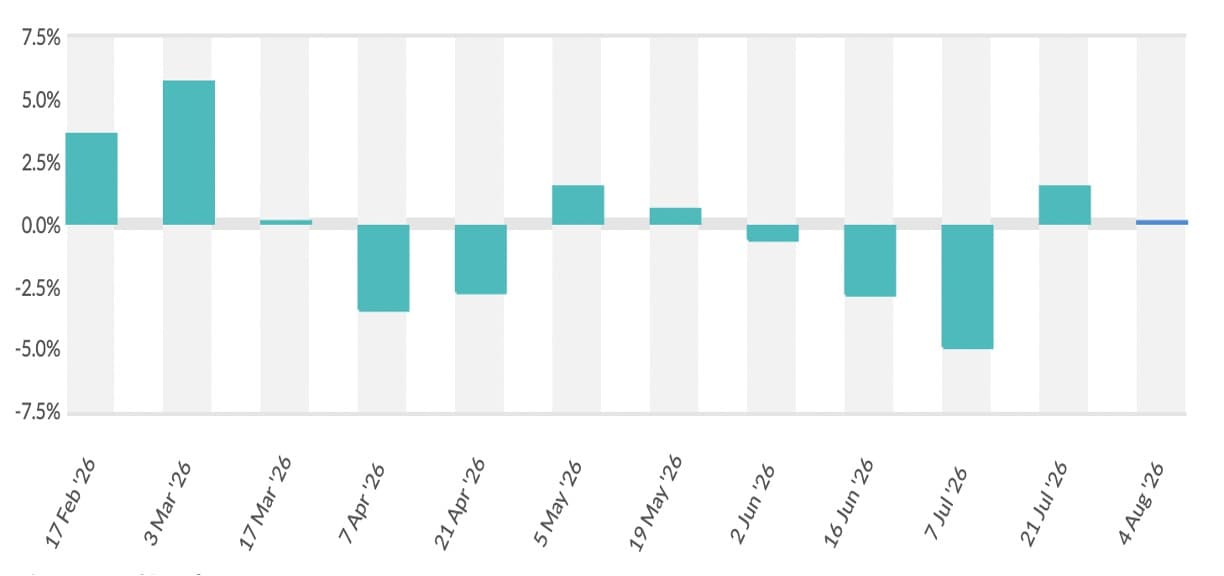
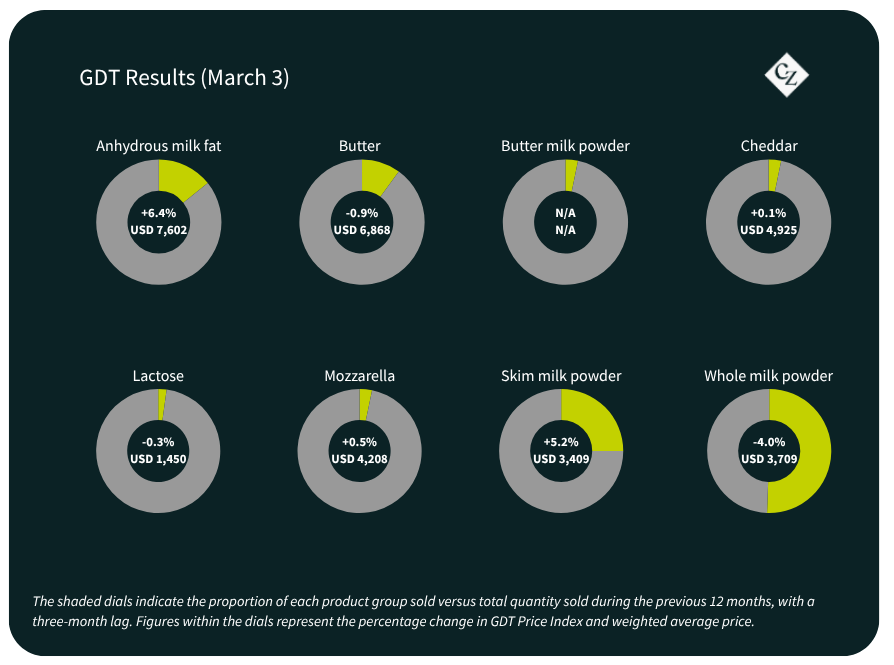
Global benchmark prices have stabilised after February’s sharp rally, with the latest mid‑March GDT auction essentially flat overall (+0.1% index), masking divergence within the complex.
deaf84df 8a2b 451d 9691 64bc9cd5bb2e

Skim milk powder (SMP) rose 5.2% to about USD 3,400/tonne, while whole milk powder (WMP) fell 4% to around USD 3,700/tonne, reinforcing the recent shift in value from fat‑heavy to protein‑heavy streams. Anhydrous milk fat (AMF) gained 6.4% to roughly USD 7,600/tonne, while butter eased slightly.

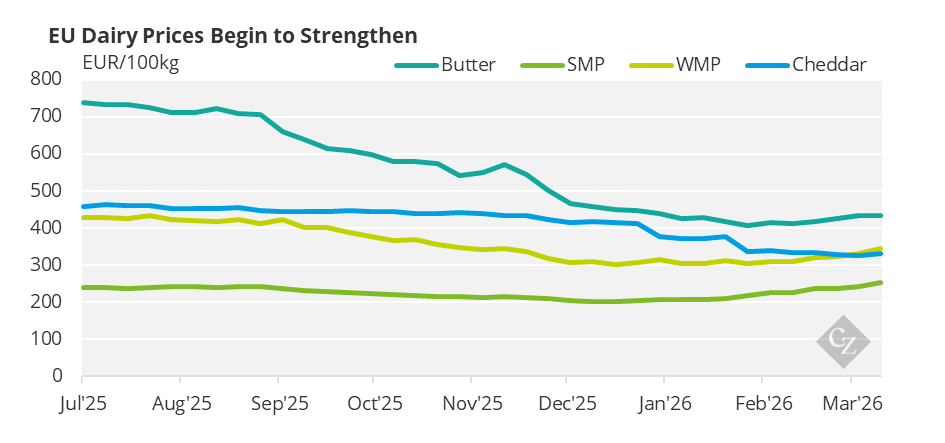
EU market data show a similar pattern. SMP was up 4.6% week on week in the week ending March 15 to around EUR 2,530/tonne. WMP was up 3.7% to near EUR 3,500/tonne and butter stayed relatively flat at about EUR 4,340/tonne, underlining a still‑compressed fat premium versus historical norms.
23175823 821f 47b4 a82a 1c85c9dc9767

Source: European Commission

In the UK, wholesale indicators suggest “green shoots” in powders and cheese as speculative buyers return, despite high milk supplies and product stocks. Overall, the last two weeks have consolidated February’s price reset rather than extended it, but the internal price structure of stronger protein, softer fat continues to evolve.

Trade Flows and Regional Differentials

Indian SMP into the Gulf: Reports of allegedly cheap Indian‑origin SMP moving into Gulf markets fit with India’s growing role as a price‑aggressive exporter when domestic stocks are comfortable. India is increasingly present in powder export flows, especially into price‑sensitive destinations. This undercuts Oceania and EU SMP in parts of the Middle East, widening regional differentials.

Gulf demand risk: At the same time, the Gulf faces income pressure from the broader regional crisis and shipping disruptions. Lower earnings for informal workers (for example, taxi drivers doing fewer trips) translate into weaker demand for value‑added dairy and foodservice channels, even as basic staples remain resilient. That combination of cheaper Indian SMP plus softer discretionary demand tilts the Gulf towards low‑cost ingredients and away from premium fat‑rich products.

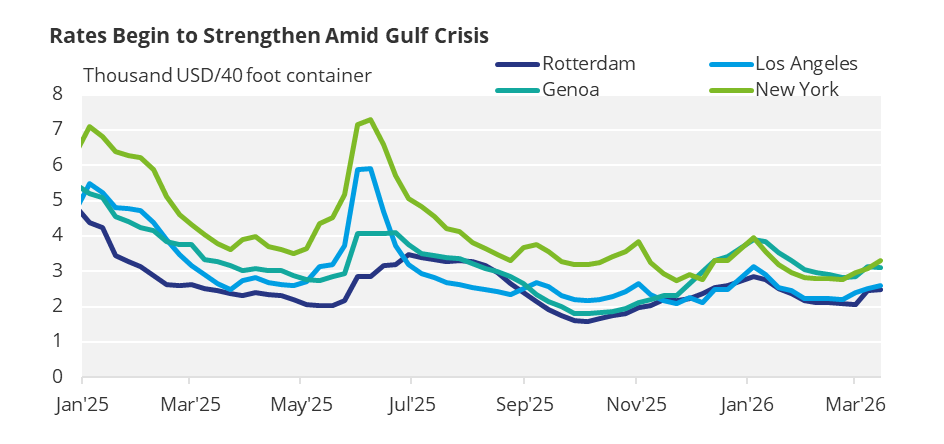
Freight‑driven geography: Red Sea and wider Middle East shipping risks have structurally raised freight rates and extended transit times, with many carriers routing via the Cape of Good Hope. This disproportionately disadvantages EU product into Southeast Asia versus New Zealand, despite EU’s nominal price advantage on paper. As a result, Southeast Asian buyers are willing to pay a premium for NZ-origin powders to secure shorter, more reliable transit and lower logistics risk.
83013176 e12a 4063 b11f f51b80e3f410

Source: Drewry

In short, EU powders should be the cheapest on a FOB basis, but heavily penalised into Southeast Asia by freight. New Zealand powders are mid‑priced FOB but best landed into Asia. Indian SMP is cheapest into the Gulf and AMF is carrying a strong premium into Middle East destinations but with elevated route risk.

SMP+AMF Versus WMP, MPC Versus SMP

SMP + AMF stream: On current GDT prices, the theoretical SMP+AMF stream return looks attractive relative to WMP. However, NZ processors are likely to keep prioritising WMP.

SMP is the most commoditised and hotly contested product globally, while AMF demand is heavily concentrated in the Middle East—precisely the region facing freight and demand uncertainty. WMP, by contrast, has a broader market base and can be placed more reliably across Asia and Africa.

In a risk‑heavy freight environment, processors may prefer slightly lower, but more certain WMP returns and faster cash conversion over higher‑value SMP+AMF that ties up working capital and market risk.

MPC versus SMP protein arbitrage: The protein relativity premium for milk protein concentrates (MPCs) over SMP is widening. With 1 tonne of MPC70 containing roughly the same protein as 2.06 tonnes of SMP, logistics become a key driver. One container of MPC moves more protein per slot than SMP, reducing freight and warehousing cost per unit of protein.

In a world of elevated freight risk and buyers wanting larger buffer stocks, MPC offers a compelling arbitrage for protein users—especially where functional requirements allow substitution away from SMP. This is likely to keep MPC prices relatively firm versus SMP and could cap SMP’s upside in some applications.

Supply, Demand and Macro Fundamentals

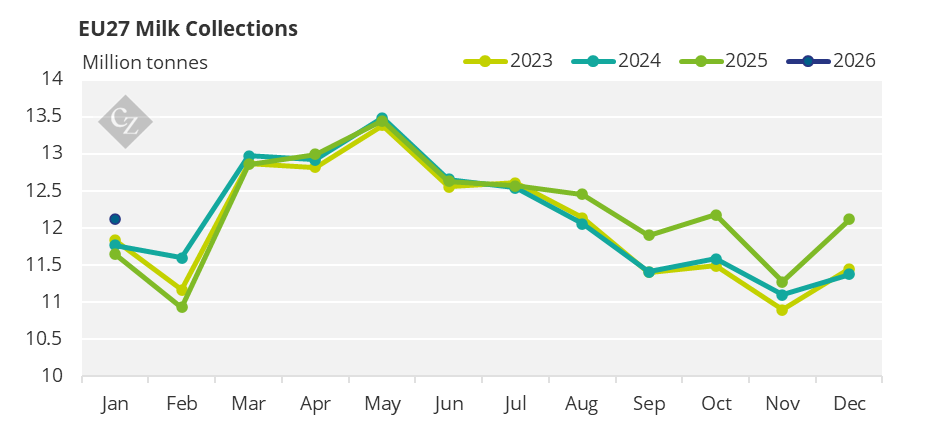
On the supply side, milk production remains robust in several key regions. GB deliveries in February were up 3.7% year‑on‑year and 5.3% higher for the season to date, a record level that keeps pressure on processing capacity.

EU milk deliveries also continue to grow, supported by previously high farmgate prices and good forage conditions. This abundant raw milk underpins ample availability of powders and fats, even as some product stocks begin to tighten at the margin.
366194dd 81f2 4b36 aec7 f960e6bf32fe

Source: Dairynews7x7 28th March, 2026  From Our Partner Channel

#GlobalDairy #DairyTrade #SupplyChain #MilkPowder #DairyMarkets #FreightCosts

Stay Updated

Get the latest dairy industry news directly in your feed.

Prefer Us on Google Search

Swipe to continue reading

Previous Article

Next Article