Latest Blogs
See More

Indian Dairy News
DairyNews7x7
Global Dairy News

DairyNews7x7
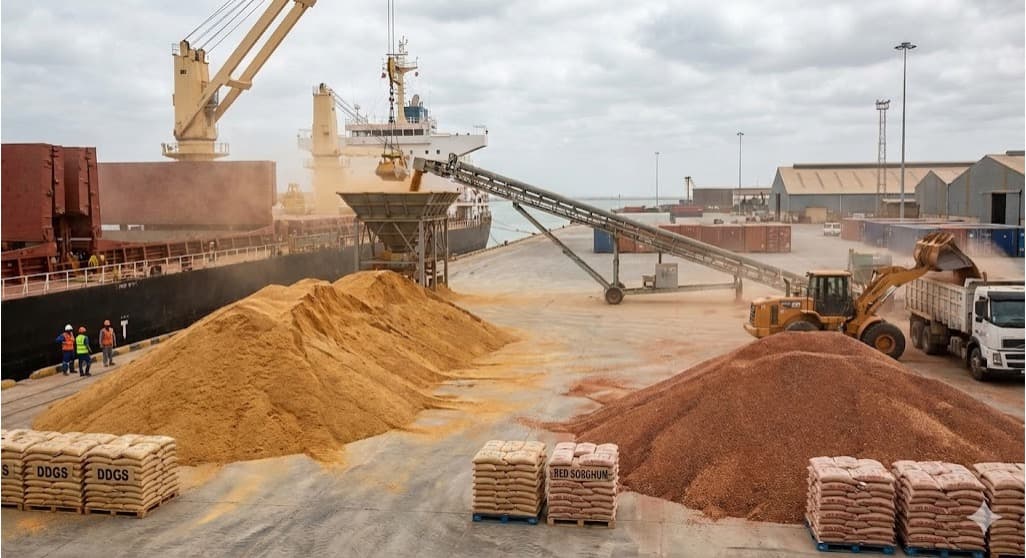
In a significant development under the India-US interim trade framework, India has agreed to allow duty-free imports of dried distillers’ grains with solubles (DDGS) and red sorghum from the United States. The move has sparked intense debate among stakeholders across the livestock, feed and farming ecosystems, with divergent views on its influence on feed costs, maize prices and downstream agricultural markets.
At its core, this policy shift is calibrated to augment feed ingredient supply while protecting sensitive agricultural segments. India has capped the DDGS duty concession at 5 lakh tonnes initially, accounting for roughly 1 % of the country’s total DDGS consumption, a cautious step meant to limit market disruption while injecting high-quality protein/energy feed into the system.
The cattle feed industry in India is heavily dependent on maize and soybean meal as primary energy and protein sources. Maize typically contributes 15–20 % in cattle rations, while soybean meal accounts for a significant share of the protein component. These feed ingredients are subject to price volatility driven by domestic supply, demand from ethanol blending programmes, and global commodity movements. Over the past year, Indian maize prices have remained soft following a strong kharif harvest and abundant arrivals, with national wholesale averages oscillating around Rs2,100–Rs2,200 per quintal — well below some regional Minimum Support Price levels — reflecting surplus supply pressure. Soybean markets, meanwhile, have seen periods of weakness with soymeal rates under pressure as DDGS and other protein substitutes gain share.
DDGS imports from the USA — projected to land at competitive price points (Rs 21,000–Rs 29,000 per tonne CIF on a duty-free basis) — introduce a pressure valve in feed formulation economics. DDGS is not a full substitute for maize in rations but functions as a high-value protein-energy blend, allowing feed formulators to replace part of maize and a larger portion of soybean meal without materially affecting animal performance. DDGS inclusion typically ranges between 15–25 % of concentrate feed, which translates to modest reduction in maize usage (roughly 5–8 % displacement in concentrate maize demand) while substantively lowering reliance on pricier soymeal. This dynamic has been observed in the domestic market where abundant DDGS availability has weighed on broader protein feed prices.
Red sorghum imports, priced competitively depending on freight and global cycles (estimated in the region of Rs 13,000–Rs 32,000 per tonne CIF duty-free), present another partial substitute for maize as an energy grain in cattle and mixed livestock feeds. Sorghum can displace up to 30 % of the grain component in typical feed formulations when price spreads justify it, offering feed mills flexibility to cushion maize price spikes. However, sorghum and DDGS are complements in ration formulation, and neither will fully replace maize given its nutritional role and high digestible energy content.
Also Read : Karnataka mobilises distilleries to rescue maize farmers after price collapse
Crucially, this liberalisation comes at a juncture when the maize market is already soft and farmers are feeling the strain of prices below production cost in some regions, prompting calls for market intervention pricing and targeted support. The state of the soybean complex is also mixed: while crushing margins have been tight, MSP hikes and acreage shifts between soybean and maize reflect farmers’ price-led crop choices.
From a macro perspective, duty-free DDGS and red sorghum imports are unlikely to cause a sudden collapse in maize or soybean prices — partly because the DDGS import concession is consciously limited in quota and because maize grain itself remains protected from duty‐free entry. Maize and soybean import tariffs and GM crop restrictions remain intact, ensuring core domestic markets are shielded. Instead, these imported feeds will likely act as price stabilisers and cost moderators. By offering lower-cost alternatives to traditional high-cost ingredients, feed manufacturers can manage formulation costs more efficiently, particularly when domestic maize and soymeal prices are elevated due to demand cycles or supply lags. This will benefit dairy, poultry and livestock intensification segments, which are highly sensitive to feed cost inflation.
Stakeholders in the farm economy, especially maize and soybean farmers, have voiced concerns that imports, even if limited, could exert downward pressure on domestic prices and margins, particularly in markets already facing surplus and weak demand. These concerns underline the delicate balance policymakers must maintain between ensuring feed security and protecting farm incomes.
In summary, duty-free DDGS and red sorghum imports from the USA can improve feed affordability, diversify ingredient supply and moderate maize and soy price volatility without fundamentally upending domestic price structures. Their impact will be shaped by quota management, global price shifts, and domestic crop cycles — and must be complemented by strong support mechanisms for farmers to ensure sectoral resilience.
Source : Blog by Kuldeep Sharma Chief Editor Dairynews7x7