Dairy sector needs to be fortified with Dr Kurien’s wisdom and teachings
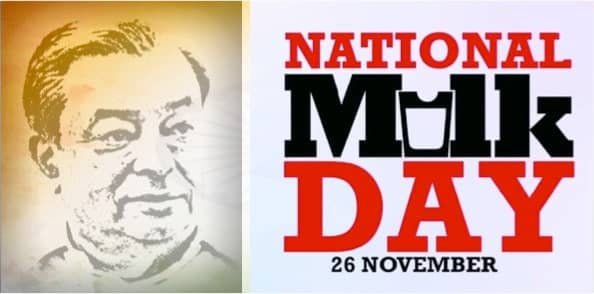
We must carry forward the efforts of Verghese Kurien, the father of India’s White Revolution
The Food and Agricultural Organisation (FAO) established National Milk Day (NMD) in India on November 26, 2014, in honour of Padma Vibhushan Verghese Kurien — known as the father of India’s White Revolution or the Milkman of India. The Indian Dairy Association, the National Dairy Development Board, and major State milk federations observe this day every year.
On this day, these events bring to the fore the contributions of India’s dairy farmers to society and the economy. The events emphasise the importance of milk and value-added milk products in everyone’s life and of the dairy sector in the economy.
Kurien’s efforts helped transform India from a milk deficit nation to a surplus one and eventually as the largest producer globally with farmers’ cooperation. This year, India is celebrating the 99th birth anniversary of Kurien.
The Amul Story
On December 14, 1946, AMUL was established in Anand, Gujarat, to protect farmers from exploitation by Polson, a dairy products firm that dominated the business then. Initially, AMUL supplied milk without any formalised distribution network.
The AMUL brand had not been recognised yet, and it was called KDCMPUL (Kaira District Cooperative Milk Producer’s Union Ltd), which was established by Tribhuvandas Patel.
Initially, it started with two dairy co-operative societies, procuring 247 litres of milk a day. To carry out Patel’s vision, Kurien began to work with Patel and developed dairy co-operatives in Kheda district.
The dairy co-operatives’ objective was to procure milk directly from farmers and pay an appropriate amount based on the quality of milk. Kurien wanted to give KDCMPUL a unique name and he even asked farmers for suggestions. After consultation with farmers and employees, it was named AMUL in 1949. And by the end of 1960, AMUL had become a well-known brand in Gujarat.
Anand fragrance to spread across India
In 1964, Prime Minister Lal Bahadur Shastri, impressed with Kurien’s work, asked him to replicate the AMUL model across the country. Under the leadership of Kurien, the Central government established the National Dairy Development Board (NDDB) in 1965. At that time, India’s milk demand exceeded supply. India depended heavily on imported milk to fulfil domestic demand.
To overcome this problem, the NDDB in 1970 launched the ‘Operation Flood’ programme under Kurien’s leadership, to expand dairy cooperatives’ network throughout the country based on the pattern followed in Anand. As a result of these efforts, India has the largest dairy cooperative network and is now the largest milk producer globally. Apart from becoming self-sufficient in milk, India accounted for 22 per cent of the milk produced globally in 2018.
Under Kurien’s leadership, GCMMF (Gujarat Co-operative Milk Marketing Federation) was established in 1973 to sell and brand AMUL products, and IRMA (Institute of Rural Management Anand) in 1979, to produce professional managers.
Dairy part of nation’s economy
Kurien’s immense efforts have made India’s dairy sector vital to the Indian economy, especially in terms of providing employment to the rural workforce. The dairy sector has helped reduce rural poverty and inequity, and ensured food security for millions of rural households.
The livestock sector contributed 4.11 per cent to India’s GDP in 2019. The dairy sector claims a significant share within the livestock sector, contributing to 67 per cent of the total livestock output (National Accounts Statistics, 2019).
Interestingly, milk output stands at 20.6 per cent of the combined production of paddy, wheat, and pulses. This sector also provides employment opportunities, especially to women, and landless, small, and marginal farmers.
Annually, 8.4 million farmers depend on the dairy sector for their livelihood, of whom, 71 per cent are women. Furthermore, agriculture employs rural households for 90-120 days a year, and dairying provides an alternative employment opportunity for them in the remaining days.
Disparity among States
India has achieved self-sufficiency in milk production, thanks to it having the second largest cattle population in the world after Brazil and a robust dairy cooperative network in a few regions.
However, data show that nine Statesproduced 77 per cent of milk, and in rest of the States the per capita availability of milk is below the national average. Milk production is, therefore, concentrated in those nine States.
Dairy promotion among small and landless farmers is hence necessary to increase milk availability, as this will also help reduce the nutrition-related problems among rural households. Additionally, State governments should channelise milk procurement through formal ways, such as via cooperatives or the AMUL model. This will help boost the income of millions of small and marginal farmers.
Moreover, strengthening milk cooperatives across States will help generate alternative employment opportunities for millions of rural farmers, especially women and economically disadvantaged communities. The Centre recently announced ₹15,000 crore under the Atmanirbhar Bharat scheme ‘Pashudhan’, to support animal husbandry and the livestock sector, to increase milk procurement, milk processing, and for setting up dairy infrastructure. Without a flourishing dairy sector, the government will not be able to achieve its objective of doubling farmers’ income.