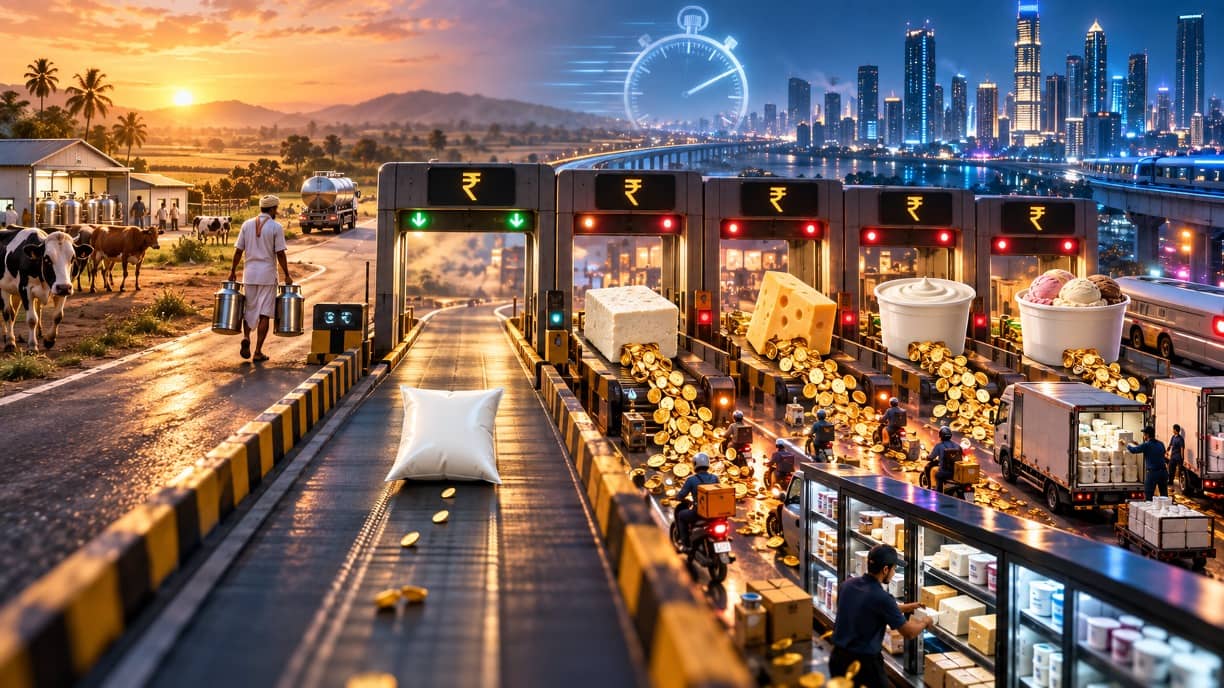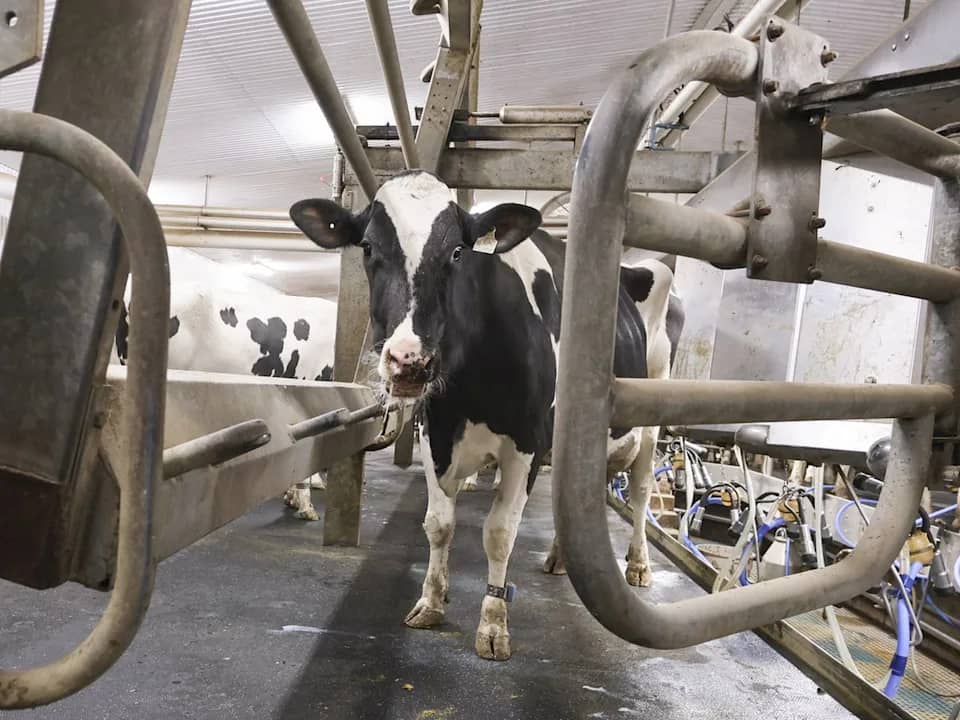
Central schemes have contributed in improving the productivity of milch animals. However, the sustainability of our dairy sector largely depends on bringing about efficiencies across the dairy value chain.
The dairy sector has been a growth propeller for the agricultural and allied sectors, and has significantly contributed towards creation of rural wealth. Its contribution to the agricultural and allied sectors in terms of value of output has increased from 17% in 2013-14 to 21% in 2018-19, and the value of output of milk group is even higher than the combined value of output of paddy, wheat and sugarcane.
Also read : Mr Dilip Rath Unanimously elected to the Board of IDF
With annual growth of about 5.6% during the last eight years, in real terms, milk group also outpaced the agricultural and allied sectors, which grew at about 3.3% during the same period. At a time when the share of food in total expenditure has been declining over the years, the share of milk in the food basket has been increasing both in rural and urban areas. While the contribution of milk in the agricultural and allied sectors was 18.54% in the 2011-12 to 2018-19 period, its contribution in terms of incremental value of output of the agricultural and allied sectors has been 31.39%—this demonstrates that the dairy sector has been playing the role of growth engine in the farm sector. In fact, the contribution of dairy to the total income of rural communities, particularly for the landless and small and marginal farmers, has been steadily increasing over the years.
Inclusive social development
Also read : Self reliance is already a part of our national ethos : Dilip Rath , NDDB
The dairy sector has also been a tool of inclusive socio-economic development in our country, as the milch-animal holding is far more equitable than landholding—while small and marginal farmers own only 45% of farmland, they own about 75% of bovines. In fact, if the current trend of increasing the share of dairy in the agricultural and allied sectors continues, agricultural growth in our country will become more inclusive than it has earlier been.
However, the agricultural sector as a whole, and the livestock and dairy sector in particular, is currently facing one of its biggest challenges due to Covid-19. The pandemic and the consequent lockdown affected the daily sector, both in terms of milk procurement and sales, due to disruptions in the milk supply chain.
The most impacted segment within the dairy sector had been the unorganised private players, as both their milk procurement and sales significantly declined during the lockdown. Producer-centric organisations such as dairy cooperatives maintained their operations despite challenges in transportation, shortage of labour, market disruptions, and virtual closure of hotels, restaurants and catering. Despite the challenges faced by dairy cooperatives in maintaining and running the supply chain, during the first fortnight of the lockdown the sale of milk dropped by about 17%, while milk procurement got reduced by only 4.7%.
Also read : Farmer-owned cooperatives shielded dairy farmers
Working capital loans
This surplus milk led to accumulation of commodities such as milk powder and fat, which resulted in liquidity crunch in the dairy industry. The interest subvention on working capital loans scheme of the central government for dairy cooperatives, implemented by the National Dairy Development Board (NDDB), helped in ameliorating the liquidity crisis to some extent. However, given the fact that the domestic market is yet to fully recover to the pre-lockdown level, to ensure milk business sustainability the commodities have to be exported in the next few weeks. In this context, the recent announcement of the government of Gujarat to provide financial assistance of Rs 150 crore to the Gujarat Cooperative Milk Marketing Federation for export of milk powder is a welcome move, as Gujarat has the largest share of commodity stocks.
Central sector schemes such as the National Dairy Plan Phase I and the Rashtriya Gokul Mission have undoubtedly contributed in improving the productivity of our milch animals through scientific animal breeding, health and nutrition. However, the sustainability of our dairy sector—currently growing at more than 6% per annum—would largely depend on bringing about efficiencies across the dairy value chain. This would require renewed thrust on expansion and upgrading of processing capacity, reduction in cost of milk production, and enhancing the share of the organised sector in dairying.
Covid-19 has led to increased consumer awareness about safe, healthy, nutritious and immunity-boosting foods that are hygienically processed and packed. The dairy industry during Covid-19 has the unique opportunity to leverage this change in consumer preferences by using innovative marketing strategies and introducing a range of immunity-boosting dairy products.
Covid-19 as an opportunity
Covid-19, in fact, has offered the dairy industry the opportunity to undertake structural reforms to bring about efficiencies, profitability and sustainability across the dairy value chain and introduce innovations. For inclusive and sustainable growth of this sector, we will have to focus on dairy underdeveloped regions of our country by creating and strengthening producer-centric institutions.
The NDDB, given its extensive reach to dairy farmers through the dairy cooperative network, has been playing a major role in providing milk producers with the necessary advisories and guidelines to tide over the current challenging times. The NDDB is also regularly organising a series of interactive webinars, called the NDDB Samvad, linking all stakeholders, including dairy farmers and cooperatives, to create awareness and share information and knowledge on new innovations/technologies.
Power of information sharing
In addition, the NDDB has been supporting the central government through the implementation of the Information Network for Animal Productivity & Health (INAPH), which has turned into a national database for all breeding and health-related services (Pashu Aadhaar). The National Animal Disease Control Programme (NADCP) and the Nationwide Artificial Insemination Programme (NAIP) are being implemented under this network. The e-Gopala app, recently launched by the Prime Minister, has provided a single-window, one-stop solution platform to dairy farmers for getting advisories on animal breeding, health and nutrition, besides providing a transparent trading platform for animal germplasm (frozen semen, embryos and milch animals). It has the potential to be a game-changing technological platform for farm-level productivity. The NDDB recently launched the call centre Pashu Mitra for dairy farmers to resolve their problems related to animal breeding, health and nutrition, and the response has been encouraging.
The recent farm sector reforms, coupled with the constitution of farmer producer organisations (FPOs), being aggressively promoted by the government will undoubtedly empower our dairy farmers. This will give an impetus to the growth momentum of the farm sector, in which dairy will continue to be the growth engine. Vocal for Local and AatmaNirbhar Bharat Abhiyan will not merely remain policy enactments, but would help the farm sector in general and the dairy sector in particular to move to a new normal that is more efficient, inclusive and sustainable.
(The author is Dilip Rath chairman, National Dairy Development Board. Views are personal)