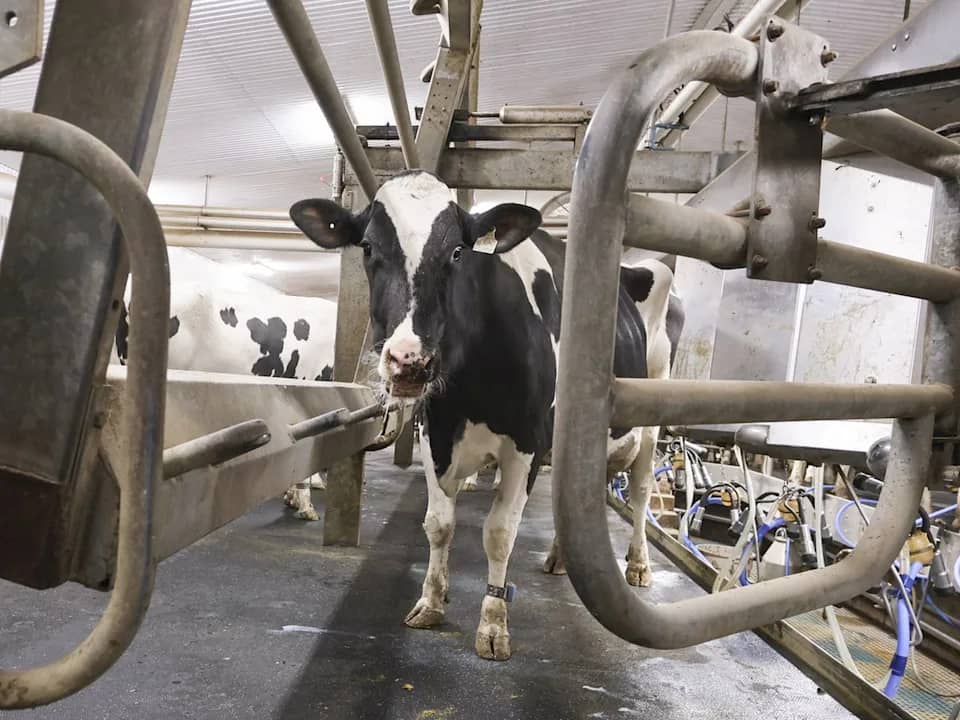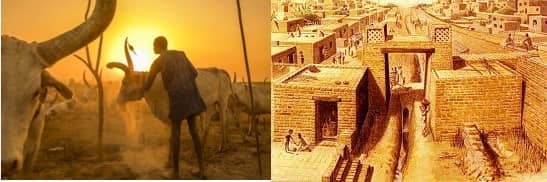
Our history with milk presents a chicken-or-egg conundrum: Humans couldn’t digest the beverage before they evolved mutations that helped them do so, yet they had to already be consuming milk to change their DNA. “There’s always been the question of which came first,” says University of Pennsylvania geneticist Sarah Tishkoff. “The cultural practice or the mutation.”
Now, scientists have found some of the oldest evidence yet for dairy drinking: People in modern Kenya and Sudan were ingesting milk products beginning at least 6000 years ago. That’s before humans evolved the “milk gene,” suggesting we were drinking the liquid before we had the genetic tools to properly digest it.
Ability to digest milk as adults
All humans can digest milk in infancy. But the ability to do so as an adult developed fairly recently, likely in the past 6000 years. A handful of mutations allows adults to produce the enzyme lactase, which can break down the milk sugar lactose. Genes that enable what’s called lactase persistence are widespread in modern Africa, which has four known lactase persistence mutations. (European populations rely on just one.)
When these lactase mutations evolved, they spread rapidly—evidence that people who carried them had a big advantage. “It’s one of the strongest signals of natural selection ever observed,” says Tishkoff, who was not involved with the study.
Study of eight skeletals
To peer into our milk-drinking past, researchers turned to Africa, where societies have herded domesticated cows, sheep, and goats for at least 8000 years. The scientists examined eight skeletons excavated in Sudan and Kenya, which were between 2000 and 6000 years old. They scraped hardened dental calculus from their teeth and looked for known milk-specific proteins trapped inside.
The findings revealed that these people were consuming some milk products kind of things around 6000 BC the team reports today in Nature Communications. That makes this the earliest known direct evidence for dairy consumption in Africa, and perhaps the world.
The research also shows dairying in Africa goes back just as far as it does in Europe—perhaps longer. That undercuts a myth, propagated by white supermacist, that lactase persistence and milk drinking are somehow associated with white Europeans.
What’s more, ancient Africans dont appear to have evolved any milk digestion genes according to a study of some of their skeletal DNA published in 2020. “It looks like the community was drinking milk before they had lactase persistence,” says Madeleine Bleasdale, a co-author of the new work and a specialist in ancient proteins at the Max Planck Institute for the Science of Human History.
Proteins from milk and fermented milks
The proteins could have come from milk, cheese, or fermented milk products like yogurt, which are common in Africa today. Fermentation is a strategy some cultures use to break down milk sugars before consuming them, which may make it easier for people without the adaptation to consume milk products without drinking raw milk.
The mutations may have eventually arisen because they helped people get more nutrients from their milk, giving them a leg up over their comrades, says Fiona Marshall, an archaeologist at Washington University in St. Louis who was not involved in the study. “Among those people, any individuals with lactase persistence would live longer and have more children.”
The selection pressure for lactase persistence might also have been environmental. Milking is a sustainable way to manage herds under tough conditions, allowing herders to get nutrition from their animals without killing them. During droughts, for example, lactase persistent herders could make better use of cattle and goats as four-legged water filters and storage containers. “If you have cows, you have a source of liquid and proteins and nutrition,” Tishkoff says. “As long as you can keep your cattle alive, of course.”
History of milk in India
One of the keys to sustaining the flourishing civilizations of the Indus Valley may have been the development of dairy production. Isotope analysis of lipid residues from ceramic vessels found at the site of Kotada Bhadli indicates that around 2500 B.C., dairy products were common there. This is the earliest such evidence known in India. Milk and cheese from domesticated cattle and water buffalo would have been a major component of the local diet, and any surplus could have been traded with other settlements.
Never miss an important dairy update
Follow DairyNews7x7 on Google to get live milk prices, policy alerts, and daily headlines directly in your feed.