Latest Blogs
See More



Indian Dairy News

DairyNews7x7
Global Dairy News

DairyNews7x7
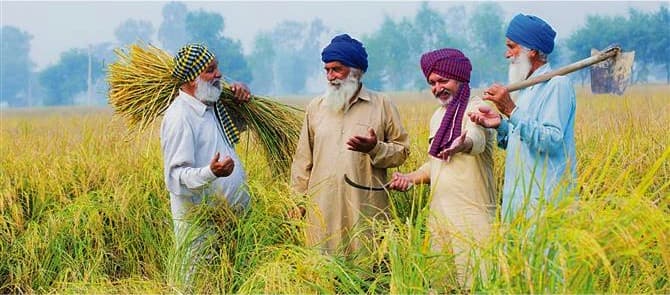
FPOs offer an excellent opportunity to farmers or ‘agripreneurs’ to establish direct market linkages. Aggregation of skills and resources is a potent way to deal with competition in the marketplace and sustain a profitable business.
IN modern-day agriculture, farmers need to move beyond mere production and find ways to establish market linkages. Agribusiness encompasses diverse activities such as the purchase of agri inputs, production, processing and reaching out to customers with the products. An ‘agripreneur’ has to compete not only with fellow producers but also with big companies and multinational corporations. Usually, an individual farmer does not have the resources and the capability to be effectively competitive in this arena.
FPOs offer an excellent opportunity to farmers or ‘agripreneurs’ to establish direct market linkages. Aggregation of skills and resources is a potent way to deal with competition in the marketplace and sustain a profitable business. However, mere creation or incorporation of an FPO may not help in achieving the desired objectives, such as enhancing farmers’ income. Sustainability, profitability and growth are the key parameters. Timely efforts are needed to address the roadblocks in the path of the FPOs’ success.However, the aggregated strength of farmers can be instrumental in facilitating the smooth conduct of agribusiness. The concept of the Farmer Producer Organisation (FPO) has emerged as a promising solution in this regard.
First of all, one has to understand the concept of a Producer Organisation (PO). A PO is a legal entity formed by primary producers — farmers, milk producers, fishermen, weavers, rural artisans, craftsmen, etc. It can be created in a number of ways, such as a producer company or a cooperative society. An FPO is an organisation created by farmers as the primary producers. Only primary producers can become its members. An FPO can be set up by farmers, beekeepers, dairy farmers, planters, fish farmers, etc.
Small producers do not have the required scale of operations individually (both in terms of inputs and produce) to get the benefit of economies of scale. On account of a long chain of intermediaries that connects the producers with the markets, they receive only a small part of the value that a consumer ultimately pays. Economies of scale lead to better bargaining power both on the supply and demand sides.
There are many institutions, such as NABARD, Small Farmers’ Agri-Business Consortium, government departments, state agricultural universities and NGOs, that support the promotion, incorporation and development of FPOs.
Legal provisions
Different types of FPOs can be formed for pooling the farmers’ efforts, depending on the legal provisions and the procedure of registration/incorporation. There are various options for registering FPOs: as a producer company under the Companies Act; under the Cooperative Society Act; under the Multi-State Cooperative Society Act; as a society under the Society Registration Act; and as a public trust under the Public Trust Act. These options vary in terms of operations, regulations and the distribution of dividends among the members.
Producer organisations can benefit the members by offering better prices for their produce at the time of purchase. Similarly, these institutions can procure inputs/raw material in bulk and sell to members at a lower margin. Such activities are permissible for producer organisations under various legal provisions. Keeping in view sustainability and efficiency, producer companies can be considered as the most promising of the given options.
Overselling the potential benefits of FPOs poses a threat to subsequent sustenance. Members normally join with high and unrealistic expectations. A wide gap between actual benefits and exaggerated promises may impact the participation and involvement of the members. For long-term profitability and sustenance, there is a need for ensuring growth of business activities of FPOs.
Importance of aggregation
An FPO is rooted in the principle of aggregation. This aggregation plays out in the form of joint efforts in the domain of purchase, production and marketing. Increased quantum of aggregation has an affirmative effect on growth and profitability.
The scope for enhancing the farmers’ income through input cost-saving is limited. Effective forward linkages are a must. FPOs need to plug the leakage of income on account of poor or negligible forward linkages.
The majority of the FPOs face the challenge of sustainability on account of poor business planning; at times, there is no business plan in place. A business plan is a vital document that is designed to pave the way for the FPO’s progress. It describes the relevant internal and external elements and strategies for starting a new venture. It is an integration of functional plans pertaining to marketing, finance, manufacturing, sales and human resources. In the absence of a sound business plan, FPOs are not able to avail of the credit lines from the banks and are not able to scale up their operations. Most of the times, chief executives hired by FPOs lack the ability to come up with a sound business plan. Stakeholders such as Cluster-Based Business Organisations (CBBOs) and Producer Organisation Promoting Institutions (POPIs) are also not able to provide the requisite support to FPOs.
Apart from the efforts on the part of individual FPOs, the institutionalisation of the support mechanism in various governmental departments and banks can be instrumental in building confidence among FPOs. Such stakeholders should be sensitised to the working of FPOs so that a preferential treatment system is put in place. Such treatment can boost FPOs’ business activities as well as membership. As of now, the level and quantum of linkage of FPOs with various government schemes leave a lot to be desired.
Direct market linkages
FPOs offer an excellent opportunity to the farmers or ’agripreneurs’ to establish direct market linkages. Aggregation of skills and resources is a potent way for dealing with the competition in the marketplace and sustaining a profitable business. However, mere creation/incorporation of an FPO may not help in achieving the desired objectives, such as enhancing the farmers’ income. Sustainability, profitability and growth are the key parameters. Timely efforts are needed for addressing the roadblocks in the path of FPOs’ success.
Constitution of Farmer Producer Organisations (FPOs)