Latest Blogs
See More
Indian Dairy News

DairyNews7x7
Global Dairy News

DairyNews7x7
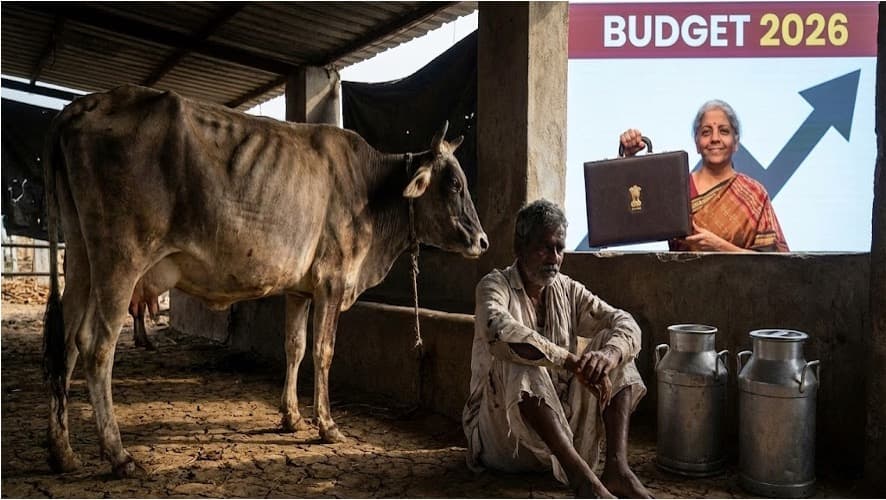
As Finance Minister Nirmala Sitharaman presented the Union Budget 2026–27 in Parliament on 1 February 2026, the government reiterated its commitment to agriculture and allied sectors — including animal husbandry, dairying and livestock — as engines of rural employment and farm incomes. While the budget speech highlighted interventions across fisheries, entrepreneurship and ecosystem support, a closer look at the actual allocations and scheme details reveals a mixed picture for Indian dairy — a sector that underpins the livelihoods of over 8 crore farmers and contributes significantly to rural GDP.
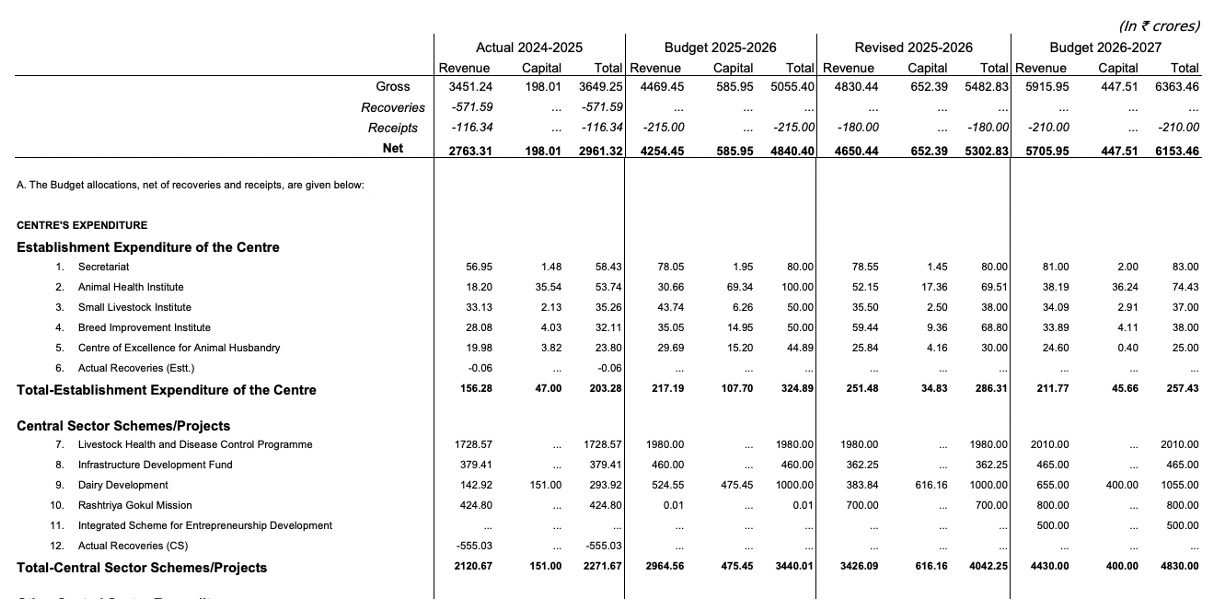
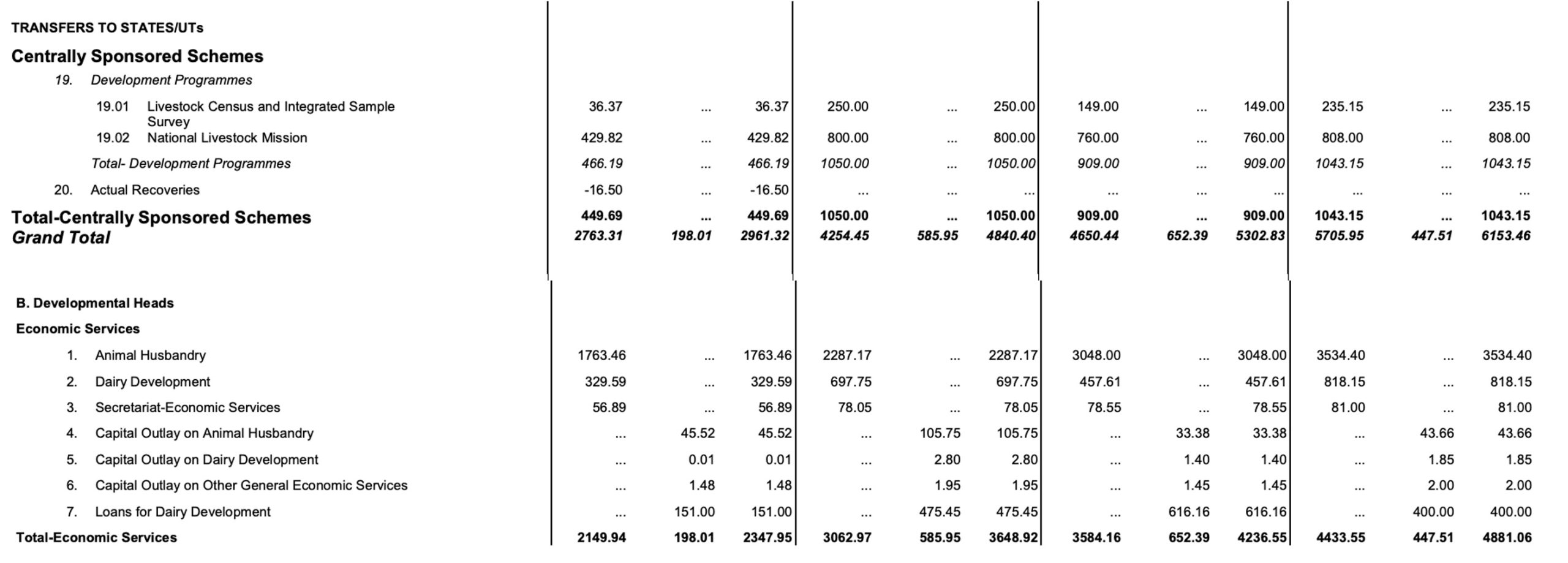
The Department of Animal Husbandry & Dairying (DAHD) in Budget 2026–27 has been allocated approximately ₹6,153 crore — a noticeable jump compared to previous years and one of the highest nominal figures ever for the department.
Within this:
Livestock Health & Disease Control secures about ₹2,010 crore, sustaining crucial vaccination drives and animal health services.
National Programme for Dairy Development (NPDD) is allocated ₹1,055 crore, up from roughly ₹1,000 crore last year, aimed at chilling, processing and cooperative strengthening.
Rashtriya Gokul Mission (RGM) gets approximately ₹800 crore, a significant step given its past funding volatility and its role in indigenous breed improvement. However it is only an increment of Rs 100 crore which is not sufficient to solve productivity challenge.
Animal Husbandry Infrastructure Development Fund (AHIDF) continues with ₹465 crore for interest subvention and credit guarantees to attract private investment. This is again an increment of Rs 100 crores which is just not going to make significant change in a sector where only 20% total milk produced is processed in organised sector.
A new Integrated Entrepreneurship Development Scheme is introduced with about ₹500 crore to spur credit-linked support for livestock and dairy value-chain enterprises. This is a good initiative but I am not sure how is it different from Entrepreneurship development schemes being offered by NABARD earlier . An important aspect of entrepreneurship development is training and development and even for dairy and agriculture sector it calls for 18% gst on training which may not make any sense if entrepreneurship culture is to be well established in true sense.
These headline numbers are solid on paper — yet a deeper evaluation shows that increases are incremental and structured to sustain existing programmes rather than reimagine the way India’s dairy economy functions.
In her speech, FM Sitaraman emphasised the role of allied sectors — including animal husbandry — in augmenting rural incomes and creating quality jobs in rural and peri-urban India. The Budget speech explicitly outlined support for:
Credit-Linked Subsidy Programmes for entrepreneurship,
Scaling-up and modernisation of livestock enterprises,
Creation of integrated livestock, dairy and poultry value chains,
And encouragement of Livestock Farmer Producer Organisations (FPOs). FPO in breeding is a good initiative provided the selection of beneficiary is done judicially. Most of the time it has been seen that any scheme on dairy farming including breeding is captured by group of influential individuals or companies rather than the sincere aspirants.
This lexicon of support points to a policy intent to catalyse private investment, enterprise formation and value chain integration. However, intent alone — without deeper public investment and targeted incentives — rarely translates into rapid structural change in an economy as large and diverse as India’s dairy sector.
RGM’s enhanced allocation signals recognition of the productivity constraints posed by sub-par genetic stock. Still, past experiences of fund crunch and under-utilisation of earlier provisions caution against complacency. Reports from the field have highlighted that earlier releases for RGM were exhausted quickly and even constrained the scheme’s ability to hit its AI targets.
The ambition to build more Gokul Grams and enhance indigenous breed genetics is strategic — but even ₹800 crore, spread across India’s vast livestock base, runs the risk of being a drop in a deep ocean. Larger, sustained funding with performance accountability mechanisms would be necessary to achieve noticeable productivity uplift.
The continued funding for the NPDD and AHIDF is welcome — yet the incremental nature of increases indicates a stability-rather-than-acceleration approach. The AHIDF’s credit-linked structure helps attract private capital, but access costs, credit terms, and collateral challenges often limit its reach to smaller dairy entrepreneurs and cooperatives.
For example, milk chilling, processing lines, quality testing labs, and cold-chain motors — vital for reducing post-harvest losses — still lack the kind of targeted subsidy or risk-sharing mechanisms that could enable wide-scale adoption, especially among micro and small players.
One strong element in the new budget is the emphasis on entrepreneurship and the creation of integrated value chains. The ₹500-crore scheme for livestock entrepreneurship — geared towards credit-linked subsidies — aims to lower entry barriers for startups and FPOs in dairy, feed, veterinary services, and allied ventures.
The Finance Minister also underscored the need to expand veterinary capacity and veterinary education infrastructure — including loan-linked capital subsidies for private veterinary colleges, laboratories, and breeding centres — a positive step in addressing the chronic shortage of para-vets and dairy-oriented health services.
While such human capital interventions take time to translate into productivity and quality improvements on the ground, they underscore an important pivot towards building institutional capacity, not just transferring funds.
Despite stacked numbers and policy sound bites, a few critical gaps remain:
1) No targeted subsidies for processing economies of scale
Direct incentives for mini-dairy plants, local processors, and small cooperatives — beyond broad credit support — are missing from the budget narrative.
2) Limited focus on export competitiveness
Global dairy markets are increasingly competitive. Yet the Budget does not articulate a specific export promotion strategy for Indian dairy products.
3) Cold-chain and quality infrastructure incentives remain modest
With India producing over 200 million tonnes of milk annually, the absence of large, dedicated financial incentives for chilling, bulk milk cooling, and quality traceability systems is a missed opportunity.
4) Dairy is still not considered as Agriculture
Agriculture receives Rs 1.62 lakh crore in budget , so as per GDP share of 25% by dairying , it should be at least 35000 crores of allocation for dairy, then why so much of discrimination?
Union Budget 2026–27 is clearly more supportive of the animal husbandry and dairy sectors than many previous budgets. It broadens the policy toolkit with entrepreneurship subsidies, institution-building incentives, and continued support for core schemes like RGM, NPDD and AHIDF.
However, it also reflects a continuity-led fiscal philosophy — stabilising existing strengths without launching bold structural interventions that could decisively shift India’s dairy sector towards higher productivity, quality, export readiness, and rural income outcomes.
The Budget speech’s emphasis on entrepreneurship and integrated value chains is welcome, yet unless matched with deeper investments and outcome-oriented design, the rewards may remain incremental rather than transformative.
Budget 2026-27 gave the dairy sector budgetary continuity, not budgetary breakthrough. Support increased — yes. Support transformative enough? Not yet.
Download the Budget expenditure sheet here : Budget 2026 Dairy
Source : Blog by Kuldeep Sharma Chief editor Dairynews7x7