Latest Blogs
See More

Indian Dairy News
DairyNews7x7
Global Dairy News

DairyNews7x7
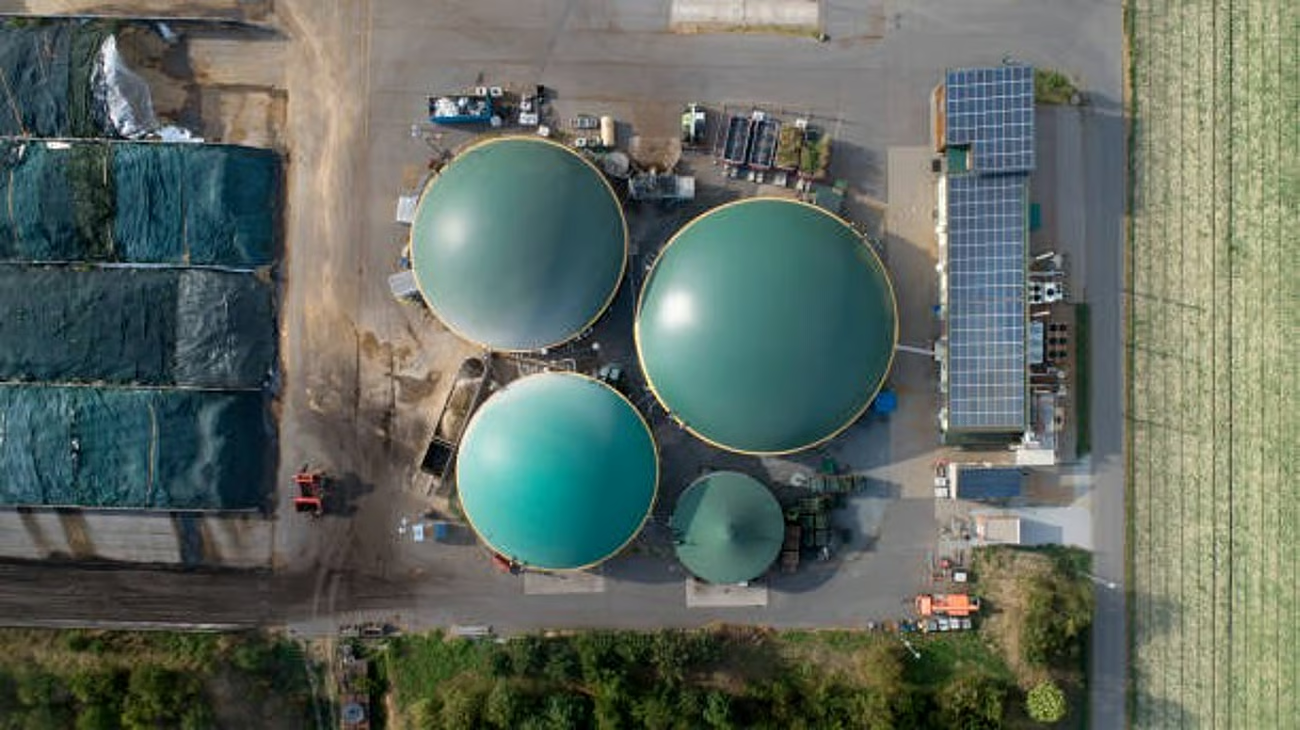
India’s dairy sector could play a major role in reducing the country’s dependence on imported LPG, as experts highlight biogas as a scalable and “atmanirbhar” cooking fuel alternative for rural households. According to an opinion piece published in Deccan Herald, India currently imports nearly 60% of the LPG used across its 33 crore kitchens, while the remaining domestic supply also depends heavily on imported crude oil, exposing the country to global energy shocks and price volatility.
The recent ₹993 increase in 19-kg commercial LPG cylinder prices has further intensified concerns over energy security. Experts from the Council on Energy, Environment and Water (CEEW) estimate that India has nearly 40 million cattle-rearing households with three or more animals, particularly across dairy-rich states such as Gujarat, Punjab, Rajasthan, Maharashtra, Tamil Nadu and Uttar Pradesh.
A household with just three cattle can potentially generate enough biogas to replace around 100 kg of LPG annually — equivalent to nearly seven cylinders — sufficient to meet the yearly cooking needs of a rural family. If all eligible households adopt biogas systems, India could offset nearly 4 million tonnes of LPG every year, while even a 25% transition could save up to ₹2,000 crore annually in import costs.
Despite this vast potential, less than 1% of rural households currently use biogas as their primary cooking fuel. The article notes that older brick-and-mortar biogas systems suffered from maintenance and construction issues, but modern prefabricated digesters now offer easier installation and higher reliability.
Experts suggest redirecting existing LPG subsidies toward financing biogas units, noting that a PMUY household currently receives nearly ₹600 per LPG refill in subsidy and under-recovery support. Over five years, this could cover almost 50% of the cost of a small biogas plant capable of operating for up to 20 years. Innovative financing models in dairy-intensive regions are also enabling adoption through cooperative-led repayment systems linked to milk payments and slurry sales.
Beyond reducing LPG imports, biogas adoption can help dairy farmers manage cattle waste efficiently, lower methane emissions, generate organic manure and strengthen rural energy resilience amid ongoing LPG supply uncertainties. (Dailyhunt)
Source: Dairynews7x7 8 May, 2026 Read full story here
#Biogas #DairyIndustry #CleanEnergy #IndianDairy #LPGCrisis #RenewableEnergy #Dairynews7x7