Logo
IndianGlobalBlogsPublicationsPodcastsMarketAboutContact
Logo
IndianGlobalBlogsPublicationsPodcasts
7News
FSSAI makes registration to all milk vendors in IndiaGujarat Ice Cream Makers Face Cone ShortageSummer Heat to Stress India’s Dairy Cold ChainSavencia Profit Drops on Rising Milk CostsTN Milk Output Claim Sparks Data Dispute

Indian Dairy News

17 High-Genetic US Bulls Arrive to Boost Kashmir Dairy
Mar 13, 2026

17 High-Genetic US Bulls Arrive to Boost Kashmir Dairy

In a major step to strengthen dairy productivity, the Animal Husbandry Department (AHD) of Jammu & Kashmir has imported 17 high-genetic-merit dairy bulls from the United States as part of a breeding i...Read More

Jigawa to Partner India for Dairy Development
Mar 13, 2026

Jigawa to Partner India for Dairy Development

The Jigawa State Government in Nigeria has announced plans to collaborate with the National Dairy Development Board (NDDB) of India to promote livestock development and expand dairy production in the...Read More

Scientific Breeding Boosts Gujarat Dairy Incomes
Mar 13, 2026

Scientific Breeding Boosts Gujarat Dairy Incomes

A 63-year-old artificial insemination (AI) specialist, Deepak Patel, from Vaheval village in Gujarat, is helping strengthen the dairy economy by promoting scientific breeding techniques that improve c...Read More

DairyNews7x7
Advertisement

Latest Blogs

See More
FSSAI makes registration to all milk vendors in India
Mar 13, 2026

FSSAI makes registration to all milk vendors in India

The recent advisory issued by Food Safety and Standards Authority of India (FSSAI) mandating registration of milk vendors is a timely and progressive step towards strengthening traceability and accou...Read More

Rajahmundry Milk Incident: Accident or Adulteration?
Mar 10, 2026

Rajahmundry Milk Incident: Accident or Adulteration?

The recent editorial “Bitter Milk” published by The Hindu raises important concerns about food safety in India. The editorial deserves appreciation for attempting to broaden the conversation and under...Read More

Milk Prices Rise in South & West: Is North Next?
Mar 05, 2026

Milk Prices Rise in South & West: Is North Next?

The recent round of retail milk price increases across South India and Maharashtra is no longer an episodic adjustment but a clear signal of structural stress building up in India’s milk economy. Over...Read More

India’s Dairy Climate Paradox: Production Triumph Meets Methane Time-Bomb
Mar 02, 2026

India’s Dairy Climate Paradox: Production Triumph Meets Methane Time-Bomb

India’s rise to the top of the global dairy league board has been one of the most remarkable agricultural success stories of the 21st century. With milk production surpassing 247 million tonnes per ye...Read More

Global Dairy News

Lactose-Free Milk Seen as Growth Driver in Coffee
Mar 13, 2026

Lactose-Free Milk Seen as Growth Driver in Coffee

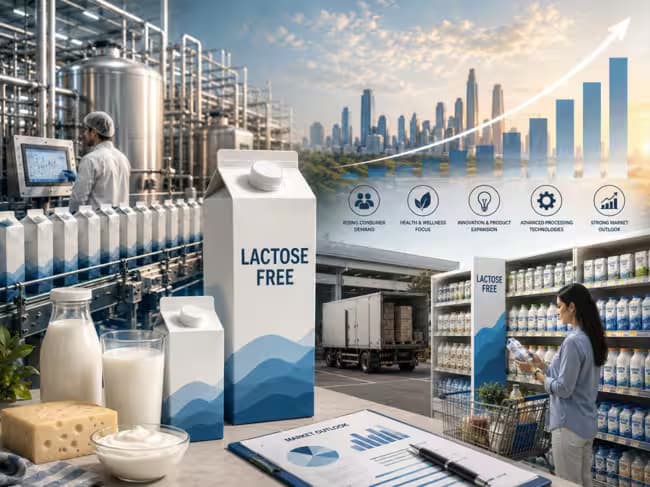
Lactose-free milk is emerging as a major growth opportunity for the dairy industry, particularly in the rapidly expanding coffee and café segment. A recent US-based study highlighted that lactose-free...Read More

Nigeria’s Dairy Challenge: Many Cows, Little Milk
Mar 13, 2026

Nigeria’s Dairy Challenge: Many Cows, Little Milk

Despite having more than 20 million cattle, Nigeria produces far less milk than it consumes, highlighting deep structural challenges in its dairy sector. Most cattle in the country are...Read More

Israel Drops Controversial Dairy Reform From Budget
Mar 12, 2026

Israel Drops Controversial Dairy Reform From Budget

The Israeli government has removed a controversial dairy reform proposed by Finance Minister Bezalel Smotrich from the 2026 Arrangements Law, a key legislative package linked to the country’s state bu...Read More

DairyNews7x7
Advertisement
Dairy News 7x7

Your trusted source for all the latest dairy industry news, market insights, and trending topics.

FOLLOW US
CATEGORIES
  • Global News
  • Indian News
  • Blogs
  • Publications
  • Podcasts
SUBSCRIBE TO OUR NEWSLETTER

Stay informed with the latest updates and trending news in the dairy industry.

No spam, unsubscribe at any time

GET IN TOUCH
C-49, C Block, Sector 65,
Noida, UP 201307
+91 7827405029dairynews7x7@gmail.com

© 2026 Dairy News 7x7. All Rights Reserved.

Terms of ServicePrivacy Policy
Prefer Us
Prefer Us

Anaerobic digestion could cut dairy carbon footprint by 20%

By DairyNews7x7•Published on February 08, 2026

Anaerobic digestion could cut dairy carbon footprint by 20%
Prefer on

Combining continuous crop cover with anaerobic digestion of manure and biomass could significantly reduce greenhouse gas emissions from dairy farming, though researchers warn careful management is needed to avoid unintended environmental impacts.

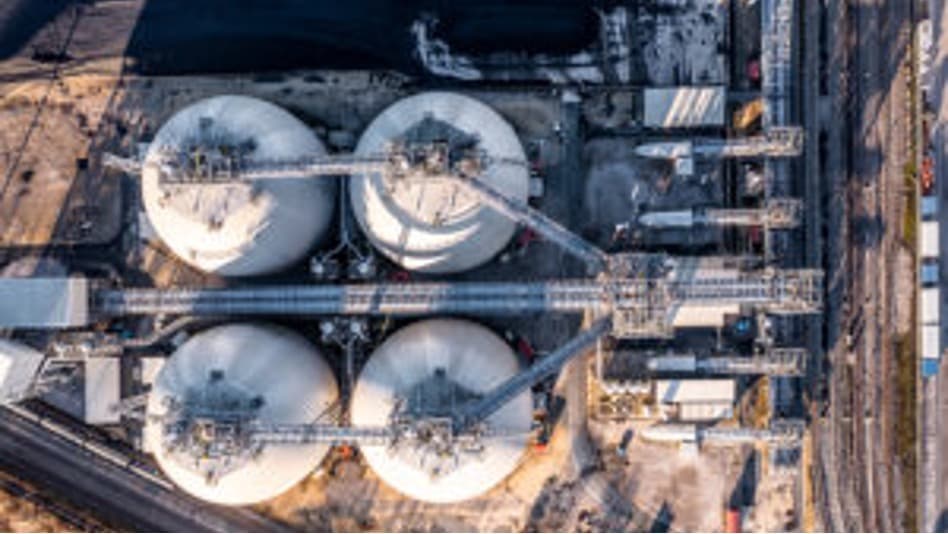
A Penn State-led study has found that using anaerobic digestion to convert dairy manure alongside grassy biomass into biogas could reduce the carbon footprint of milk production by over 20% compared with traditional dairy farm management.

The research, published in Environmental Science and Technology, evaluated the "Grass2Gas" approach on a simulated large Pennsylvania dairy farm, combining year-round vegetation cover with anaerobic digestion – a microbial process that converts organic matter into combustible biogas, consisting primarily of methane.

However, the study revealed complex trade-offs. Whilst continuous cover reduces nutrient runoff, growing additional vegetation for anaerobic digestion increased the need for off-farm feed imports in most scenarios, offsetting many water quality benefits from a lifecycle perspective.

"Our research highlights the complexities of integrating anaerobic digestion into farm systems, including the impact on soil biogeochemistry and nutrient balances," said senior author Christine Costello, assistant professor of agricultural and biological engineering at Penn State.

The researchers found that reducing herd size to match available feed resulted in small milk losses comparable to typical wastage levels in the dairy supply chain.

The digestion process changes manure chemistry, particularly how nitrogen is stored and released. This means digestate – the nutrient-rich fertiliser remaining after anaerobic digestion – behaves differently in soil and air than undigested manure, considerably influencing emissions of ammonia, nitrous oxide and nitrate.

"Agricultural and environmental scientists, engineers and policymakers should think about crop and livestock production and energy technology as one interconnected system," said Costello. "When we add an energy-production technology to a farm, we really need to think about how the residual materials will be handled."

The research was supported by the US Department of Agriculture's National Institute of Food and Agriculture.

Source : DAirynews7x7 Feb 8th 2026 Bioenergy Insight

Stay Updated

Get the latest dairy industry news directly in your feed.

Prefer Us on Google Search

Swipe to continue reading

Previous Article

Next Article