Agriculture must emulate dairy cooperative model of milk procurement
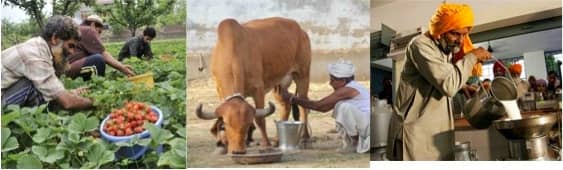
Farmers can learn from the successful cooperative model and gain better remuneration for their produce
Indian farmers remain gravely concerned and even suspicious about the new farm regulations despite repeated assurances from the government that their interests are fully protected under the proposed regime. The spectre of corporatisation and highly resourceful transnational companies seems to deeply influence their emotional sentiments leading to the fury against the government.
There is no denying the fact that there could be certain infirmities in the implementation process of the new laws that have become a rallying point to oppose the government, largely based on misinformation and suspicion.
Even today, and earlier, when the consumer in metros pays ₹50-60 for a kg of tomato or onion, the farmer in the remote part of India hardly receives ₹6-8/kg of that. The gains of the price rise to the consumer are hardly transferred to the farmers whose woes remain mostly unheard.
Post-Covid-19, when industrial production has slumped, both the employment and output in the farming sector have witnessed a considerable rise. Today, realisation of remunerative prices of agricultural produce remains the key challenge for Indian agriculture.
Driving success in dairying
On the other hand, the dairy industry in India is credited with providing up to 80 per cent of the consumer price to dairy farmers compared to merely 25 per cent in Australia, 33 per cent in New Zealand and around 30-40 per cent in most parts of Europe.
Interestingly, 77 per cent of milk production in India comes from small, marginal and landless farmers whose resource availability and land holding are comparatively much more stressed than the growers of agricultural produce.
Rapid strides
Remarkably, milk remains the key source of liquidity and supplementary income for over 100 million farmers in India especially those whose land resources are marginal and even landless unlike other conventional agricultural crops. Besides, it is the sole source of their daily income to meet their daily household expenses. This calls for learning from the processes and institutional mechanisms of Indian dairying.
India has a come a long way to become world’s largest milk producing country with over 193 million tonnes of milk and from being a net importer of dairy products just a few decades ago. Contrary to apprehensions of Western dairy experts and economists, both in India and abroad, over the last 60 years, India’s milk production grew at a CAGR of 4.5 per cent compared to 1.8 per cent in the US and 1.3 per cent in the EU and Australia.
The dairy sector has become among the highest gross value sectors in agriculture with higher prices and correspondingly higher value of milk production. This has been achieved not by merely accident but through ingenious organisations of a large number of small milk producers spread across the rural areas of the country.
Institutionalisation of milk production
India’s novel strategy to organise and institutionalise milk production has become a matter of envy for the traditionally well-established dairy producing countries, such as European nations, the US, Australia and New Zealand.
Today, the traditionally robust milk producers are not fearful of the US, Europe or Oceania but they are visibly afraid of the challenge emanating from the Indian dairy industry.
In India, there are about 100 million farmers who are dependent on dairy compared to merely 10,000 in New Zealand and 6,300 in Australia. Thus, the socio-economic impact of the dairy sector is much more pronounced in India compared to any other major milk exporting countries leading to its far-reaching political repercussions.
No MSP for milk
There is no MSP for milk but dairy farmers in India receive 70-80 per cent of the consumer price under its ingenious institutionalisation of nationwide milk co-operatives who also own the processing plants run by world class technocrats.
Despite the democratic system of elections within co-operatives with deep-rooted political interests, India hs made remarkable strides to become world’s largest milk producer with dairy processing plants owned by farmers of massive capacities surpassing dairy processors in most parts of even the developed world.
The co-operative structure, although adopted in other sectors of agriculture could hardly achieve the professionalism or efficiency and agricultural marketing remained at the mercy of numerous middlemen across the marketing channel adding to farmers’ woes. This makes a strong case to emulate India’s success in dairy industry in agriculture too.
Research suggests that opening up of the markets, making them more competitive and providing alternate avenues to sell the farm produce lead to higher price realisation for the producers.
There is no short-cut to achieving competitiveness for farm produce at every stage of the value chain such as improving productivity, efficient management of logistics, removing marketing anomalies, keeping agriculture sustainable for the nature and ensuring institutional mechanisms for the farmers to get prices ruminative enough so that farm production remains not only sustainable but an attractive activity. The new farm reforms are a landmark step in the direction not only for the welfare of the farmers but also to make Indian agriculture internationally competitive. However, the government needs to be very prudent to balance the conflicting interests of various stakeholders while implementing the new laws.