Logo
IndianGlobalBlogsPublicationsPodcastsMarketAboutContact
Logo
IndianGlobalBlogsPublicationsPodcasts
7News
FAO Global Dairy Prices Rebound After Prolonged DeclineIndia waives petrochemical duty amid war crisisVijaya Dairy Hikes Milk Prices from April 4From Commodity to Credibility: The Changing Face of Dairy BrandingFSSAI 2026: Packaging Now Defines Dairy Compliance

Indian Dairy News

India waives petrochemical duty amid war crisis
Apr 03, 2026

India waives petrochemical duty amid war crisis

India has waived customs duty on around 40 critical petrochemical imports as a temporary measure to tackle supply disruptions triggered by the ongoing West Asia conflict, with the exemption effective...Read More

₹22 Cr Dung Project Stalls in Ludhiana
Apr 03, 2026

₹22 Cr Dung Project Stalls in Ludhiana

A ₹22–22.5 crore cow dung collection project in Ludhiana has stalled just months after launch, as a deadlock between the Municipal Corporation (MC) and dairy owners disrupts operations at major dairy...Read More

Vijaya Dairy Hikes Milk Prices from April 4
Apr 03, 2026

Vijaya Dairy Hikes Milk Prices from April 4

Vijaya Dairy, operated by the Krishna District Milk Producers Mutually Aided Cooperative Union Limited, has announced a price increase of ₹2 per litre and Re 1 per half-litre for packet milk, effectiv...Read More

DairyNews7x7
Advertisement

Latest Blogs

See More
FSSAI 2026: Packaging Now Defines Dairy Compliance
Apr 02, 2026

FSSAI 2026: Packaging Now Defines Dairy Compliance

The recent draft notification issued by the Food Safety and Standards Authority of India (FSSAI) on 26th February 2026 and uploaded on March 11th 2026, may appear routine at first glance. But let us...Read More

Rajahmundry: A Tragedy Waiting to Repeat — An Early Warning
Mar 31, 2026

Rajahmundry: A Tragedy Waiting to Repeat — An Early Warning

The earlier editorial “Bitter Milk” by The Hindu rightly called for stronger accountability in food safety governance. But the situation in Rajahmundry has now escalated far beyond a routine saf...Read More

When Fertiliser Disrupts the Milk Curve: Between Assurances and Emerging Reality
Mar 30, 2026

When Fertiliser Disrupts the Milk Curve: Between Assurances and Emerging Reality

India’s next milk price shock has already begun. And it is not in dairy—it is in fertiliser. A recent report by Mongabay India, authored by Kundan Pandey, flags a structural vulnerability that India h...Read More

Quiet Centralisation: Risk is real for Private Dairy Sector
Mar 28, 2026

Quiet Centralisation: Risk is real for Private Dairy Sector

A Quiet Centralisation: What the New Cooperative Push Means for India’s Private Dairy Sector As reported by agencies citing a written reply by the Union Minister of Cooperation, Amit Shah, in the Raj...Read More

Global Dairy News

FAO Global Dairy Prices Rebound After Prolonged Decline
Apr 03, 2026

FAO Global Dairy Prices Rebound After Prolonged Decline

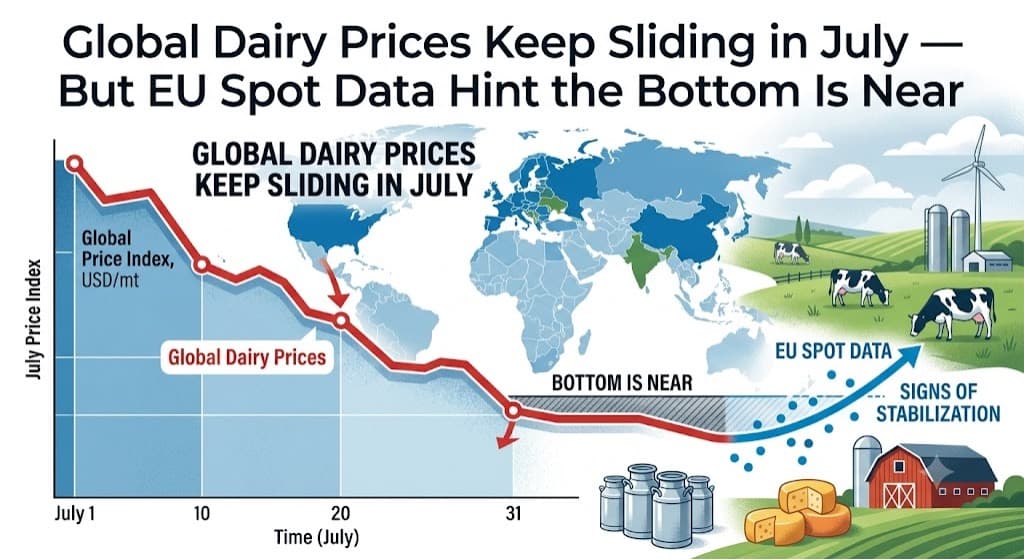
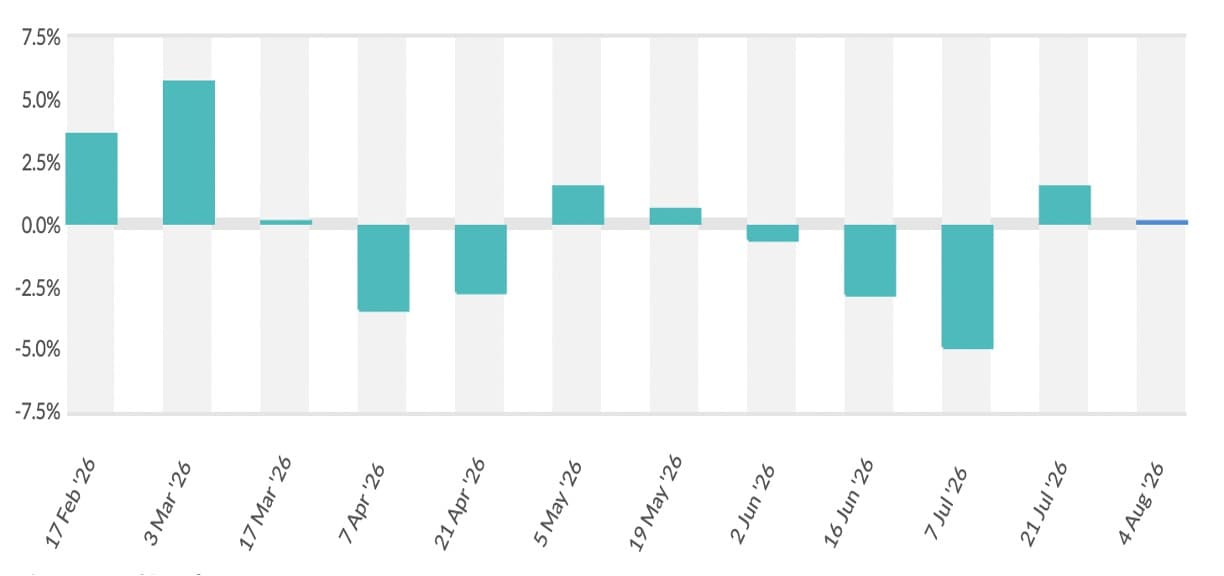
The FAO Dairy Price Index averaged 120.9 points in March, registering a modest increase of 1.5 points (1.2%)—marking the first upward movement since July 2025. However, despite this recovery, the inde...Read More

Methane leaks threaten dairy digester gains
Apr 03, 2026

Methane leaks threaten dairy digester gains

A new study highlights that while methane digesters on dairy farms are largely effective, rare but massive leaks can erase much of their climate benefit, raising concerns about long-term sustainabilit...Read More

Mega dairy deals reshape New Zealand sector
Apr 03, 2026

Mega dairy deals reshape New Zealand sector

New Zealand’s dairy landscape is undergoing a major transformation with two significant acquisitions completed this week, signaling a strategic shift in global dairy investments. French giant Lactalis...Read More

DairyNews7x7
Advertisement
Dairy News 7x7

Your trusted source for all the latest dairy industry news, market insights, and trending topics.

FOLLOW US
CATEGORIES
  • Global News
  • Indian News
  • Blogs
  • Publications
  • Podcasts
SUBSCRIBE TO OUR NEWSLETTER

Stay informed with the latest updates and trending news in the dairy industry.

No spam, unsubscribe at any time

GET IN TOUCH
C-49, C Block, Sector 65,
Noida, UP 201307
+91 7827405029dairynews7x7@gmail.com

© 2026 Dairy News 7x7. All Rights Reserved.

Terms of ServicePrivacy Policy
Prefer Us
Prefer Us

70% mislabeled and 21% toxic amongst 36 popular Indian protein supplements

By DairyNews7x7•Published on April 12, 2024

70% mislabeled and 21% toxic amongst 36 popular Indian protein supplements
Prefer on

Citizens protein project: A self-funded, transparent, and concerning report on analysis of popular protein supplements sold in the Indian market

Abstract

In this study, we analyzed popular protein supplements in India for potential health risks. Most products didn't match their labeled protein content, some even exceeded it, hinting at deceptive practices. Many contained fungal toxins, pesticides, and harmful heavy metals like lead and arsenic. Some also included hepatotoxic herbal extracts like green tea, turmeric, Garcinia cambogia, and Ashwagandha. Indian-made products fared worse than multinational ones. We found various potentially toxic compounds, urging for stricter regulation and safety studies in this industry. Manufacturers should simplify ingredients and avoid harmful substances to protect consumers' health.

Introduction


Dietary supplements, especially protein formulations, are widely used by various groups, but concerns about their safety persist. Mislabeling and contamination are common issues, with evidence showing the presence of harmful substances like toxic metals. Regulation in India focuses on manufacturing practices, leaving content safety in the hands of manufacturers. Despite this, protein supplements often lack transparency and quality assurance. Our study fills this gap by analyzing popular protein products rigorously, aiming to reveal any potential toxic ingredients. We employed standardized methods to ensure transparency and provide valuable insights into product safety.


Results


We obtained and analyzed 36 protein supplements, maintaining seals and blinding until laboratory analysis. The products included blended, pure plant-based, and pure whey-based formulations, with some containing herbal extracts. Among them, 25 (69.4%) were mislabeled regarding protein content, with deficits ranging from <10% to over 50%. Some products had higher than labeled protein content, possibly due to "protein or amino spiking." Five samples (13.9%) were contaminated with aflatoxins, and three (8.3%) showed trace pesticide residue contamination. Heavy metal analysis revealed trace levels of arsenic, cadmium, lead, and copper in various samples. Interestingly, heavily promoted brands often had the lowest protein content, and aflatoxins were mostly found in plant-based supplements. Pesticide residues were detected only in plant-based supplements.


The gas chromatography and mass spectrometry (GC-MS) analysis conducted on the protein supplements revealed a wide array of organic and inorganic compounds present in the products. Among these compounds, some were found in the majority of the analyzed samples, indicating their pervasive presence across different brands and formulations.

For instance, compounds like cycloheptatriene, spiroheptadiene, acetone, acetic acid, and dichloromethane were detected in a high percentage of the analyzed products, with percentages ranging from 72.2% to 83.3%. These compounds are commonly associated with industrial processes and are not typically expected to be present in dietary supplements.

Additionally, other substances like ammonium acetate, toluene, trichloromethane, isopropyl alcohol, and hydrogen isocyanate were also identified in a significant portion of the analyzed protein formulations, ranging from 50% to 75%. These compounds have various industrial applications and may indicate contamination or impurities in the supplements.

Notably, the absence of synthetic steroids or hormonal agents in the analyzed products is reassuring from a health perspective. However, the presence of natural phytosteroids in plant-based formulations highlights the complexity of these supplements and underscores the importance of thorough analysis to understand their composition accurately.

Overall, the GC-MS analysis provides valuable insights into the diverse range of compounds present in protein supplements, emphasizing the need for stringent quality control measures and regulatory oversight to ensure the safety and efficacy of these products.

Stay Updated

Get the latest dairy industry news directly in your feed.

Prefer Us on Google Search

Swipe to continue reading

Previous Article

Next Article