5 Year Budget Plan to Make Indian Dairy Global Leader in 2047
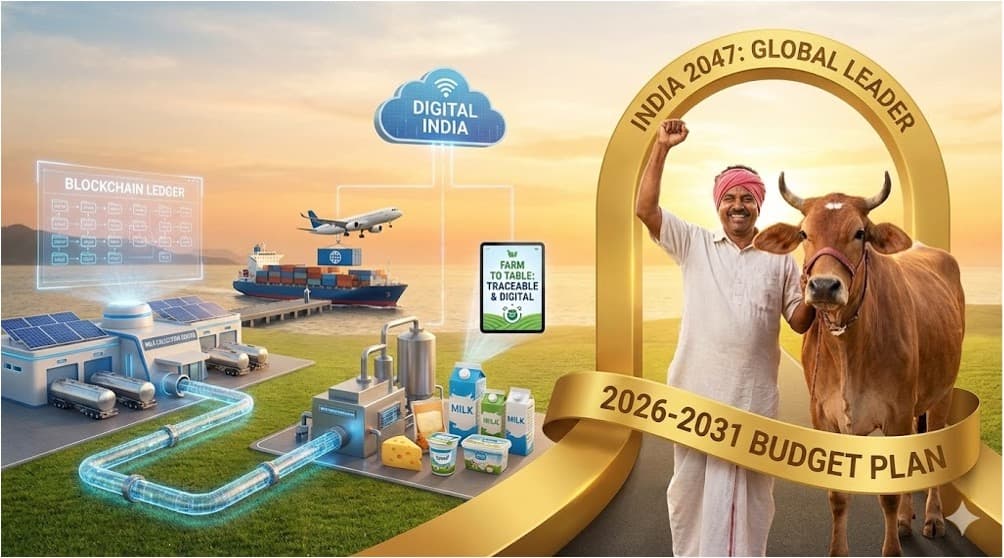
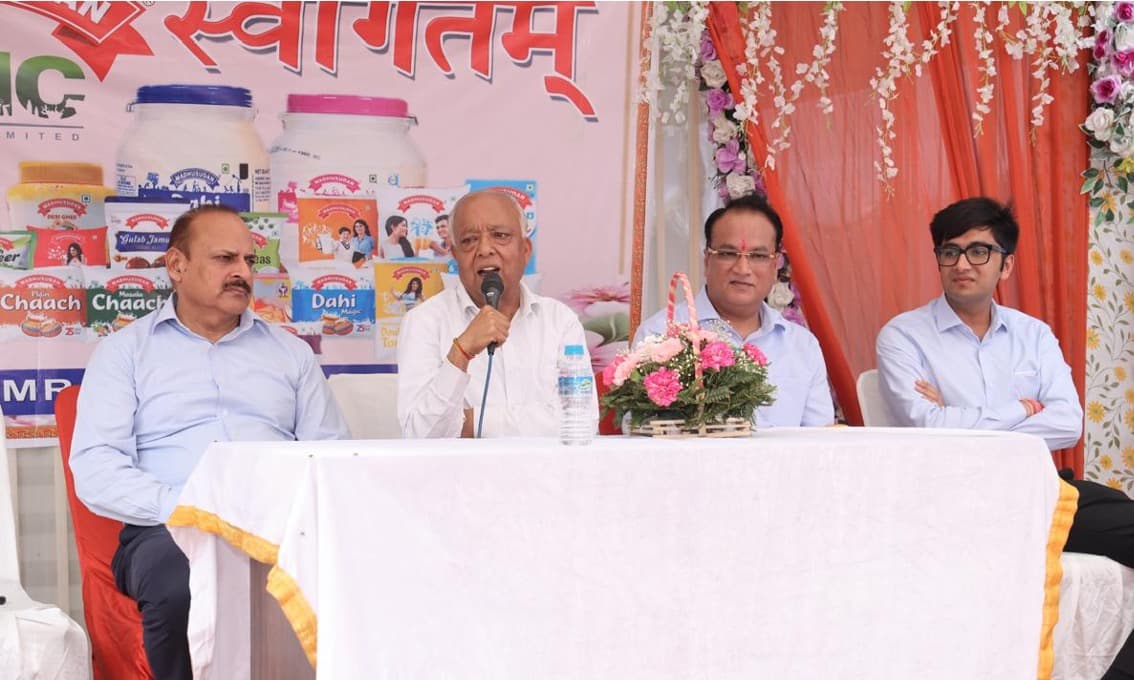
I recently moderated a key session on India Dairy Vision 2047 at the TPCI's International Dairy Processing Conference 2026, gaining valuable insights from panellists. This led to me developing policy recommendations for the upcoming Budget 2026-2027.
Hard Realities faced by dairy even after 78 years of independence
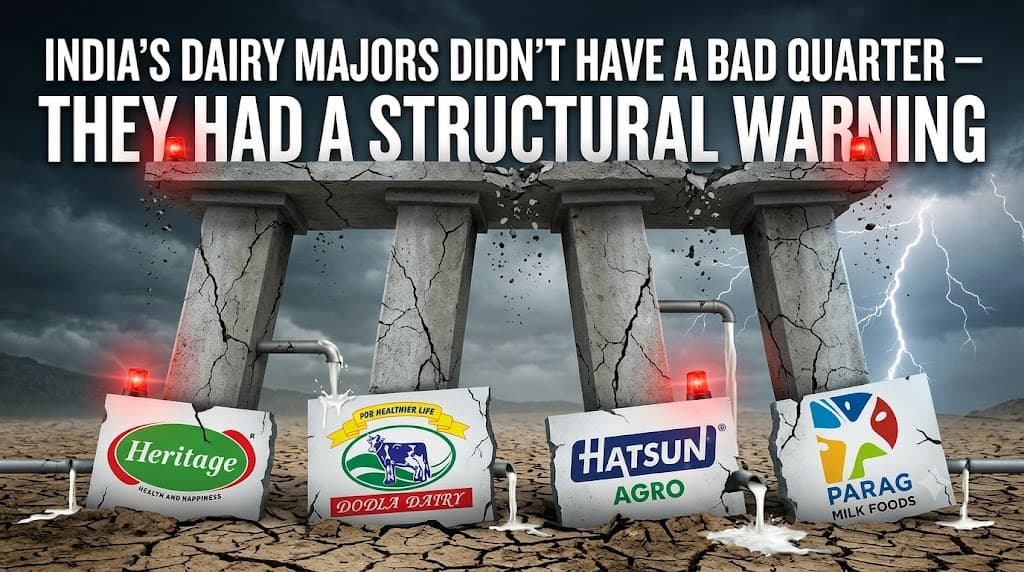
India’s dairy journey in the 20th century, under the visionary leadership of Dr Verghese Kurien, was anchored in two transformative pillars: inclusion of millions of smallholder farmers and large-scale institution-building through cooperatives and infrastructure. This model converted milk into a national food-security movement. However, as India approaches Vision 2047, three hard realities confront the sector. Despite becoming the world’s largest milk producer, India’s per-animal productivity remains among the lowest globally. Even as the dairy economy has expanded to nearly USD 225 billion, inflation-adjusted farm-gate milk prices have seen limited real growth. Most strikingly, while India produces nearly 25% of the world’s milk, its share in global dairy trade remains below 0.5%, exposing a deep disconnect between production scale and global value capture.Apart from these three, challenges like lack of cold chain, adulteration and contaminants in milk, dairy being not given Agriculture status, Primary production of dairy and agriculture not covered under FSSAI and weak enforcement by the regulator, etc. So I have tried to cover these major points with certain policy recommendations and possible budget allocation for at least 5 years to sustain the interventions.
Introduction to Indian Dairy Sector
India’s dairy sector is a cornerstone of rural livelihoods, supporting over 8 crore farmers and contributing significantly to nutritional security and the rural economy. Despite being the world’s largest milk producer, the sector faces deep structural challenges that limit farmer incomes, compromise quality assurance, and constrain India’s participation in global dairy trade. The Union Budget FY 2027 presents a crucial opportunity to address these issues through a sustained five-year reform and investment framework.The foremost challenge is India’s low dairy productivity. While aggregate milk production is high, per-animal productivity remains among the lowest globally due to gaps in genetics, breeding services, fodder availability, and veterinary care. A National Dairy Productivity Mission with multi-year budgetary commitment is essential to address these gaps through breed improvement, genomic selection, balanced feeding programs, fodder banks, and performance-linked incentives. Improving productivity is the most sustainable way to enhance milk output while conserving land and water resources. The productivity mission must also prioritise climate-resilient and environment-friendly breeds, along with promotion of methane-reducing fodder and balanced feeding practices, to sustain milk yields while reducing the environmental footprint of dairying under increasing climate stress.
Farmer remuneration is another critical concern. Inflation-adjusted farm-gate milk prices have remained stagnant for nearly a decade, eroding farm viability and discouraging investment. Unlike crops, milk lacks a transparent price discovery and protection mechanism. Introduction of a structured Cost plus Support Price framework for milk, backed by a Price Stabilisation Fund, will ensure income security for farmers. Annual inflation-linked price revisions and quality-based differential pricing should be institutionalised to reward better production practices.
Traceability and cold chain infrastructure continue to be weak links in the dairy value chain. Inadequate chilling capacity, fragmented logistics, and limited digital integration result in quality deterioration, wastage, and safety risks. The Budget should support a National digital dairy traceability platform integrated with investments in bulk milk coolers, refrigerated transport, renewable energy-powered chilling units, and block-level quality testing facilities. This will significantly reduce losses and improve supply chain transparency.
Adulteration and contamination of milk and milk products remain serious threats to public health and consumer confidence. Weak enforcement, limited testing infrastructure, and the absence of regulatory oversight at the primary production level allow malpractices to persist. A National Milk Quality Assurance and Enforcement Programme is required, supported by expanded testing capacity, mobile laboratories, training and development, strict penalties, and mandatory registration of primary milk producers. Bringing primary production under a formal regulatory framework, while incentivising compliance, will strengthen quality governance across the sector.
India’s dairy exports currently account for less than 0.5 percent of global dairy trade, reflecting inadequate policy support, limited market development, and challenges in meeting international standards. A dedicated Dairy Export Promotion and Competitiveness Scheme is required to support value-added dairy products, improve logistics, facilitate global market access, and align domestic quality systems with international benchmarks. Establishment of dairy export parks and enhanced export credit support will help Indian dairy products gain global acceptance.
A fundamental policy gap that needs urgent correction is the exclusion of dairy from the formal definition of agriculture. As a result, dairy farmers are denied access to priority agri-credit, comprehensive risk mitigation instruments, income tax exemptions, and social security benefits available to crop farmers. Recognising dairy as an agricultural activity and extending parity in benefits is essential for long-term sustainability. A comprehensive dairy risk management framework covering price volatility, animal health, and feed cost inflation should be introduced.
Consolidated Financial Outlay (FY 2027–31)
| Component | Five-Year Outlay (₹ crore) |
| National Dairy Productivity Mission |
15,000 |
| Price Stabilisation Fund | 6,000 |
| National digital dairy traceability platform and Cold Chain | 7,000 |
| A National Milk Quality Assurance and Enforcement Programme | 4,000 |
| Dairy Export Promotion and Competitiveness Scheme | 8,000 |
| Risk Mitigation & Agriculture Status | Policy-based |
| Total | ₹40,000+ crore |
Co-investment Model
In conclusion, it is neither necessary nor desirable that the entire financial outlay be borne by the Government alone. A structured co-investment model, wherein the private sector and cooperative institutions contribute equity alongside public funding, will accelerate outcomes and ensure accountability. Such blended financing will leverage industry expertise, strengthen governance, and multiply the impact of public resources. This partnership-led approach can deliver a globally competitive, farmer-centric dairy ecosystem without imposing undue fiscal strain on the exchequer.Source : Dairynews7x7 Jan 15th blog by Kuldeep Sharma Chief Editor Dairynews7x7