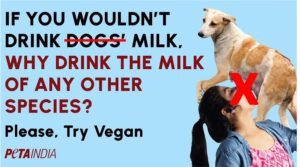
PETA India’s provocative billboard campaign—posed in major cities with the tagline “If you wouldn’t drink dogs’ milk, why drink cow’s?” and an image of a child sipping dog milk—has sparked more outrage than debate. While intended to jolt consumers into veganism, the stunt undermines reasoned discourse on animal welfare, ignores India’s rich dairy heritage, and insults millions of dairy-farming households.
Dream of our PM Modi ji and efforts of government in cow protection
India's BJP-led Central Government has consistently emphasized cow protection—not just as symbolic reverence, but through substantive policy action. Since 2020, it has sanctioned over ₹1,800 crore for the establishment of 5,000+ gaushalas and allocated ₹700 crore towards research on cow-based products, including cow milk, dung, urine therapy, and even methane gas projects .
Additionally, recent amendments in the Prevention of Cruelty to Animals Act reinforced stricter penalties for cow cruelty, demonstrating legislative commitment.
PETA’s provocative “dog milk” billboard not only undermines these efforts—it is a direct slap at the government's drive to make the cow worshippable in modern India, mocking a sacred animal and hurting the sentiments of millions who view cow welfare as integral to cultural pride and national ethos.
Heritage & Livelihoods Demeaned
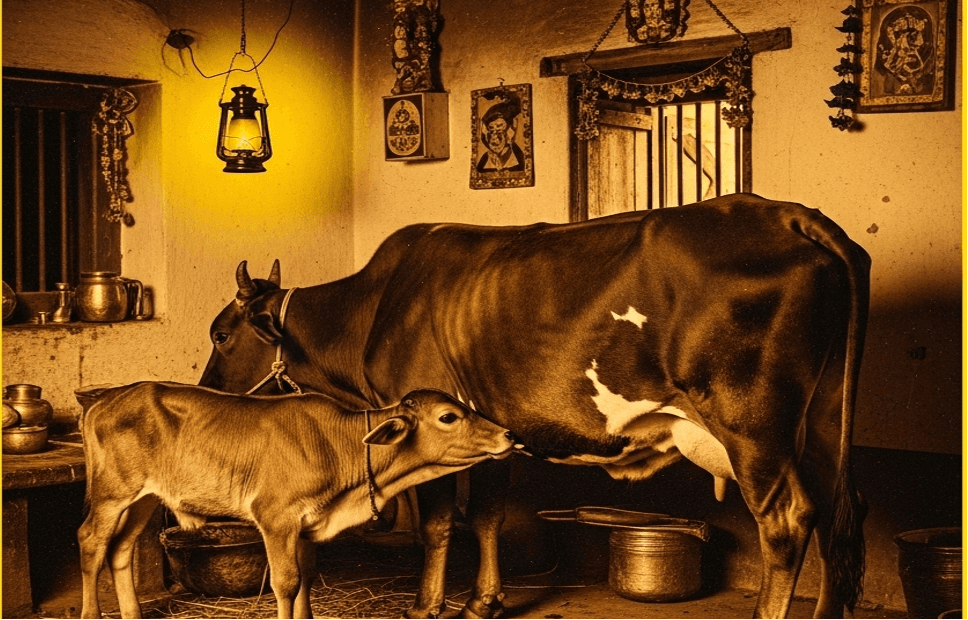
Milk from cows and buffalo has nourished India for millennia—not just as a food staple but as a cultural cornerstone. Cows hold a sacred place in Indian spirituality and tradition. More, the dairy sector sustains over 80 million rural households, including many landless women, forming the backbone of rural economies . The ad’s provocative message erases these facts, reducing centuries of ethical dairy farming to a viral gaffe.
Shock Over Evidence, Again
This campaign follows a familiar PETA playbook of “viral-first” activism. Globally, PETA has launched controversial efforts—from “Got Autism?” milk-cancer ads to comparing dairy practices with rape, Holocaust analogies, and gun violence . Its “Bovine Mammary Secretion Day” proposal to rebrand World Milk Day is another example of its tendency to reduce complex discussions to sensational headlines . These tactics alienate rather than educate.
Ignoring Dairy Reform
The dairy industry, especially in India, is in transformation. Ministry of cooperation under the leadership of Amit Shah ji has launched White revolution 2.0 to enroll all dairy farmers under dairy cooperatives. Cooperatives like Amul are pioneering farmer-driven governance, engaging over 3.6 million farmer-members and investing in quality, traceability, and animal welfare . Regulatory bodies like FSSAI and NABL enforce stringent hygiene and ethical standards. Dairy-specific initiatives—such as SOPs for artificial insemination, methane reduction efforts, and calf-care protocols—are gaining ground. PETA’s narrative seems oblivious to these advancements.
Constructive Paths vs. Deplatforming Debate
Advocating vegan diets has its place, but alienating producers and consumers is counterproductive—especially in a democracy built on inclusive debate. Vegan advocacy would achieve more traction through collaboration: supporting plant-based product innovation, advocating for higher animal-welfare standards within dairy, instead of divisive campaigns that insult traditions and livelihoods.As I always say, the future doesn’t belong to plant or animal—it belongs to plant and animal food.
How Stakeholders Should Respond ?
I think it is high time for all stakeholders to come together and take some actions. I have tried to identify the key stakeholders and key actions which might be taken up by them as follows . I would like to begin with Indian Dairy Association .
Indian Dairy Association
The Indian Dairy Association (IDA) and cooperating dairy collectives must take a firm, multi-pronged stance against PETA’s "dog milk" billboard, beginning with a formal legal review to pursue defamation or misleading advertisement claims. The Indian Dairy Association and allied member cooperatives and industries must take prompt and unified action to counter PETA’s insensitive “dog milk” ad.
First, issue a joint official statement condemning the billboard for its cultural insensitivity and for trivializing India’s deep-rooted dairy heritage, highlighting milk’s sacred status and the way it sustains over 80 million rural households, as noted in backlash reports¹.
Second, in tandem with press outreach, launch a counter-campaign showcasing real-world impact—success stories of humane animal husbandry, grassroot welfare programs, and traceable, certified dairy chains.
Third, call on regulatory authorities—Ministry of Information & Broadcasting and ASCI—to review such provocations under responsible advertising codes and ensure future ads adhere to cultural respect and factual accuracy². By responding decisively—through communication, storytelling, and regulatory engagement—the dairy sector can protect consumer trust, assert its ethical transformation, and demand accountability from advocacy groups prioritising shock over reason.
Farmers & Cooperatives
Dairy farmers and cooperatives starting with AMUL, KMF, etc need to publicly condemn PETA’s campaign while reaffirming dairy’s cultural and economic significance. Leaders should highlight dairy’s deep-rooted traditions, ethical standards, and impact on rural communities, showcasing ground-up stories—from animal welfare programs to environmental initiatives and transparent value chains. These narratives humanize the industry and counteract the shock-based messages with substance and pride.
Processors
Dairy processors can reassure consumers by launching informative campaigns spotlighting their traceability systems and certifications — such as FSSAI, organic, or humane labels. By conducting and publishing audit results, they build trust. Partnering with academic institutions and civil society, they can co-host webinars on sustainable animal husbandry, improving outreach and demonstrating the industry’s commitment to welfare and transparency.
Government & Regulators
The Ministry of Fisheries, Animal Husbandry & Dairying, alongside FSSAI, should issue firm statements reaffirming dairy’s role in culture, nutrition, and livelihoods. Policy incentives—such as carbon credits for methane capture, welfare-certified labeling, and “dairy‑climate” credits—can accelerate sustainability. Creating formal consultation channels, even with critics like PETA, will help focus advocacy on evidence-based reforms rather than emotive campaigns.
Ministry of Information & Broadcasting
The Ministry should enforce Responsible Advertising via ASCI’s Code, ensuring that provocative ads respect cultural sensitivities and don’t misinform. It must monitor such campaigns for social impact and act promptly—suspending or reviewing content that misleads or offends, aligning with past actions against ads deemed indecent or harmful .
By responding collectively and strategically—through public statements, education, policy measures, and regulation—the dairy sector can turn the narrative from sensationalism to authentic transformation, honoring traditions, protecting livelihoods, and advancing sustainability.
PETA’s “dog milk” billboard isn’t just provocative—it’s reductive. If the aim is meaningful dialogue on animal welfare, dismissive shock tactics erode trust. Real progress requires collaboration, cultural sensitivity, and evidence-driven advocacy. Dairy and its critics share space in our changing food system—but only through respect and reason can we build a future that upholds both ethics and livelihoods.
Conclusion
Demands for veganism don’t require disrespect. Let’s work together—farmers, regulators, NGOs—to elevate food discourse with integrity and empathy.
PETA’s dog‑milk billboard is less a message and more a misfire—disrespectful, culturally tone-deaf, and ethically simplistic. It ignores India’s agricultural heritage, misleads consumers, and denigrates dairy’s cultural stature. If the goal is to promote sustainable or ethical food systems, then balancing tradition, livelihood, and welfare is essential. Real change requires respectful dialogue, supportive evidence, and positive collaboration—not clickbait moralizing.
Let us all condemn it every social platform which we are associated with . Let the world knows that our dairy sector cant take such communication lightly. Let there be request made to municipal corporation to remove these billboards from all the locations.
Real progress in animal welfare and sustainable diets demands empathy, facts, and respect—not clickbait. Let’s respect and champion evolution in food choices without erasing tradition.
Source : Blog by Kuldeep Sharma Chief Editor Dairynews7x7 June 16th 2025